
Decoding the Digital Soul: The Acmeological Matrix for Social Network Discourse
Human as Acmeologic Entity in Social Network Discourse (Multidimensional Approach)
The paper introduces a multidimensional acmeological approach to model speaker-specific features in Social Network Discourse (SND). Using a novel "acmeological matrix," the authors quantify both positive and negative personal dynamics, aiming to detect destructive personality features and socio-media deprivation in virtual environments.
TL;DR
This research pioneers a multidimensional approach to profiling social network users by applying Acmeology—the science of human "peak" development—to the digital realm. By constructing a complex Acmeological Matrix, the authors move beyond simple sentiment analysis to map the negative and positive dynamics of an individual's personality based on verbal, paraverbal, and non-verbal cues.
Context: Beyond Positive Development
Historically, acmeology has been the study of how humans reach their highest positive potential. However, the modern digital landscape—fraught with aggression, radicalization, and "information communication utterances"—requires a darker mirror. The authors argue that a person can also reach a "peak" of negative dynamics, often driven by deprivation (social, political, or economic).
The Problem: The Gap in Author Profiling
Existing methods for author profiling often struggle with the "Why" behind destructive online behavior. Why do users violate ethical norms? Why does frustration turn into aggression? This paper identifies the missing link: a structured way to measure the correlation between deprivation and speech activity in the virtual space.
Methodology: The Acmeological Matrix
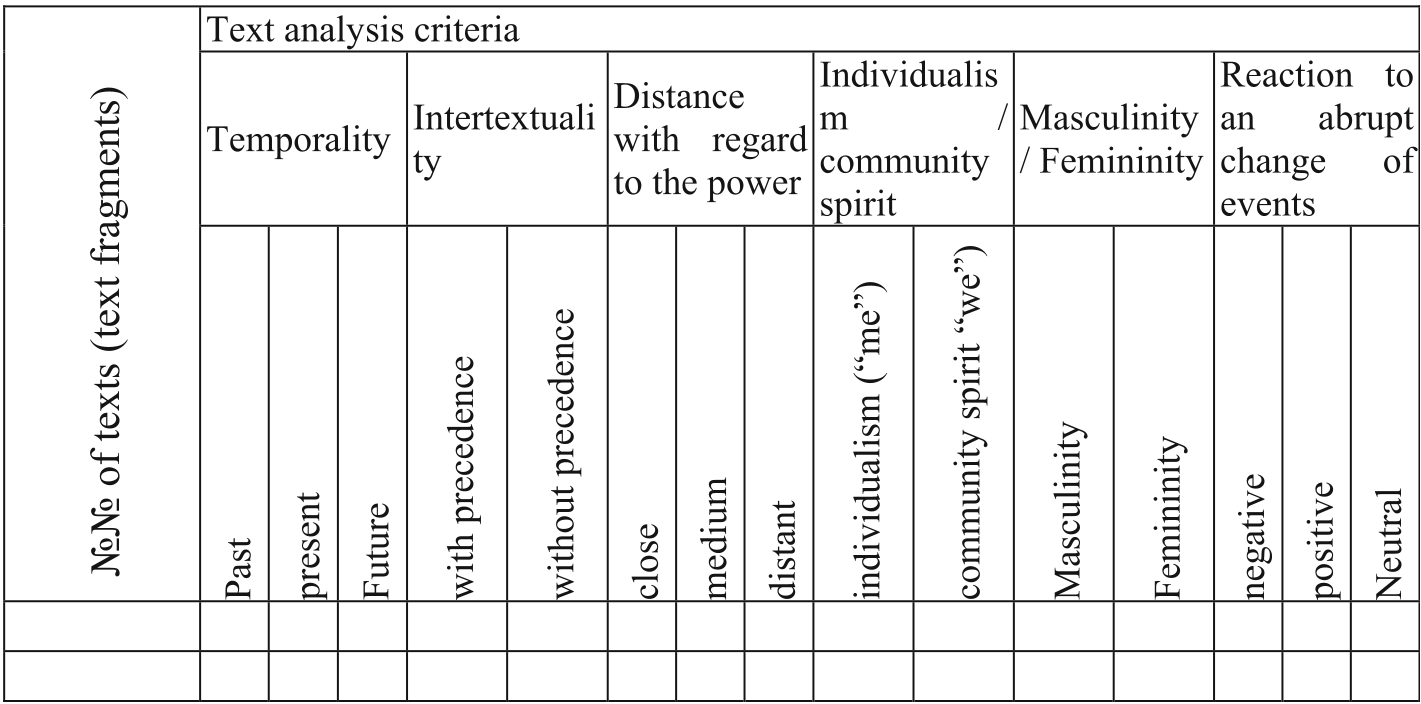
The core innovation is the Acmeological Matrix. This is not just a table of words; it is a multidimensional coordinate system that evaluates:
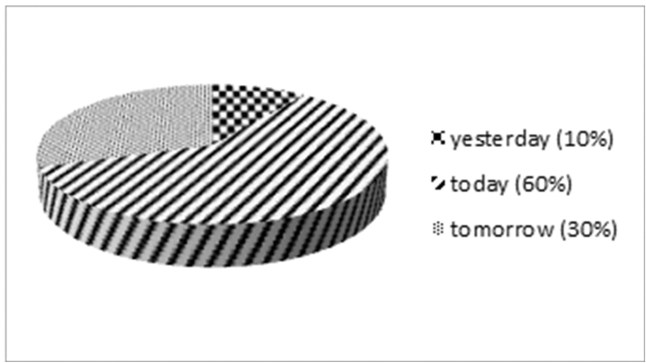
- Temporality: Is the user focused on the past (nostalgia), present (criticism), or future?
- Social Distance: How does the user perceive themselves in relation to "Power" or "The Team"?
- Cognitive Dissonance: Following Festinger’s principles, the model tracks when users knowingly violate community norms.
The authors also formulated a mathematical expression for negative acmeological dynamics (): Where is verbal content, is paraverbal (prosody/tone), and is non-verbal (gestures/facial expressions from video data).
Experiments and Data
To validate this, the researchers built a massive Russian Electronic Media Corpus:
- Written Part: 40 MB of text (~7 million tokens) from 4,000 authors.
- Spoken Part: 50 hours of multimodal (audio/video) recordings involving 300 speakers.
The analysis reveals how deprivation leads to specific "Negative Acmeological Curves." By plotting these on a Cartesian system, the researchers can visualize the shift from neutral behavior to destructive peaks.
Critical Insight: The Forensic Future
The real-world value of this work lies in Forensic Linguistics. By identifying the "verbal determinants" of aggression (hostility, resentment, or nostalgia-driven frustration), authorities and researchers can:
- Identify Groups: Detect clusters of "deprived individuals" before radicalization peaks.
- Attribution: Match anonymous social network accounts to real-world personality profiles with higher accuracy.
- Behavioral Prediction: Use the time-quantization of the matrix to predict when a user is approaching a "negative acme" (e.g., potential for destructive real-world actions).
Conclusion & Limitations
The "Acmeological Entity" approach provides a sophisticated toolkit for understanding the "Electronic Personality." While the current study is heavily rooted in Russian media discourse, its mathematical framework () is globally applicable.
Future Work will likely involve the automation of this matrix using Deep Learning to provide real-time monitoring of social network health, though ethical considerations regarding privacy and "predictive policing" remain a significant hurdle for implementation in democratic societies.