
Decoding Digital Shadows: How Personality and Trust Mold Behavior in Social Networks
Human behavior in online social networks
This paper presents a systematic literature review investigating the influence of Online Social Networks (OSNs) on human behavior, specifically focusing on personality traits and decision-making processes. By analyzing 96 peer-reviewed sources using NVivo, the authors identify Facebook and Twitter as the most studied platforms and highlight "Trust" as a pivotal mediator in online interactions.
TL;DR
Social media has transformed from a simple "broadcasting" tool into a complex ecosystem of co-creation and influence. This systematic review by Gillen et al. highlights that while our online lives are ubiquitous, our understanding of the psychological drivers behind them—specifically Personality and Trust—is still in its infancy. The core finding? Trust is the ultimate mediator of our decisions online, often outweighing professional marketing.
The "Web 2.0" Pivot: Why Behavioral Motivation Matters
The shift from Web 1.0 (static content) to Web 2.0 (collaborative creation) turned every user into both a publisher and an audience. This democratization of content created a "black box" of human behavior. Existing research identifies a critical problem: we are increasingly accessible via portable and wearable tech, yet we are susceptible to behavioral shifts driven by invisible factors like Informational Conformity and Communication Saturation.
Methodology: Mapping the Literature
The researchers conducted a rigorous systematic review using the Scopus database, filtering 169 initial papers down to 96 high-quality sources. Using NVivo 11 Pro, they performed "pattern coding" to extract the most frequent themes and keywords influencing human interaction.
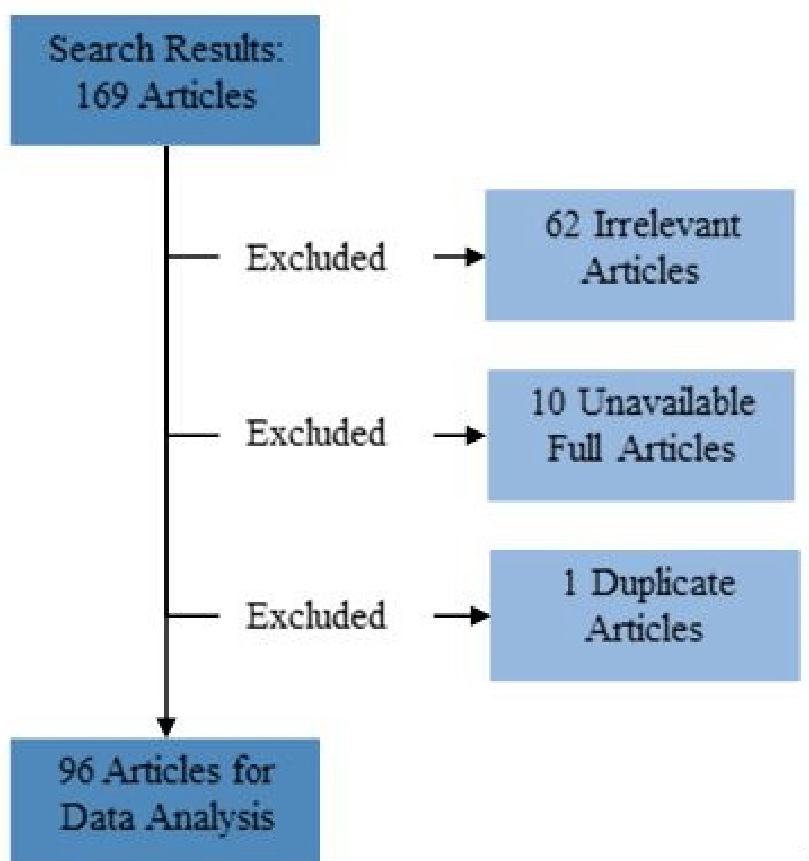 Figure 1: The systematic filtering process used to isolate relevant academic literature.
Key Insights: The Five-Factor Model (FFM) and OSN Usage
The study utilizes the Five-Factor Model—Extraversion, Agreeableness, Conscientiousness, Neuroticism, and Openness—to map how specific traits manifest online:
- Extraverts: Are the "social butterflies" of OSNs, maintaining significantly higher friend counts.
- Neuroticism: Linked to "Facebook addiction," where users spend more time on the platform, likely seeking external validation.
- Agreeableness: Correlates with higher frequencies of personal postings and self-disclosure.
The authors note a critical limitation: most personality research is conducted via self-reported surveys, which are prone to "Method Bias"—users often report how they want to be seen rather than how they actually behave.
The Anatomy of Trust in Decision-Making
Perhaps the most significant contribution of this review is the breakdown of Trust as the backbone of online decision-making. The authors identify three distinct layers:
- Characteristic-based: Trust born from similarities (gender, culture).
- Process-based: Trust built over time through repeated social interactions.
- Institution-based: Trust mandated by rules and platform procedures.
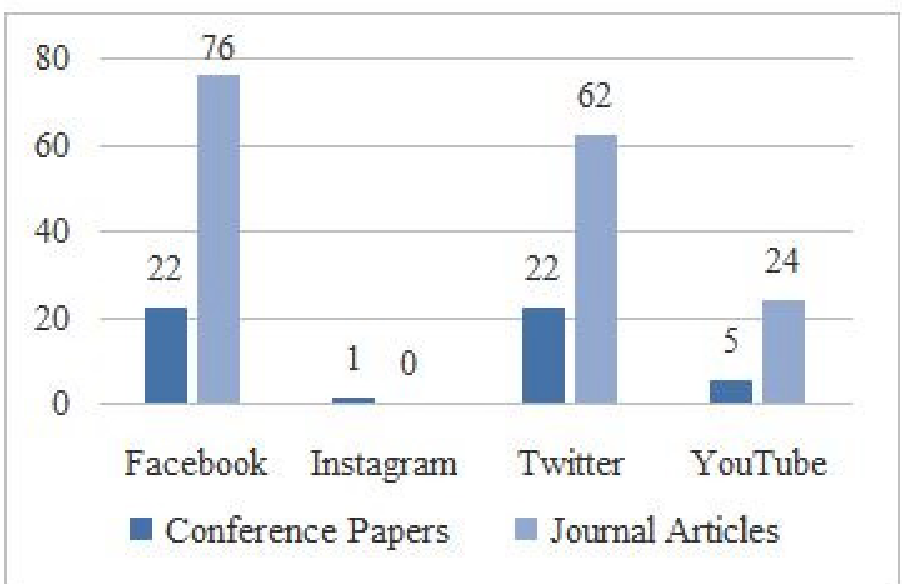 Figure 2: Dominance of Facebook and Twitter in academic discourse compared to YouTube and Instagram.
Crucially, Word-of-Mouth (WOM) on social networks is viewed as more "authentic" than commercial advertisements. This creates a paradox: while we trust our peers more, we are also more vulnerable to the "abuse of trust" and the spread of misinformation within these closed loops.
Experiments & Results: The Research Gap
The data coding revealed a startling imbalance. Despite YouTube having nearly one-third of the internet's population, it is vastly under-researched compared to Facebook. This "platform bias" leaves us blind to how video-centric or image-centric (Instagram) environments influence behavior differently than text-centric ones.
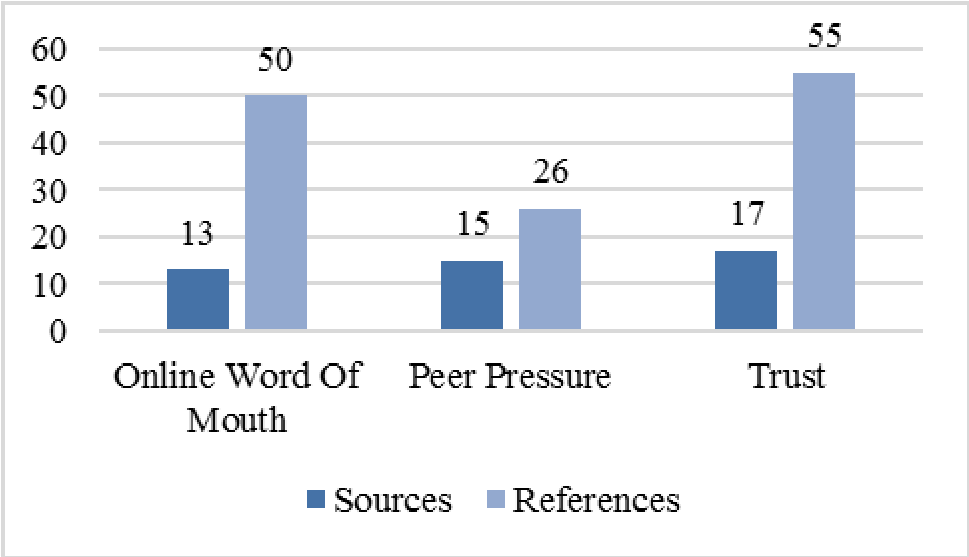 Figure 3: Quantitative analysis showing trust as the most significant node in the decision-making literature.
Critical Analysis & Conclusion
Takeaway
Online Social Networks are not just tools; they are cognitive extensions. The paper identifies that Trust is the primary driver of behavior, but warns that this trust is increasingly being leveraged for peer pressure and misinformation.
Future Outlook
The authors advocate for two major shifts in future research:
- Predictive Modeling: Moving from descriptive surveys to using personality as a tool to predict (and protect) user behavior.
- Passive vs. Active Users: Understanding the "Lurkers" (passive users) who consume content without generating it, a group currently ignored by most behavioral studies.
In conclusion, as OSNs mature, the focus must shift from what platform people use to why they trust the information within it.