
CCMA: Boosting Negotiation AI through Cross-Cultural Reliability Modeling
Human-Computer Agent Negotiation Using Cross Culture Reliability Models
The paper presents a novel methodology for designing automated negotiation agents capable of interacting with humans across different cultures (Israel, USA, Lebanon). It introduces the Cross Culture Methodology Algorithm (CCMA), which utilizes a Leave-One-Out strategy and classical machine learning to automatically select the optimal training data and algorithms for predicting human agreement fulfillment.
TL;DR
Negotiation is a deeply cultural act. While previous AI agents were often "culture-blind" or strictly "culture-specific," this paper introduces CCMA (Cross Culture Methodology Algorithm). By automatically determining when and how to mix data from different countries (USA, Israel, Lebanon), the authors achieved significant jumps in predicting whether a human will actually keep their word—boosting accuracy by nearly 10% in certain cultural contexts.
Problem & Motivation: The "Truthfulness" Gap in Global AI
Automated agents frequently fail in real-world negotiations because they assume a "universal" human rationality. In reality, cultural background dictates how people value agreements and how they react to a partner who breaks them.
The authors identify two major hurdles:
- Data Scarcity: Getting high-quality negotiation data for every specific culture is expensive and slow.
- Behavioral Divergence: A strategy that works against a negotiator in New York might be perceived as an insult in Beirut, leading to different "reliability" outcomes.
The core insight of this work is that human behavior isn't entirely unique to each culture. There are underlying patterns of reciprocity that can be learned by strategically combining datasets, provided we have an automated way to find the "perfect mix."
Methodology: The CCMA Framework
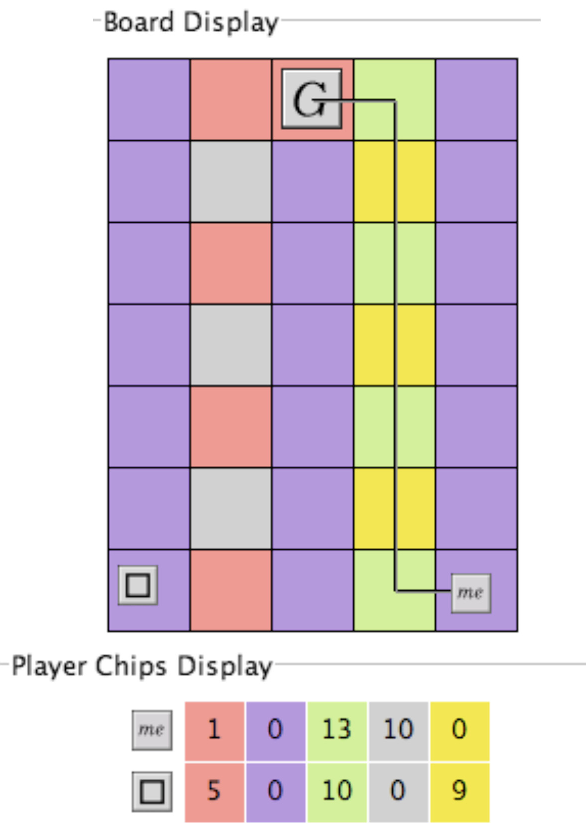
The researchers utilized the Colored Trails (CT) environment—a game where players trade colored chips to reach a goal. Crucially, players can choose to "lie"—promising a chip but not delivering it.
The CCMA Algorithm
The Cross Culture Methodology Algorithm (CCMA) works through a rigorous Leave-One-Out validation process:
- Feature Engineering: Beyond game scores, they added cultural context (Country), agent types (Purb, Nasty, PAL), and behavioral history (e.g.,
prevFullTransfer—did they keep the last promise?). - Automated Algorithm Selection: It tests J48 (Decision Trees), RepTree, Naive Bayes, and Multilayer Perceptrons.
- Data Integration: It systematically tests if adding data from "Culture B" helps predict "Culture A."
Experiments & Results: The Power of Integration
The study highlights that "more data" isn't always better, but "diverse data" often is.
Key Findings:
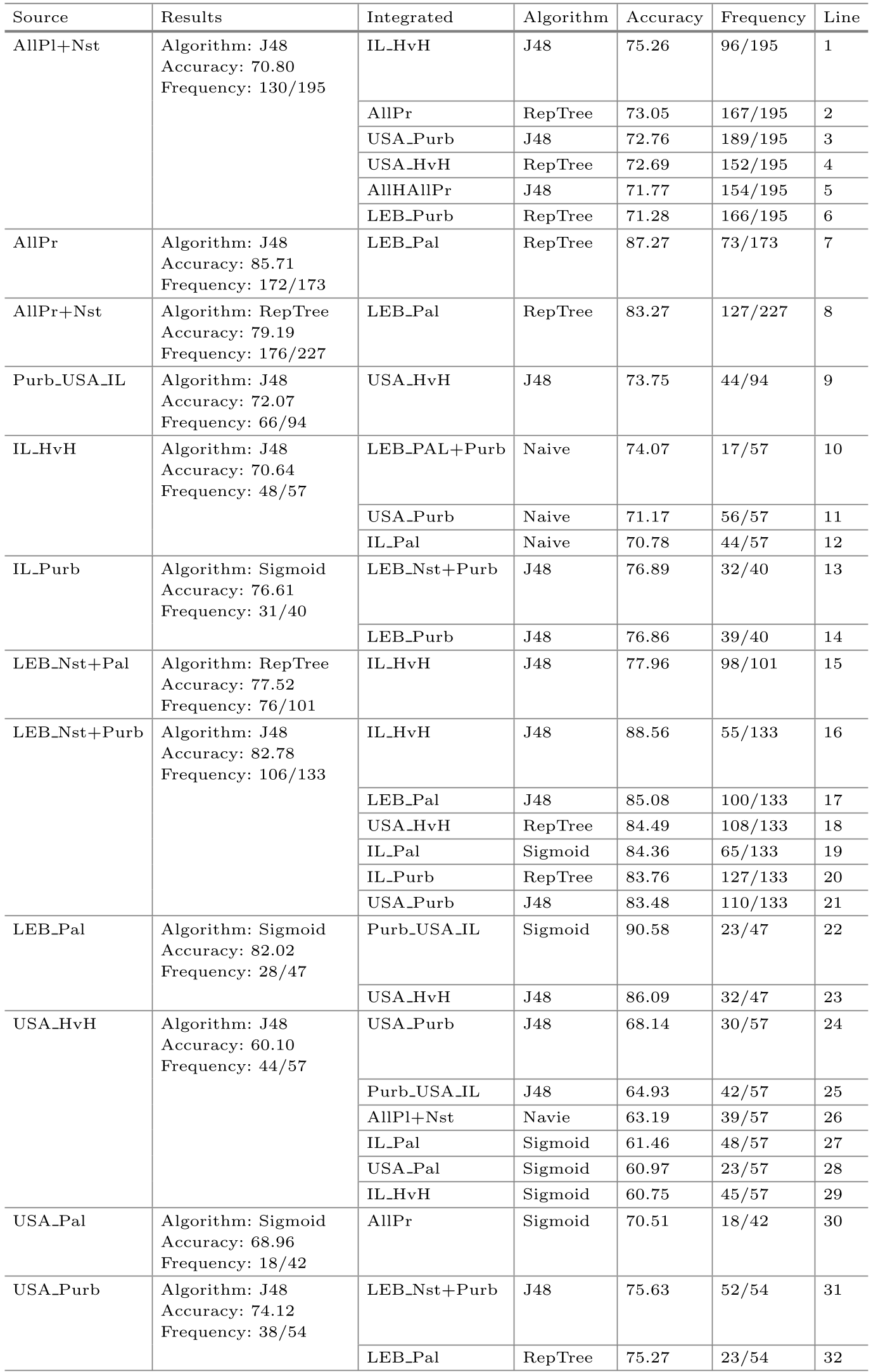
- Lebanese Predictability: Predicting Lebanese players' reliability (LEB Pal) jumped from 82.02% to 90.58% when the model integrated data from US and Israeli interactions.
- US Sensitivity: For US players, the baseline accuracy of 60.10% was significantly improved to 68.14% by integrating US-specific agent data, suggesting that domestic agent-human interactions are more transferable than cross-country human interactions in certain US contexts.
- Algorithm Matters: While J48 was often the most frequent "winner," the Sigmoid (Neural Network) proved superior for predicting behavior in Lebanon and the USA when playing against adaptive agents (PAL).
Critical Analysis & Conclusion
Takeaway
The value of this work lies in its data-agnostic automation. It moves away from the "hard-coded" cultural assumptions of early social psychology and toward a dynamic, evidence-based approach to cultural modeling in AI. It proves that cross-cultural "noise" can actually be "signal" if processed through the right algorithm.
Limitations
- Restricted Cultures: The study only covers three countries. The "Cross-Culture" aspect might face scalability issues when applied to dozens of cultures simultaneously.
- Protocol Specificity: The results are tied to the "alternating-offer" protocol. Whether these behavioral reliability traits transfer to continuous, high-stakes diplomatic negotiations remains an open question.
Future Outlook
As we move toward a world of globalized AI assistants, the CCMA offers a blueprint for how these agents can "code-switch" their behavioral models dynamically, ensuring they remain reliable and effective partners regardless of where their human user was raised.