
ESN Adoption: Bridging the HCI Gap in Developing Economies
Human Computer Interaction Aspects of Enterprise Social Networks: An Empirical Validation of Adoption Model in a Developing Country
This paper proposes and validates a Human-Computer Interaction (HCI) based adoption model for Enterprise Social Networks (ESNs) within the context of Egypt. Utilizing a mixed-methods approach—thematic analysis of interviews followed by a survey of 82 employees—the study identifies Interactivity, Perceived Value, Management Support, and Usability as the primary drivers for successful ESN adoption in developing countries.
TL;DR
Why do employees love Facebook but ignore their company’s internal social network? This study investigates the HCI (Human-Computer Interaction) factors driving Enterprise Social Network (ESN) adoption in Egypt. It finds that successful adoption isn't just about having the tool—it’s about Interactivity, Usability, Perceived Value, and Management Support.
Problem & Motivation: The "Implementation Gap"
While social media penetration is skyrocketing in countries like Egypt (with 83% of internet users on Facebook daily), ESNs often fall flat in the workplace. The author argues that failure stems from a "one-size-fits-all" approach that ignores human factors. In developing countries, unique cultural traits—like a high Power Distance (where hierarchical gaps are wide)—and poor user engagement during the design phase create significant barriers to technical innovation.
Methodology: From Qualitative Insight to Quantitative Proof
The research followed a rigorous two-step process:
- Exploratory Phase: Semi-structured interviews with 10 employees across two organizations to identify what really matters to them.
- Validation Phase: A survey of 82 participants analyzed using Multiple Discriminant Function Analysis (MDFA) to see which factors actually separate "Adopters" from "Non-Adopters."
The Hypothesized Model
Based on the interviews, the author proposed six core dimensions:
- Interactivity: Engaging activities like chat rooms and online voting.
- Usability: How easy the tool is to learn and navigate.
- Perceived Value: The degree of convenience and rapidity in business tasks.
- Management Support: Encouragement from supervisors.
- Privacy: Concerns over work-life balance.
- Power Distance: The impact of organizational hierarchy.
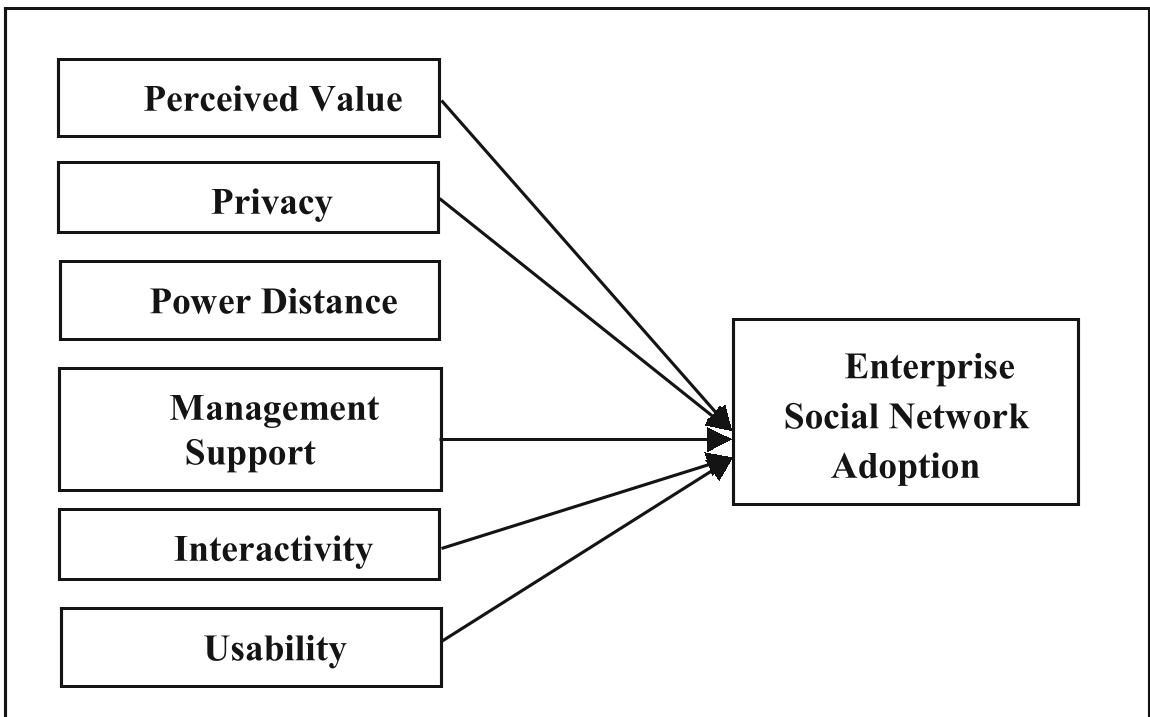 Figure 1: The hypothesized relationship between HCI factors and ESN adoption.
Key Findings: What Actually Drives Adoption?
The results were telling. While Privacy and Power Distance are often cited in theory, the data showed that four specific factors dominate the decision to use an ESN:
- Interactivity (Loading: 0.934): This was the strongest predictor. Users crave "Live" environments over static repositories.
- Usability (Loading: 0.845): If it’s not obvious, it’s not used. Overwhelming content is a major deterrent.
- Management Support: In hierarchical cultures, employees watch their bosses. If managers don't praise knowledge sharing on the platform, employees won't contribute.
- Perceived Value: The tool must "fit" the task. Rapidity in sharing news and reaching a consensus is vital.
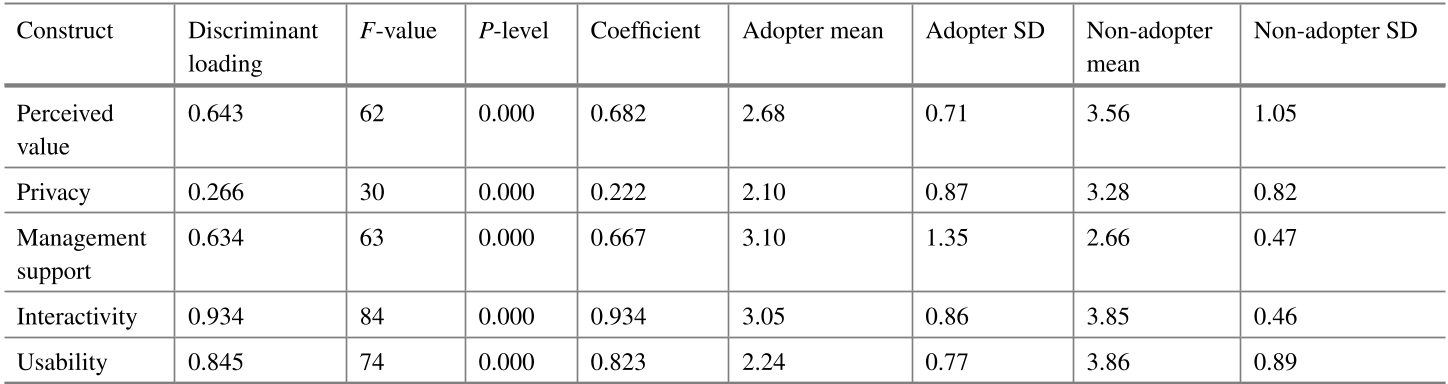 Table 1: Discriminant analysis showing the significant influence of HCI factors.
Critical Insight & Conclusion
The study highlights a critical shift: ESNs are not just "IT tools"; they are social environments.
Takeaway for Managers: You cannot simply "deploy and pray." You must actively reward participation and foster a culture of horizontal communication. Takeaway for Developers: Prioritize interactivity. Features like "shared dropboxes," "message boards," and "break rooms for informal discussion" are not luxuries—they are the bedrock of adoption.
Limitations: The study was limited to two organizations in Egypt. Future research should explore if these findings hold true as ESNs mature from the "initial adoption" phase to "long-term impact" on organizational performance.