
Unboxing the Medical Black-Box: The Synergy of HCI and XAI in Healthcare
A Systematic Review of Human–Computer Interaction and Explainable Artificial Intelligence in Healthcare With Artificial Intelligence Techniques
2021-01-01
Summary
Problem
Method
Results
Takeaways
Abstract
This paper provides a systematic review of the intersection between Human-Computer Interaction (HCI) and Explainable Artificial Intelligence (XAI), specifically within the healthcare sector. It identifies XAI as the critical bridge for creating trustworthy, transparent, and user-centered intelligent medical systems.
## TL;DR
Modern healthcare is at a crossroads where Artificial Intelligence (AI) offers superhuman diagnostic accuracy but suffers from a "Trust Gap." This systematic review identifies **Explainable AI (XAI)** as the mandatory bridge between complex algorithms and Human-Computer Interaction (HCI). By integrating human-centered design into AI workflows, the industry can move from opaque "Black-Box" decisions to transparent, accountable medical partnerships.
## The Motivation: Why Accuracy Isn't Enough
In healthcare, a 99% accurate model is useless if a surgeon cannot understand *why* it recommended a high-risk procedure. The "Black-Box" phenomenon creates several critical pain points:
* **Clinical Mistrust**: Doctors are legally and ethically responsible; they cannot follow "blind" advice.
* **Socio-Relational Ambiguity**: The introduction of AI can confuse the traditional patient-doctor relationship.
* **Legal & Ethical Vulnerability**: Opaque models risk biased outcomes regarding race or gender without easy detection.
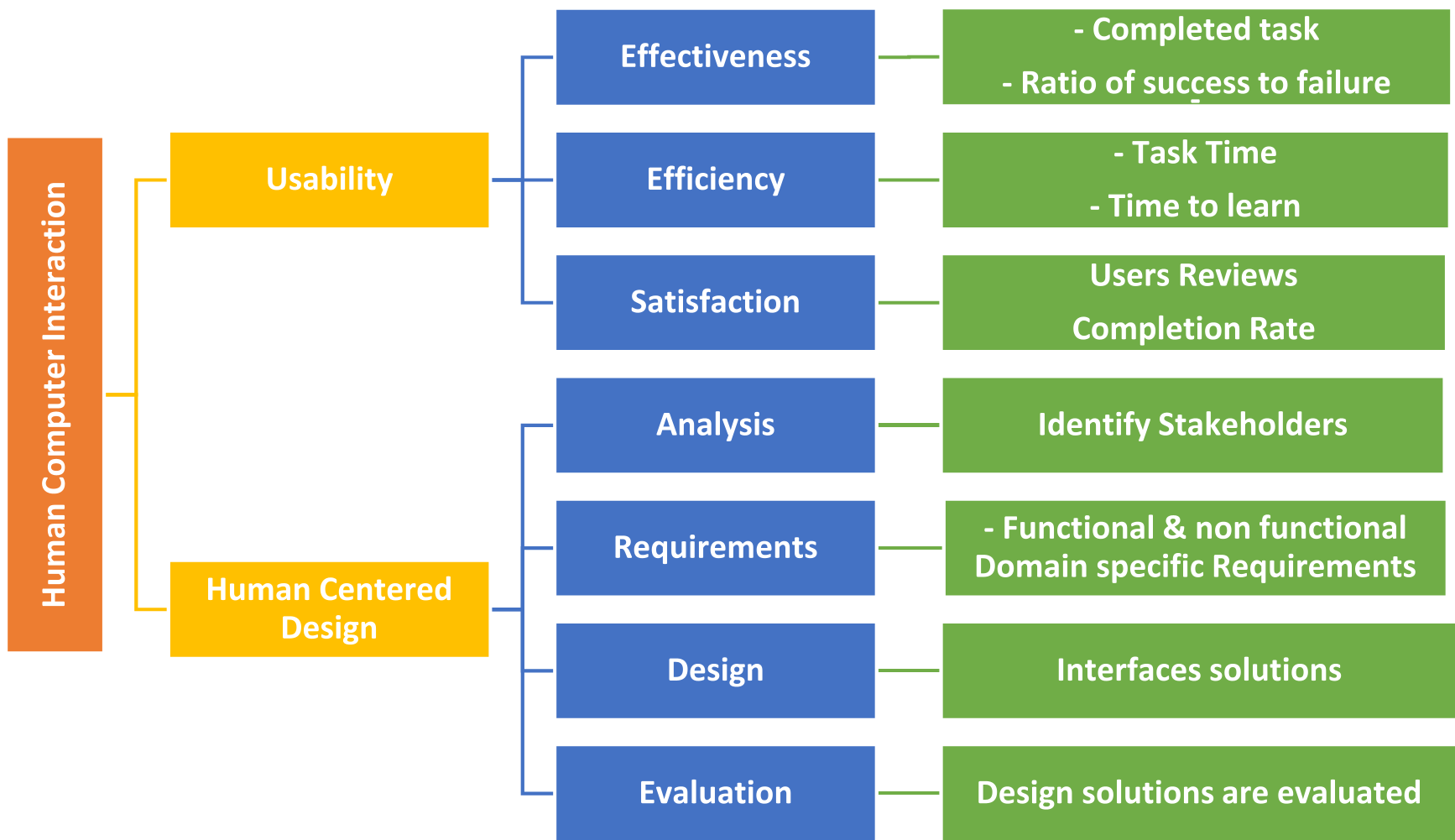
The authors argue that the intersection of HCI and AI is not just a technical upgrade but a paradigm shift toward **Human-Centered AI (HAI)**.
## Methodology: The Three Stages of Explainability
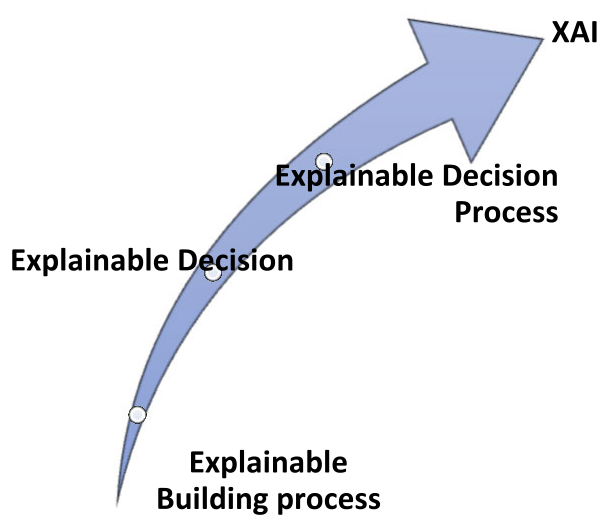
To solve the transparency crisis, the paper suggests that explainability must be baked into the system at three distinct stages:
1. **Explainable Building Process**: Focusing on visualization and debugging tools (like Tensor Flow Playground) for data scientists to ensure the model is robust before deployment.
2. **Explainable Decision**: This is the "User-Facing" stage. Using techniques like **SHAP** or **LIME**, the system provides a rationale for a specific result that matches the user's mental model.
3. **Explainable Decision Process**: Ensuring that the internal logic of the AI is interoperable with other business and medical systems.
## Deep Dive into Explainability Techniques
The paper catalogs eleven core techniques, but two stand out for their relevance to HCI:
* **Visual Explanation**: Utilizing heatmaps or feature highlights to show which part of a CT scan triggered a diagnosis.
* **Surrogate Models**: Training a simpler, interpretable model (like a Decision Tree) to act as a "proxy" for a complex Deep Learning engine.
## Critical Analysis: Healthcare-Specific Challenges
While XAI is promising, the review highlights significant "dysfunctional items" specific to the medical field:
* **The Vocabulary Gap**: There is no industry-wide agreement on what constitutes a "good explanation."
* **Performance vs. Explainability**: Increasing interpretability often requires simplifying the model, which can lead to a slight drop in peak accuracy—a difficult trade-off in life-or-death scenarios.
* **False Causation**: Predictive models might identify correlations that health professionals know are medically irrelevant, leading to "Insufficient Explainability."
## Conclusion & Future Outlook
The review concludes that XAI is still in its infancy (tracing back to DARPA’s 2017 initiative). The next frontier is the **"XAI Twin"**—a system that runs in parallel with Deep Learning to provide real-time optimization and transparency. For healthcare, the takeaway is clear: the most successful AI products of 2026 will not be those that are the "smartest," but those that are the most "talkative" and "interpretable" to the humans who use them.
### Key SOTA Comparisons in the Paper
| Technique | Use Case | Result/Benefit |
| :--- | :--- | :--- |
| **CNN + SHAP** | Nanophotonic Structures | 95% Accuracy with feature contribution insights |
| **Random Forest** | Glass Transition Temp | Best visual explainable performance |
| **Fuzzy Logic (Type 2)** | Banking/Finance | Outperformed Neural Nets in global/local stability |
