
Beyond Usability: Redefining HCI for the Crowdsourcing Economy
11135_Human computer interaction paradigm for business process task crowdsourcing.
This paper introduces a comprehensive Human-Computer Interaction (HCI) paradigm specifically designed for business process crowdsourcing. It expands the traditional HCI spectrum to include Task Interaction Initiation, Task Execution, and Motivation Retainment, achieving faster task completion and higher accuracy in form digitization use cases.
TL;DR
In the world of crowdsourcing, a "good interface" isn't enough to get work done. This paper argues that Human-Computer Interaction (HCI) must be expanded beyond traditional usability to include recruitment, execution, and retention. By applying this paradigm to form digitization, the authors demonstrate how optimizing task posting times and payment granularity can dramatically improve throughput and worker satisfaction.
The Problem: The "Loose Coupling" Challenge
In a standard corporate desktop environment, the user has to use the software provided. In crowdsourcing platforms like Amazon Mechanical Turk (MTurk), the relationship is "loosely coupled." Workers are free agents who can ignore or abandon tasks at will.
The authors identify a critical gap: conventional HCI is oblivious to the fact that it needs to "buy in" a worker’s interest before they even see the interface. Most prior work focused discretely on task design or UI, but failed to provide a cohesive framework that addresses the entire worker lifecycle—from noticing a task to coming back for the next one.
Methodology: The Three-Dimensional Paradigm
The paper proposes a holistic model that broadens the HCI spectrum into three key dimensions:
1. Task Interaction Initiation
This is about visibility and filter-reduction.
- Spatio-Temporal Logic: Where does the task appear in the list? When is it posted?
- Preliminary Specs: Payment, required skills, and requester credibility are the primary "UI elements" that determine whether a worker even clicks.
2. Task Execution Interaction
Once the worker is "in," the focus shifts to cognitive load and accuracy.
- Homogeneity: Grouping similar sub-tasks (e.g., all date fields together) to allow workers to enter a "flow" state.
- Sub-task Rejection: Allowing workers to reject a single illegible field rather than forcing them to dump the entire microtask.
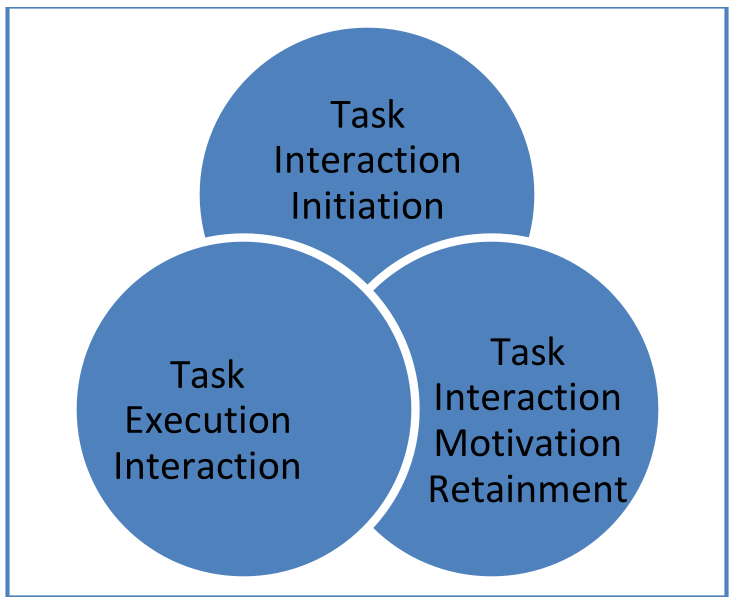 Fig 1: The Three Dimensions of Crowdsourcing HCI.
3. Task Interaction Motivation Retainment
This is the "loyalty program" of crowdsourcing.
- Granular Payment: Instead of binary (Pass/Fail) payments for a whole form, workers are paid for individual correct fields. This prevents frustration and "reputation decline" due to minor errors or bad handwriting.
- Game Elements: Bonus payments for consistent high performance.
Experimental Results: Form Digitization Use Case
The authors validated their paradigm using an insurance claim form digitization task. The results proved that "when" and "how" you present a task is just as important as the UI buttons.
- Temporal Impact: Tasks posted during Indian daytime (where most workers were located) saw significantly faster completion rates.
- Response Speed: 90% of tasks were completed within 5 hours by simply ensuring the task appeared at the top of the "most recent" list via strategic reposting.
- Error Control: By using "gold data" (known fields) interspersed with new data, the system could gauge performance dynamically without over-relying on the platform's coarse reputation scores.
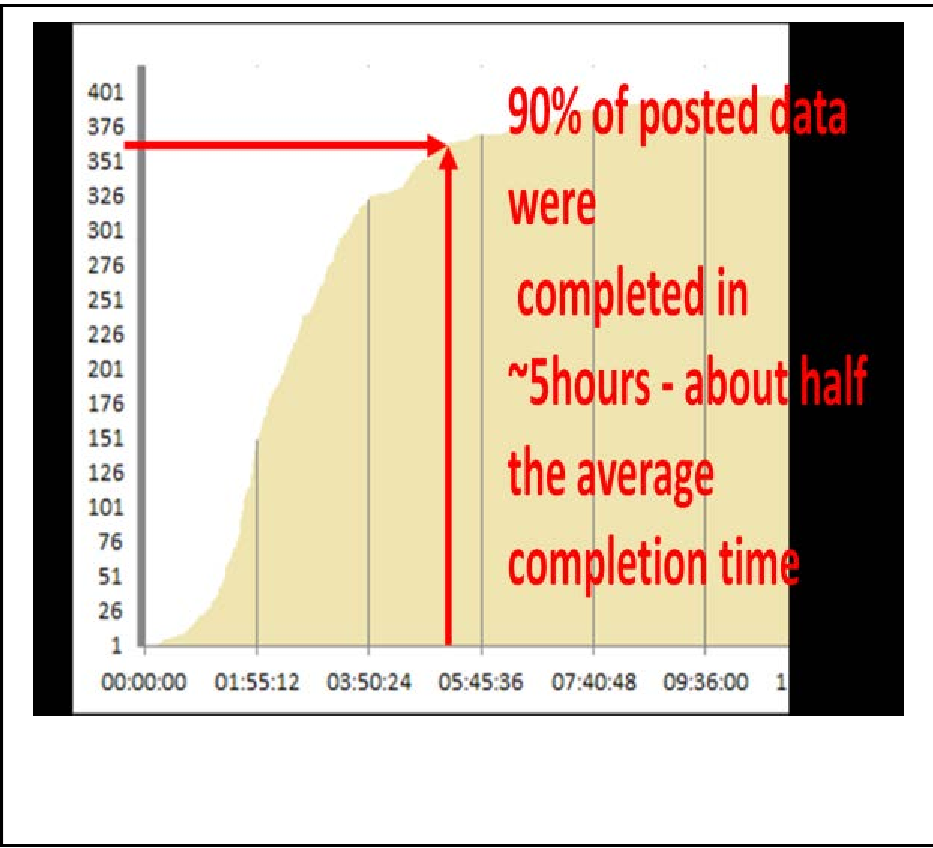 Fig 2: 90% Task Completion within 5 hours using initiation strategies.
Critical Insight: The Shift to Task-Centric HCI
The most striking observation of this paper is that two of the three dimensions—Initiation and Retainment—come from a task management perspective rather than a traditional UI design perspective.
The authors effectively argue that for crowdsourcing, the "Interface" is the entire economic and temporal context of the work. If the payment isn't rational or the timing is off, the most beautiful UI in the world will remain unused.
Conclusion and Future Outlook
This work provides a robust roadmap for enterprises looking to outsource complex business processes. While the 2013 context focused on form digitization, these principles are arguably more relevant today in the era of RLHF (Reinforcement Learning from Human Feedback), where high-quality human data is the bottleneck for AI.
Limitations: The study primarily focuses on simple micro-tasks. Future research should investigate whether these "Motivation Retainment" strategies (like granular pay) scale to creative or highly complex knowledge-work tasks where "correctness" is subjective.