
3D Gabor & IKCCA: Redefining Pose-Invariant Emotion Recognition
Human emotion recognition using real 3D visual features from Gabor library
This paper introduces a robust human emotion recognition framework that utilizes 3D Gabor filters to extract facial features and an Improved Kernel Canonical Correlation Analysis (IKCCA) for classification. Achieving an 85.39% accuracy on the BU_3DFE database, it outperforms traditional 2D methods and offers a fully automated end-to-end pipeline.
TL;DR
Researchers have developed a novel facial emotion recognition system that leverages 3D Gabor filters to extract "real" 3D visual features—combining spatial geometry with facial density. By pairing this with an Improved Kernel Canonical Correlation Analysis (IKCCA), the system achieves a high accuracy of 85.39%, effectively solving the long-standing problem of pose and lighting sensitivity in 2D systems.
Problem & Motivation: The 2D Limitation
Most contemporary facial expression recognition (FER) systems operate in the 2D domain. While effective in controlled environments, they break down in real-world scenarios due to:
- Head Poses: 2D projections lose information when the face is turned.
- Lighting: Shadows can be misinterpreted as facial wrinkles or muscle movements.
- Semantic Gap: 2D pixels often fail to capture the subtle volumetric changes of muscles during complex emotions like "Disgust" or "Fear."
While 3D geometric models (meshes) exist, they often ignore the density/intensity information of the skin and require human experts to manually mark feature points—a bottleneck for real-time AI.
Methodology: The Core Architecture
The proposed method shifts the paradigm from "Surface Analysis" to "Volumetric Analysis" through two main innovations:
1. The 3D Gabor Library
Instead of 2D wavelets, the authors use a 3D Gabor Transform, which is a complex sinusoid wave modulated by a 3D Gaussian window. They designed a library with 64 filters (4 scales × 4 orientations in two directions).
- Why it works: It treats the face as a volume (), allowing the filter to detect intensity changes in 3D space. This provides an Inductive Bias that is naturally invariant to rotation and illumination.
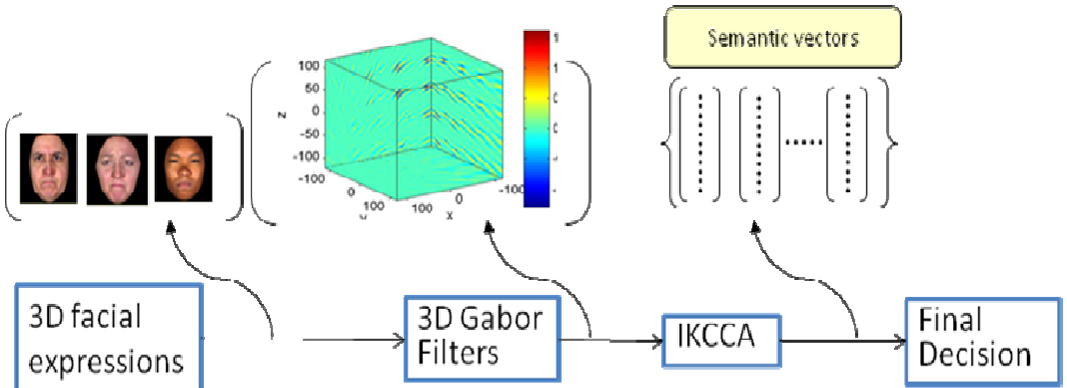 Fig 1: The system workflow from 3D Scan to IKCCA Classification.
2. IKCCA Classifier
Standard KCCA (Kernel Canonical Correlation Analysis) often suffers from "singularity" (mathematical instability when solving for high-dimensional projections). The IKCCA proposed here uses a normalized cross-covariance approach with a positive constant factor () to stabilize the correlation maximization. It maps high-dimensional 3D features into a 7D Semantic Space corresponding to the universal emotions (Neutral, Happiness, Sadness, Anger, Fear, Surprise, Disgust).
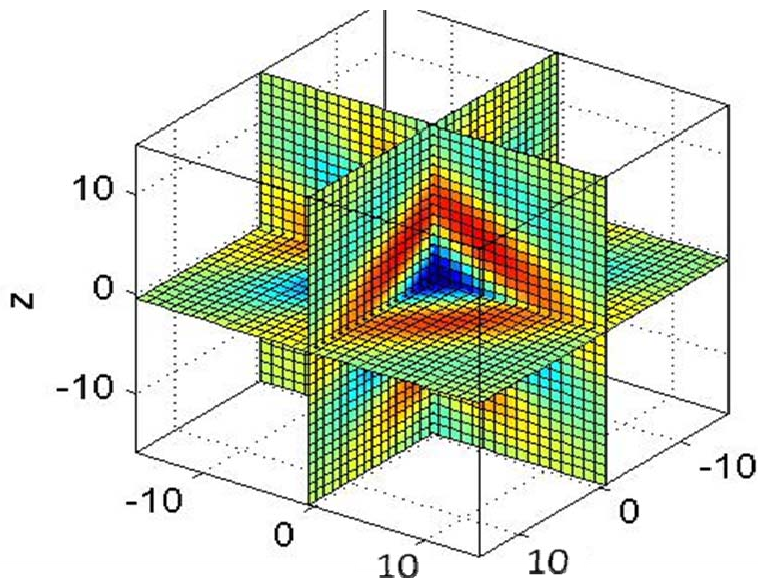 Fig 2: Slice view of a 3D Gabor filter in the spatial domain.
Experiments & Results
The model was validated on the BU_3DFE database, the gold standard for 3D facial research.
Performance Gains
- Vs. 2D Methods: Performance jumped from 49.29% (2D Gabor) to 85.39% (3D Gabor + IKCCA).
- Automation Benefit: While some geometric methods (e.g., Tang & Huang) reached 95% accuracy, they required manual landmark labeling. This proposed method is 100% automated, making it viable for actual product integration.
The Emotion Confusion Matrix
The study revealed that "Happiness" (82.7%) and "Anger" (84.6%) are the easiest to detect because they involve high-intensity muscle contractions. "Fear" and "Sadness" remain the most challenging, often being confused with one another due to similar ocular and mouth patterns in 3D space.
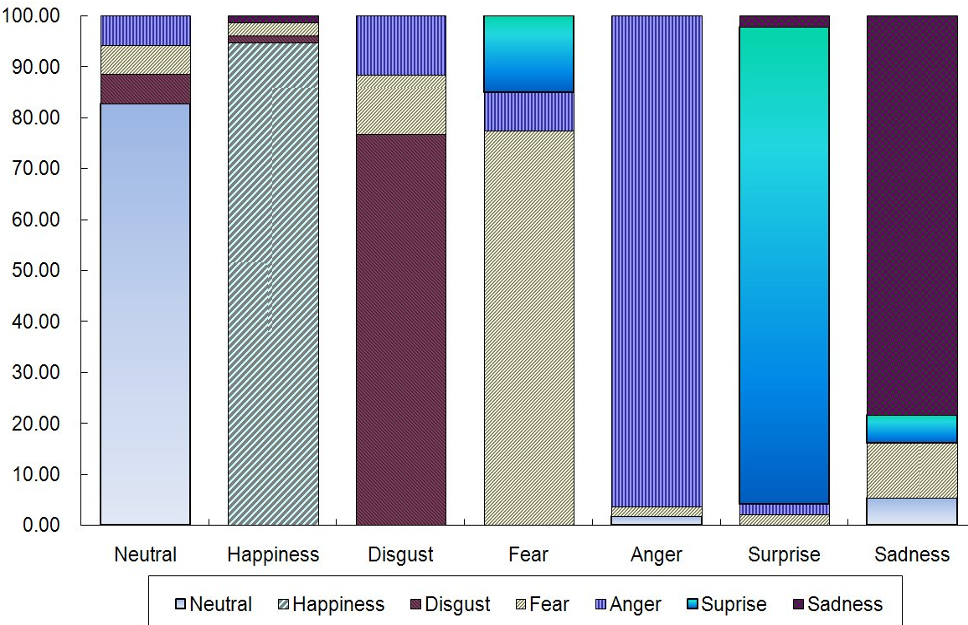 Fig 3: Recognition rates across different experimental strategies.
Critical Analysis & Conclusion
Takeaway
This work proves that 3D Visual Features are superior to 2D features for affective computing. By extracting mean () and standard deviation () from 3D Gabor responses, the authors created a compact but expressive 128-dimensional feature vector that captures the essence of human emotion.
Limitations
- Computational Cost: Convoving 64 3D filters () is heavy. Future work could optimize this via sparse 3D convolutions.
- Data Scarcity: While BU_3DFE is large, 3D data is still harder to collect than 2D video, limiting the "in-the-wild" applicability.
Future Outlook
This technique lays the groundwork for pose-invariant interfaces in VR/AR and intelligent automotive systems, where a driver's head may move frequently while the AI must maintain an accurate emotional assessment.