
Human-Machine Collective Intelligence: Bridging Intuition and Automation for Decision Support
Human-Machine Collective Intelligence Environment for Decision Support: Conceptual and Technological Design
The paper proposes a conceptual and technological framework for a "Human-Machine Collective Intelligence Environment" (H-MCIE) aimed at decision support. It introduces an ontology-based architecture that integrates ad hoc human teams with intelligent software services to navigate complex, dynamic scenarios like emergency response and business management.
TL;DR
This research addresses a fundamental gap in decision sciences: how to combine the rapid processing power of AI with the nuanced experience of human experts. The authors propose a novel environment (H-MCIE) that uses Stigmergy-inspired "Smart Spaces" and Ontological representation to allow humans and software agents to solve high-uncertainty problems (like disasters or complex business shifts) as a single, cohesive team.
Background: Beyond Simple Crowdsourcing
In the current AI landscape, we often see a divide. On one hand, we have automated systems (like ABS or Autopilots) that handle narrow, well-defined tasks. On the other, we have crowdsourcing (like Amazon Mechanical Turk) that processes simple, independent tasks.
The paper argues that complex decision-making falls into the "missing middle." These problems have too many parameters for pure automation and too much interdependency for simple crowdsourcing. The authors suggest that the answer lies in Ad Hoc teams—groups that form quickly, perform specialized roles, and dissolve once the task is done.
The Core Challenge: The "Language" Barrier
The primary friction in human-machine collaboration is communication. Humans communicate in nuances and natural language; machines require structured data.
The authors identify that for a machine to truly "help" a team, it must understand:
- The Context: What are the criteria, alternatives, and constraints of the problem?
- The Process: Who is responsible for what? What is the current stage of the decision-making cycle?
Methodology: The Ontological "Lingua Franca"
The heart of the H-MCIE is a dual-ontology system. Instead of forcing humans to write code, the system uses Digital Nudging and NLP to map human conversations to a structured Decision-Making Ontology.
1. The Interaction Model
Software services are not just "tools" found in a menu; they are Autonomous Participants.
- Dormant State: Services monitor the "Smart Space" via SPARQL queries.
- Active State: When a specific condition is met (e.g., a human mentions a "logistics bottleneck"), the service activates itself, proposes its contribution, and joins the team.
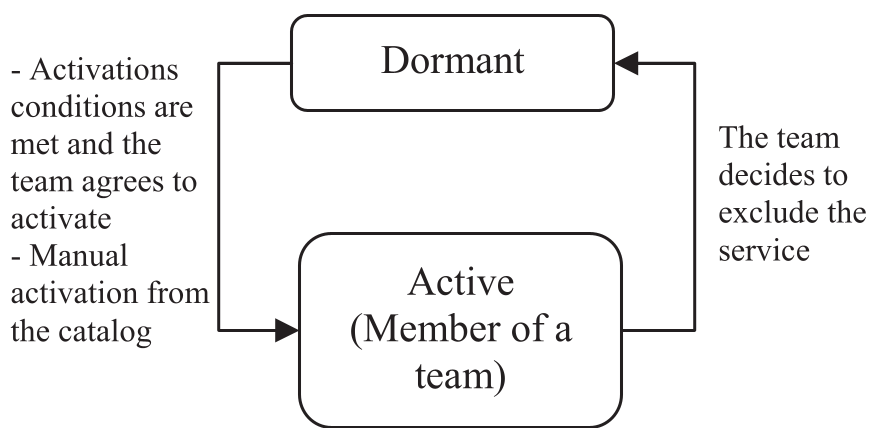 Fig 1: The lifecycle of a software service within a human-machine team.
2. The Technological Stack
The environment is implemented as a specialized web application (similar to a "Semantic Slack"). It includes:
- Discourse Support Components: Bridging structured and unstructured data.
- Team Member Recommender: Using history and specialization to find the right humans.
- Isolated Containers: Ensuring that third-party services can process the problem data without leaking sensitive information to external providers.
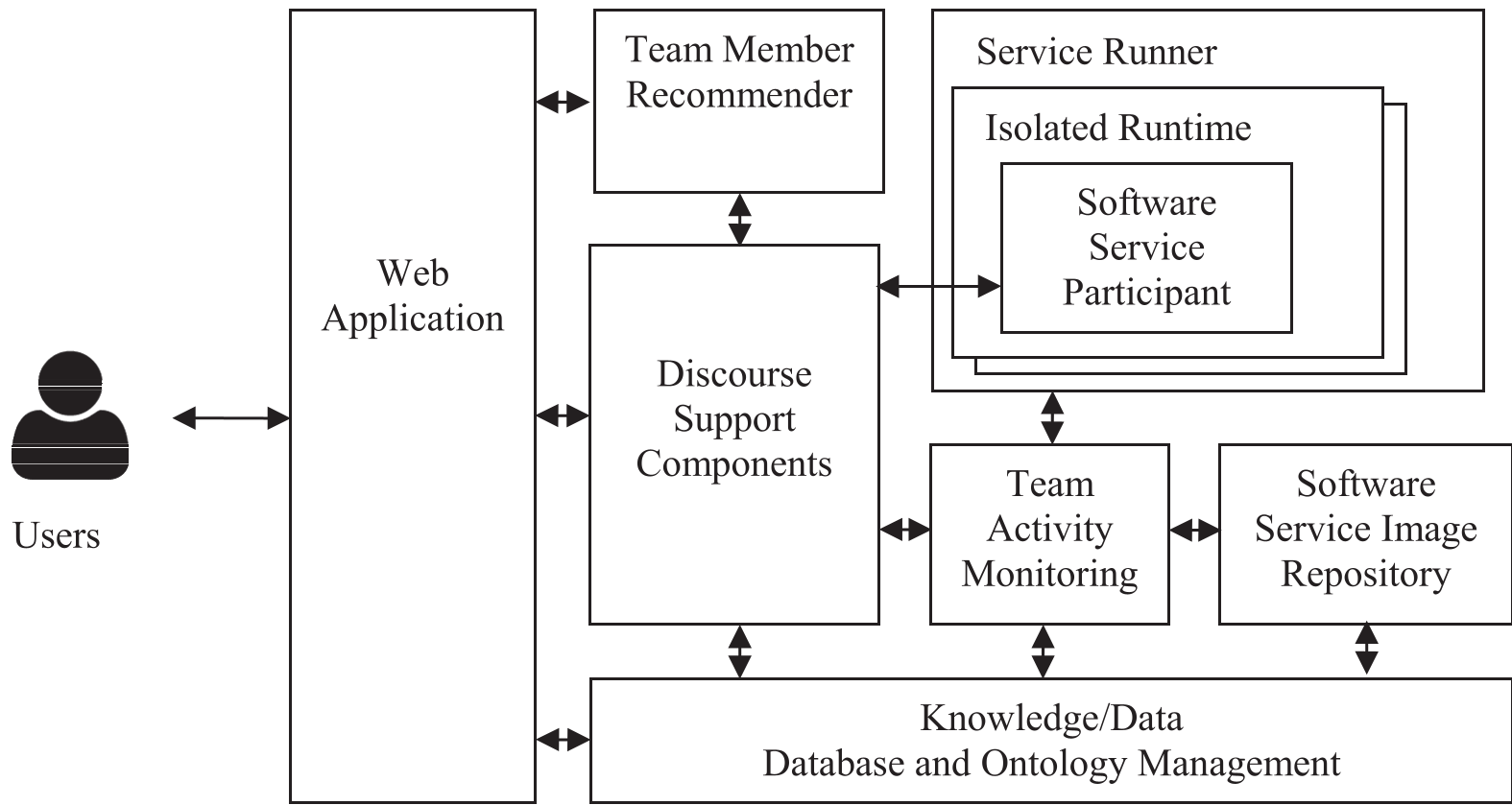 Fig 2: The technological layering from user interface to the backend image repository.
Impact and Results
The paper demonstrates that by organizing information around Simon's Model (Define -> Establish Criteria -> Generate Alternatives), the H-MCIE provides a roadmap for "flash organizations" to become productive immediately.
The methodology differs from previous "Smart Space" technologies by shifting from a physical neighborhood (like a smart room) to a Virtual Decision Space. This allows for global, ad hoc collaboration where software agents contribute Pareto-optimal sets and statistical fact-checking alongside human qualitative analysis.
Critical Insight & Future Outlook
While the paper provides a robust framework, the "nudging" mechanism is the critical pivot point. The success of this system depends on how well human participants can be "persuaded" to provide structured input without it feeling like a chore.
Future Work in this area will likely involve Generative AI acting as the middleman—taking messy Slack-like conversations and automatically populating the Decision-Making Ontology, effectively removing the manual "nudging" burden from the human experts.
Conclusion
The H-MCIE represents a shift from "AI as a tool" to "AI as a teammate." By leveraging shared ontologies and specialized coordination roles, we can finally tackle problems that are too big for any single mind—human or machine—to solve alone.