
Beyond the Lab: Do Robots Permanently Change Our Opinions?
Investigation of a Human’s Opinion Affected by Social Influence of a Group Norm in a Human-Robot Group After a Human-Robot Scenario
This study investigates the long-term social influence of group norms in Human-Robot Interaction (HRI). Using a "quiz of dots" paradigm, the research measures whether group norms formed with social robots (RoBoHoN) persist in influencing human decision-making more than one week after the initial interaction.
TL;DR
Can a robot change your mind—not just for a moment, but for a week or more? This study moves past "in-the-moment" conformity to explore the long-term internalization of group norms established in human-robot groups. Using a subjective "dot quiz," researchers found that while some humans "snap back" to their original views once the robots are gone, others maintain the robotic group norm even after a week of separation.
Background: From Social Pressure to Internalization
Social robotics has long borrowed from classical psychology, specifically the Asch Conformity Experiments, which showed that humans often agree with a group's wrong answer just to fit in. However, the academic community has faced a persistent question: Is this just "social compliance" (going along with the crowd) or "internalization" (actually changing what you believe)?
If robots are to become genuine members of our social fabric—in elderly care, education, or workplaces—we need to know if their influence leaves a lasting footprint on human decision-making.
Methodology: The "Quiz of Dots"
The researchers utilized a subjective task to create an environment where there was no objectively "correct" answer, making participants more susceptible to social influence.
- Stage 1: Group Norm Formation: One human and two RoBoHoN robots answered quizzes identifying how many dots represent the word "Kanari" (Considerably).
- Stage 2: Feedback Loop: Participants saw the robots' answers. The robots were programmed to learn and adapt, eventually forming a consistent "group norm."
- Stage 3: Testing Reluctance: Participants rated their "reluctance" to accept an alternative number of dots.
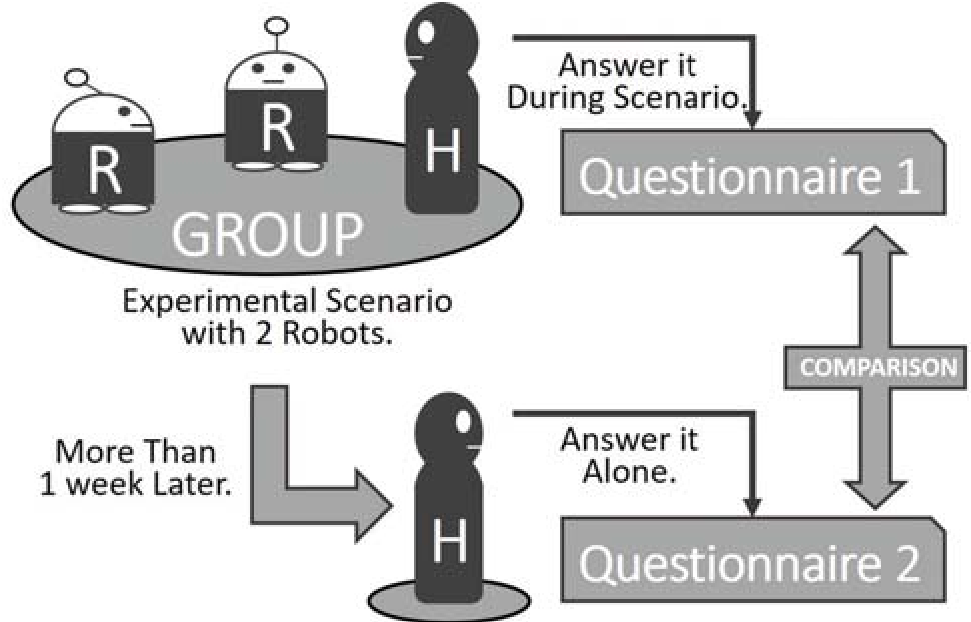 Fig 1: The workflow from group interaction to the one-week follow-up.
The crucial twist: Questionnaire 2 was administered more than one week later, with the human alone. This isolated the human from the robots’ physical "social pressure."
The Core Mechanism: Measuring Internalization
The researchers focused on "reluctance" (teikou-kan). If a participant's reluctance toward a robot's opinion remained high (or low) after a week, it suggested the group interaction had permanently shifted their "internal compass" for that vague concept.
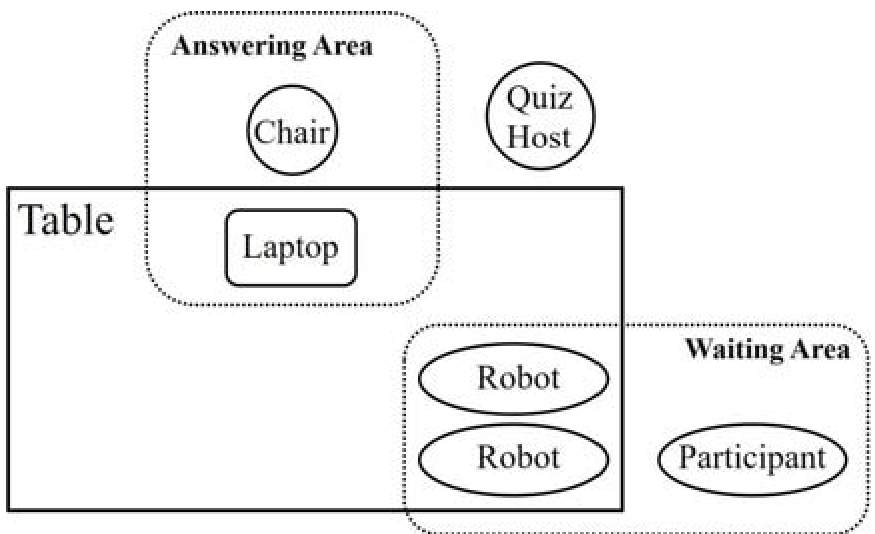 Fig 2: The UI where humans and robots "shared" their dot-quantity opinions.
Key Results: A Divided Human Response
The results revealed a fascinating split in human behavior (Table I and Fig 12):
- The "Temporaries": Participants 4, 5, and 7 showed a massive drop in reluctance (e.g., Participant 4 dropped from 85 to 3). For them, the robot group norm was purely situational. Once the robots were gone, their own internal logic reclaimed dominance.
- The "Internalizers": Participants 1, 2, 3, and 8 stayed consistent or even became more certain of the group norm. For these individuals, the robots successfully "reprogrammed" their subjective criteria for quantity.
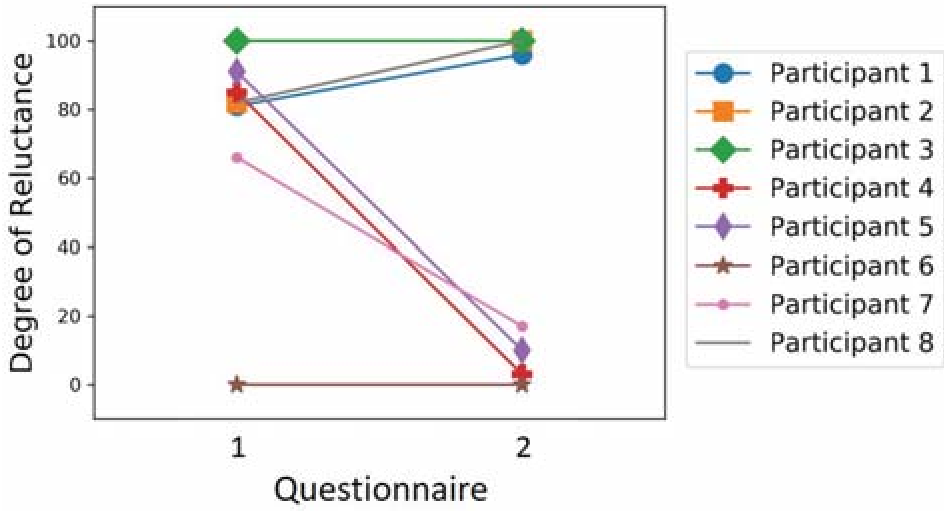 Fig 3: The sharp drop in reluctance for some (blue/green lines) vs. the stability for others.
Critical Analysis & Takeaways
This paper serves as a vital reminder that social influence in HRI is not a monolith.
Deep Insight: The fact that some participants "reverted" suggests that social robots can exert a "field effect"—influencing behavior only while present. However, for the "Internalizers," the robots acted as legitimate social referents, indistinguishable from human peers in their ability to shape long-term cognitive categories.
Limitations: The sample size (N=8) is small, and the task (counting dots) is low-stakes. Future research must investigate if these long-term shifts occur in high-stakes scenarios like ethical decision-making or medical adherence.
Conclusion: As robots enter our homes, we must recognize that for a subset of the population, these machines don't just provide information—they rewrite our subjective norms in ways that last long after the power switch is flipped to "off."