
Robots as Social Catalysts: A Comparative Case Study on Autistic Twins and Siblings
Human–Robot Interaction in Autism Treatment: A Case Study on Three Pairs of Autistic Children as Twins, Siblings, and Classmates
This paper presents a longitudinal case study investigating the impact of robot-assisted group-games on three pairs of autistic children (twins, siblings, and classmates). Utilizing humanoid robots Nao and Alice alongside therapeutic scenarios based on Applied Behavioral Analysis (ABA), the study achieves a universal decrease in autism severity across all participants (measured via GARS) and significant improvements in joint attention and social reciprocity for high-functioning subjects.
TL;DR
This study explores how humanoid robots can facilitate social interaction among children with autism in paired settings. By observing twins, siblings, and classmates over 12 sessions, researchers found that robots help bridge communication gaps, significantly reducing autism severity and improving social skills even for children at vastly different points on the spectrum.
Background: Moving Beyond Individual Therapy
While social robotics has shown promise in autism treatment for two decades, most studies focus on a one-on-one (Robot-Child) paradigm. However, the ultimate goal of autism therapy is to foster human-to-human interaction. This research takes a bold step by using robots as intermediaries in "paired-group" settings. By studying special cases—specifically twins and siblings—the authors could control for genetic and environmental variables that usually cloud clinical data.
The "Why": Why Robots Work where Humans Struggle
Children with ASD often find human social cues (micro-expressions, unpredictable tonality) overwhelming. Robots like Nao (Nima) and Alice (Mina) offer a "simplified" social interface:
- Predictability: Robots provide consistent, repeatable interactions that reduce anxiety.
- Motivation: The "cool factor" of a robot serves as a powerful reinforcement tool.
- Joint Attention: Robots act as a neutral third point of reference, making it easier for children to share attention with a peer or parent.
Methodology: The Paired-Group Protocol
The researchers developed a modular intervention structure focusing on two pillars: Imitation and Joint Attention (JA).
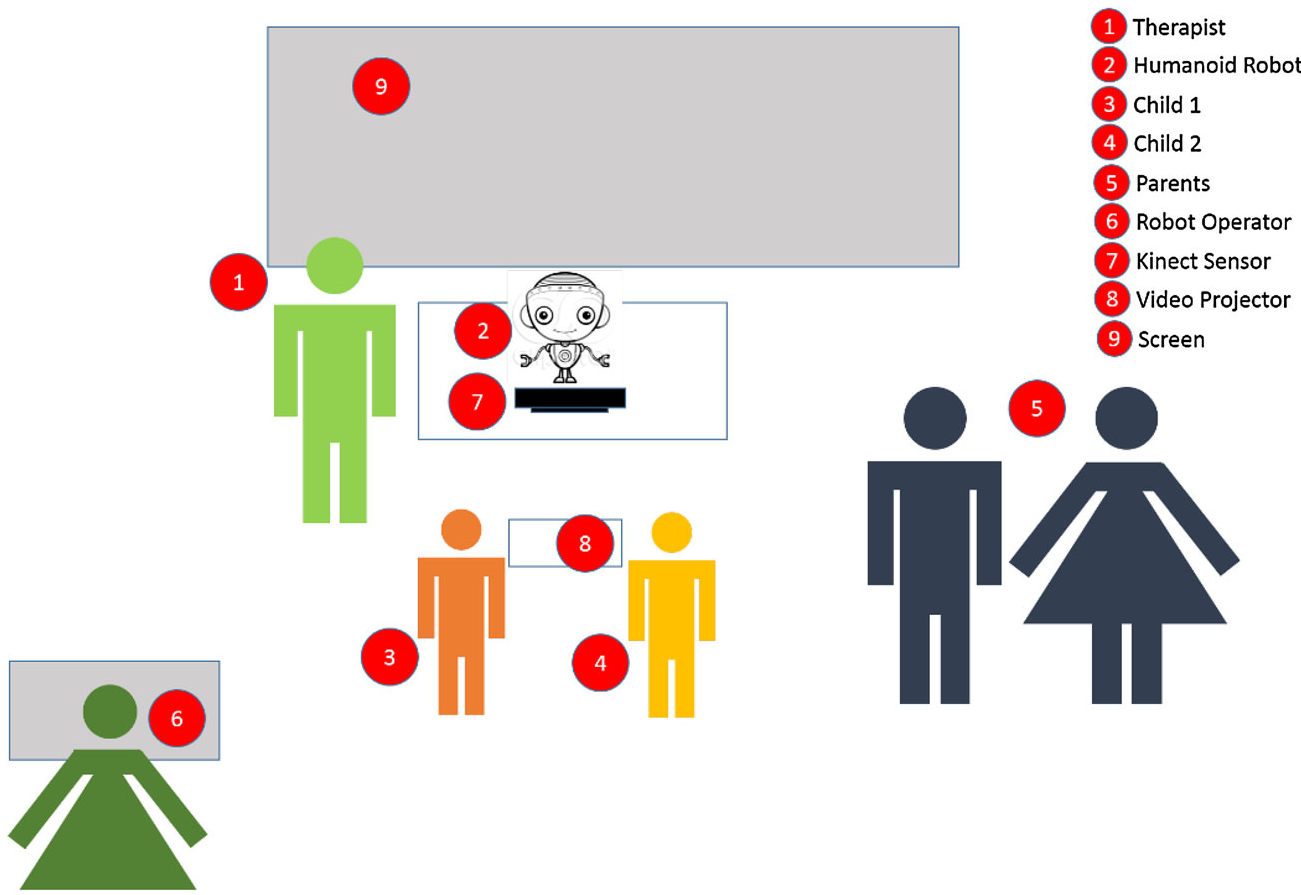 Figure 1: The schematic setup illustrating the Triadic interaction between the robot, the child, and a peer/parent.
The sessions utilized a "Wizard of Oz" approach—where the robot was partially operated by a human to ensure clinical accuracy—and included games like virtual xylophone playing, Kinect-based recognition, and motor imitation.
Key Findings: Large Effect Sizes and Spectrum Diversity
The results were analyzed through three lenses: video coding, standardized questionnaires (GARS/ASSP), and parent interviews.
1. Social Skill Breakthroughs
For the high-functioning children, the improvement in social participation was substantial. The Cohen’s d effect size reached approximately 0.7, suggesting a "large" clinical impact.
2. Gaze and Attention
One of the most critical metrics was "Gaze Percentage toward the Robot." As the sessions progressed, the children's comfort and interest in the robot grew significantly.
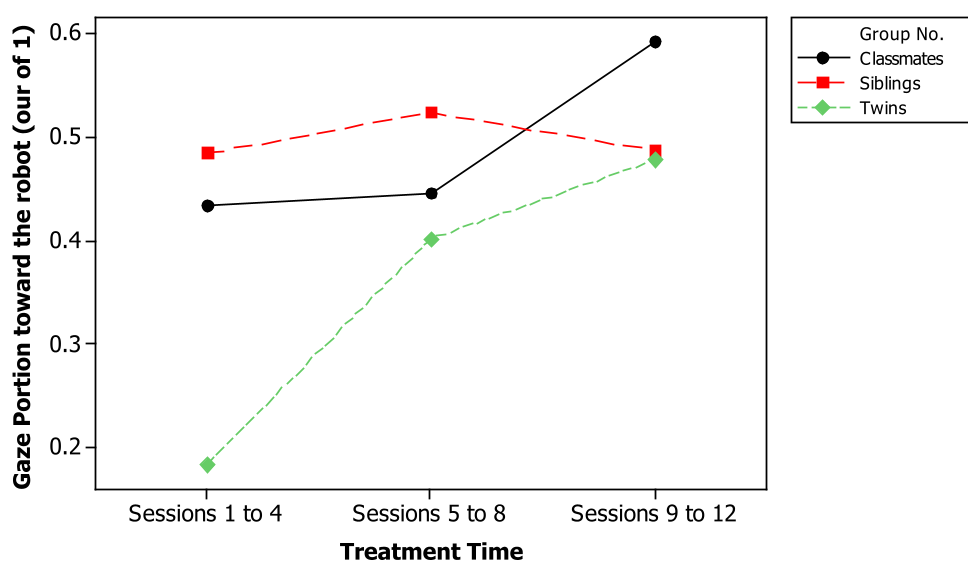 Figure 2: Data showing the significant increase in gaze percentage toward the robot over time, indicating sustained social engagement.
3. The Multi-Level Success of Twins
The study highlights a fascinating contrast in a pair of twins (one high-functioning, one low-functioning). While the high-functioning twin improved in verbal communication, the low-functioning twin showed a rare decrease in stereotyped behaviors and an increase in imitation success (p < 0.05). Notably, the mother reported the twins playing "meaningful turn-taking games" at home for the first time in their lives.
Critical Insight: The Ceiling Effect vs. New Challenges
The study noted a "Ceiling Effect" for some high-functioning siblings in gross motor tasks—they were simply too advanced for the basic games. This highlights the need for adaptive difficulty in future robotic programs. Conversely, for the low-functioning subjects, the robot's presence acted as a "security blanket," reducing aggression and allowing cognitive learning to surface.
Conclusion and Future Outlook
This work confirms that robots are not mere toys but clinical tools capable of reducing the "social avoidance" characteristic of autism.
Key Takeaways for Future Research:
- Paired Grouping: Robots should be used to facilitate peer-to-peer interaction, not just child-machine loops.
- Generalization: The parent interviews proved that skills (like dancing or turn-taking) often "leaked" into the home environment, which is the gold standard of therapy.
- Spectrum Inclusivity: Even low-functioning children benefit from robotic interventions through reduced maladaptive behaviors, provided the tasks are tailored to their motor capabilities.
The future of ASD therapy lies in these "cyber-physical" social circles, where the robot serves as the gateway to a more connected human life.