
Huntalent: Re-engineering Recruitment with Big Data and Weighted Similarity
Huntalent: A candidates recommendation system for automatic recruitment via LinkedIn
This paper introduces Huntalent, a candidate recommendation system designed for automated recruitment using LinkedIn data. It leverages Apache Spark for large-scale data processing and utilizes a weighted Content-Based Filtering approach with Cosine Similarity to match candidates to job offers, significantly outperforming traditional methods in precision and recall.
TL;DR
Huntalent is a scalable recruitment platform that shifts the recommendation focus from "jobs-for-seekers" to "candidates-for-employers." By utilizing Apache Spark to process over 2.5 million LinkedIn profiles and implementing a weighted content-based filtering model, the system achieves a massive 78.6% recall rate, helping recruiters find the "needle in the haystack" of Big Data.
The Recruitment Bottleneck: Data Sifting vs. Decision Making
In the current era of Big Data, the challenge isn't finding information—it's filtering the noise. Recruiters face a "Data Deluge" where manual screening of LinkedIn profiles is no longer feasible.
The authors identify a critical gap: existing recommendation systems are often uni-directional, helping candidates find jobs while leaving recruiters with generic search tools. Furthermore, simple keyword matching (Cosine Similarity) fails because it treats all profile attributes (like location vs. niche technical skills) as equally important, which does not reflect real-world hiring priorities.
Methodology: The Huntalent Architecture
The system is built on a distributed big data processing framework, ensuring that the iterative nature of similarity calculations doesn't lead to prohibitive processing times.
1. Data Pipeline & Preprocessing
Using Spark MLlib, the system ingests JSON-formatted LinkedIn profiles. The preprocessing phase involves:
- Cleaning: Handling missing values (a significant issue, with 7% of profiles missing up to 5 key attributes).
- Tokenization & Stop-word Removal: Converting free-text profiles and job descriptions into clean token vectors.
- Vector Construction: Transforming candidate attributes and job requirements into a binary vector format.
2. The Core Innovation: Weighted Similarity
While traditional systems use a simple Cosine Similarity between a job description and a profile , Huntalent introduces a Multimodal Weighting Paradigm. The final ranking is determined by:
Where recruiters explicitly define the weights (), enabling the system to prioritize, for example, Skills over Location for remote technical roles.
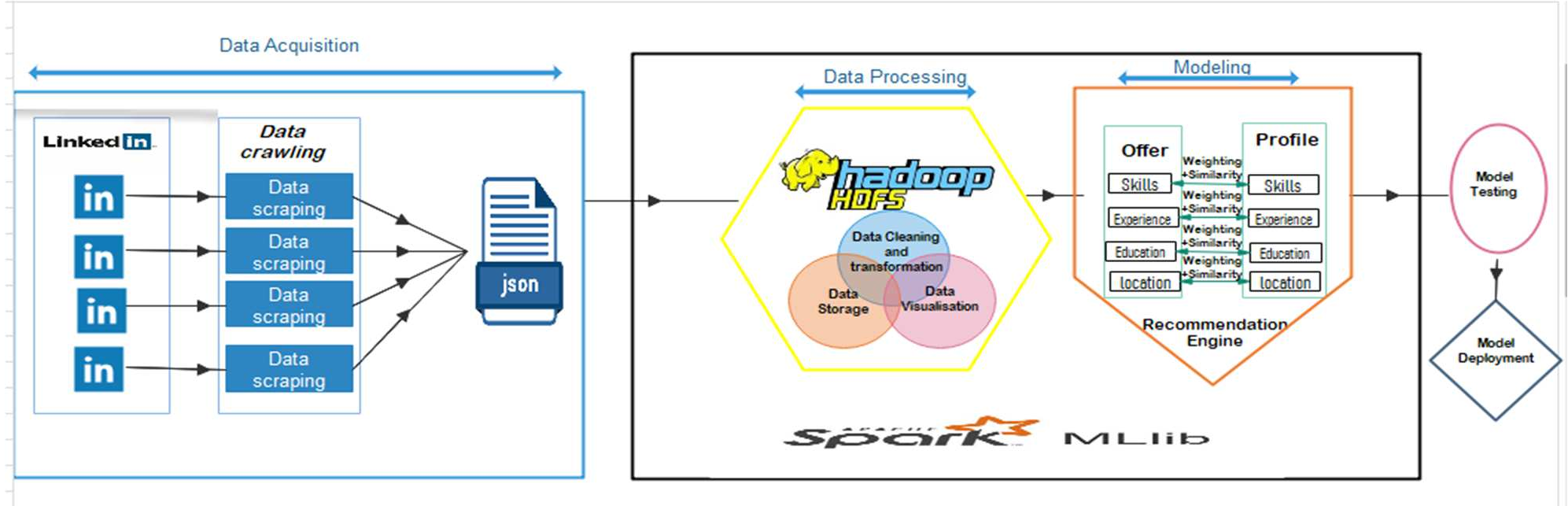 Fig 1: The Huntalent system architecture from data acquisition to model deployment.
Experimental Evidence
The authors benchmarked three similarity measures: Jaccard, Pearson Correlation, and Cosine Similarity.
- Accuracy: Cosine Similarity emerged as the clear winner with a Mean Absolute Error (MAE) of 0.207, compared to Pearson's 0.72.
- Systemic Superiority: When comparing original Cosine Similarity against the Huntalent Weighted Approach, the results were striking:
- Precision: Increased from 0.249 to 0.433.
- Recall: Jumped from 0.337 to 0.786.
This implies that roughly 8 out of 10 recommended candidates are considered high-quality matches when the recruiter's preferences are integrated into the algorithm.
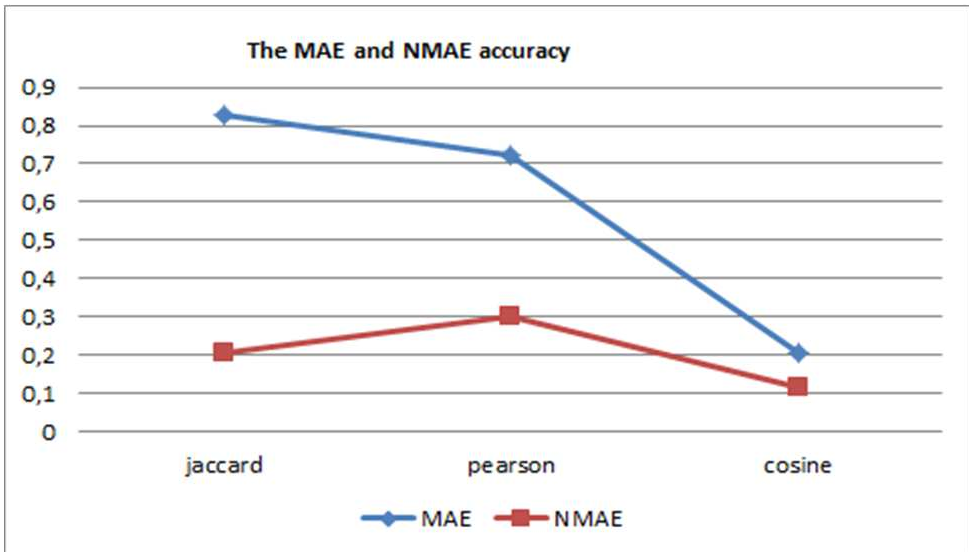 Fig 2: Performance comparison showing the efficiency of Cosine Similarity in reducing error rates.
Critical Analysis & Future Outlook
The strength of Huntalent lies in its scalability (via Spark) and its flexibility (via weighting). However, from a modern technical perspective, there are areas for evolution:
- Semantic Gap: The current model relies on tokenization. Moving toward Dense Embeddings (e.g., Word2Vec or BERT) would help capture synonyms (e.g., "Software Engineer" vs. "Developer").
- Dynamic Weighting: Future iterations could use Machine Learning to learn the weights by observing which candidates a recruiter actually clicks on, rather than requiring manual input.
Conclusion
Huntalent proves that Big Data technologies like Apache Spark are not just for infrastructure; they are essential for enabling complex, iterative HR algorithms. By empowering recruiters to "weight" their requirements, Huntalent transforms a passive search into a proactive recommendation engine, dramatically reducing the "Time-to-Hire."