
HDVAA: Rethinking Influence Maximization through Hybrid Value Accumulation
A Hybrid Algorithm for Influence Maximization of Social Networks
This paper introduces the Hybrid Distribution Value Accumulation Algorithm (HDVAA) to address the Influence Maximization (IM) problem in social networks. By combining a novel "Value Greedy" stage with a traditional "Hill Climbing" stage, the method achieves superior node activation coverage, outperforming standard Greedy and PageRank benchmarks on datasets like Wikipedia and Gnutella.
TL;DR
Influence Maximization (IM) has long been dominated by Greedy algorithms that focus on immediate gains. This paper introduces the Hybrid Distribution Value Accumulation Algorithm (HDVAA), which shifts the focus toward "influence accumulation." By "warming up" regions of a social network before triggering a mass activation, HDVAA outperforms traditional Hill Climbing and PageRank methods, particularly as the number of seed nodes grows.
Background & Positioning
In the world of viral marketing, the IM problem—finding nodes that trigger the widest information spread—is a foundational NP-hard challenge. While Kempe et al. (2003) established the baseline with the Linear Threshold (LT) and Independent Cascade (IC) models, their proposed Greedy solutions often suffer from "myopia." They select nodes that yield the highest instant activation count but ignore nodes that have been almost activated.
The work by Lin et al. sits in the modern lineage of Heuristic-Greedy Hybrid Algorithms, aiming to balance computational efficiency with global dissemination efficacy.
The Core Motivation: The "Blind Spot" of Greedy Selection
Traditional algorithms treat influence as a binary state: a node is either active or inactive. However, in the Linear Threshold Model, every neighbor of an inactive node exerts a numerical influence. If a node's threshold is 0.8 and its active neighbors provide 0.7, the node remains "inactive," yet it is primed for activation.
The authors argue that traditional Greedy methods waste resources by ignoring these "primed" nodes. Their insight is to spend the initial seed budget on nodes that increase the total potential of the network, making it "easier" for subsequent seeds to trigger a cascade.
Methodology: The Two-Stage HDVAA
The algorithm is split into two distinct phases, governed by a coefficient (proportional to the total seeds ):
1. The Value Greedy Stage (Accumulation)
Instead of counting active nodes, the algorithm calculates a value val(u) for each candidate node.
- If a neighbor is not activated,
val(u)increases based on the ratio of influence to the activation threshold. - If a neighbor is activated, the algorithm recursively adds the potential influence of to , but penalizes dense clusters to ensure the seed nodes are distributed across different regions.
2. The Hill Climbing Stage (Exploitation)
Once the network is "pre-heated" with accumulated influence values, the algorithm switches to the traditional Hill Climbing method. At this stage, because many nodes are near their thresholds, each new seed acts as a catalyst for a massive chain reaction.
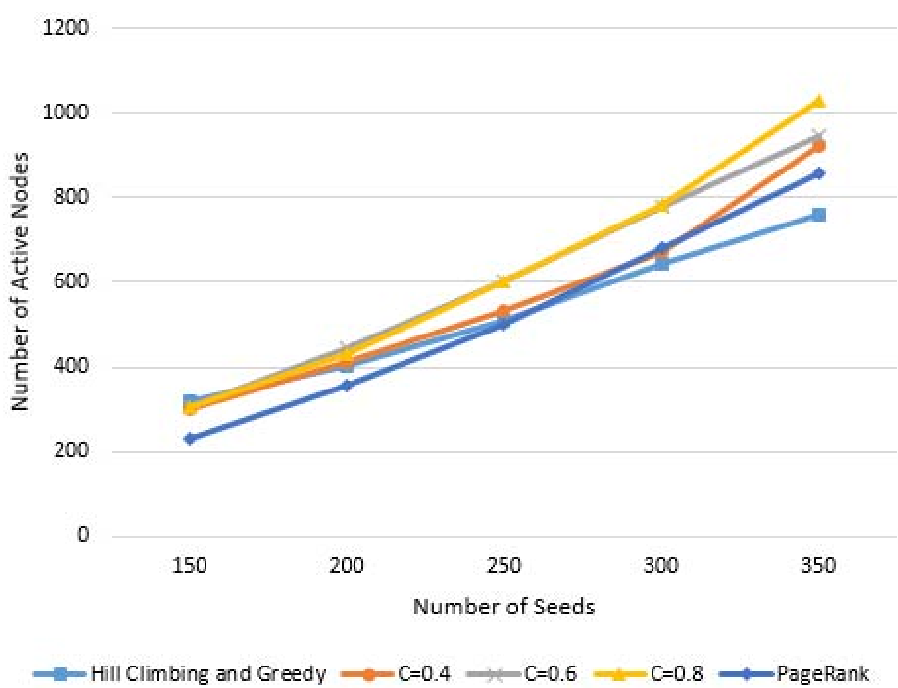 Fig 1: Comparison showing the performance leap on Wikipedia Voting Data.
Experimental Analysis
The researchers tested HDVAA on two distinct graph types:
- Wikipedia Voting Data: A dense network of social interactions.
- Gnutella Network: A peer-to-peer file-sharing topology.
Performance Results
The "Value Accumulation" effect is most visible when the seed set is large. In the Gnutella network, HDVAA (with ) showed a dramatic divergence from the Greedy baseline. While Greedy methods began to plateau (diminishing returns), HDVAA’s "pre-heating" in the first stage allowed it to activate over 1,000 additional nodes.
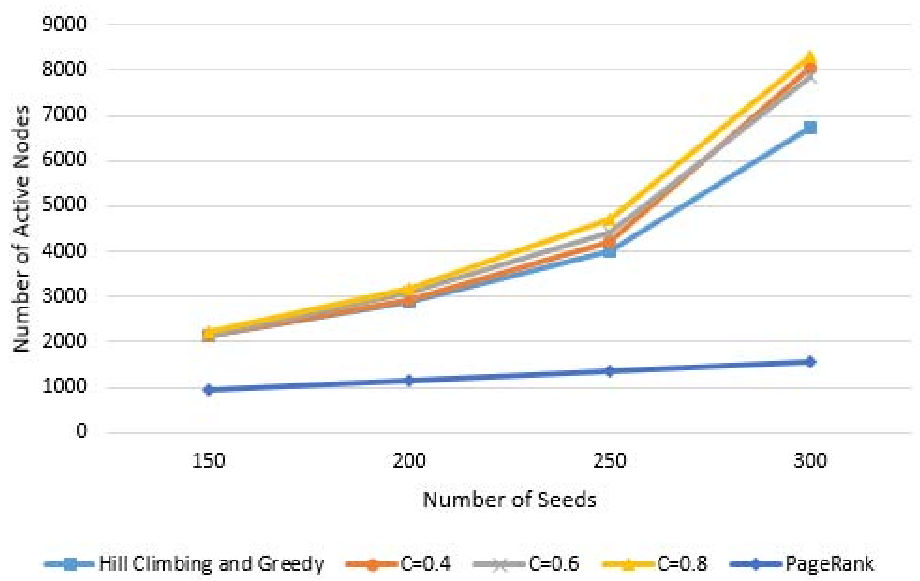 Fig 2: The widening gap between HDVAA and traditional Greedy algorithms as seed count increases.
Critical Insights & Future Outlook
The genius of this approach lies in its Strategic Patience. By not chasing the highest activation count in the first few rounds, the algorithm builds a "foundation" of influence.
Limitations: Despite the performance gains, the Time Complexity remains . The authors acknowledge that while the activation results are SOTA-level for this class of algorithm, the computational burden is still heavy for massive-scale networks (billions of edges).
Future Work: There is a significant opportunity to combine this "Value Accumulation" logic with Community Detection or Sketch-based heuristics (like RIS) to reduce the search space and make the algorithm viable for web-scale social platforms.
Conclusion
Lin et al. have successfully demonstrated that Influence Maximization is not just about who you activate, but how you prepare the rest of the network for activation. This "warm-up" strategy provides a robust template for future viral marketing and information dissemination research.