
Beyond Hashes: A Hybrid Behavior-Based Approach to Malware Family Classification
A Hybrid Approach for Malware Family Classification
This paper introduces a hybrid framework for malware family classification using dynamic analysis and machine learning. By utilizing an enhanced Cuckoo Sandbox and a novel feature set combining API calls with regex-based behavior signatures, the authors achieve a categorization accuracy of 93% across nine major malware families using a Random Forest classifier.
TL;DR
As malware grows in complexity—tripling in volume in recent years—static signatures are falling short. This paper presents a robust framework that moves beyond "what a file looks like" to "how it behaves." By hooking system APIs in a customized sandbox and extracting unique behavioral signatures via regular expressions, the researchers achieved a 93% classification accuracy across 32,475 samples, effectively identifying zero-day variants that evade traditional scanners.
The Core Challenge: The Flaws of Static Analysis
The security industry is in an arms race. Cyber-criminals use obfuscation and polymorphism to change a malware's code signature without altering its malicious intent. Static analysis—examining the code without running it—is easily defeated by these "shape-shifting" tactics.
The authors identify two major gaps in current research:
- Data Fragility: Most studies use tiny datasets or rely on a single Antivirus (AV) vendor for labels, which are often inconsistent.
- Context Loss: Simply knowing which API was called (e.g.,
CreateFile) isn't enough; you need to know what it was called with (the arguments) to understand the malware's true purpose.
Methodology: The Hybrid Feature Engine
The researchers built a sophisticated pipeline that transitions from raw binary execution to high-level intelligence.
1. Enhanced Sandbox & Labeling
They utilized an "enhanced" Cuckoo Sandbox with 11 additional API hooks designed to catch hidden process and thread activities. To fix the "labeling problem," they implemented a majority vote system across all AV vendors on VirusTotal, ensuring the ground truth for their machine learning model was statistically sound.
2. Primary vs. Secondary Features
The "Hybrid" aspect of this paper lies in its feature matrix (287 features total):
- Primary (269 features): Binary flags indicating the presence of specific API calls (File, Registry, Network, etc.).
- Secondary (18 features): These are the "secret sauce." They use Regex (Regular Expressions) to identify patterns in API arguments. For example, the Bifrose family creates mutexes starting with "Bif" followed by random numbers. A hardcoded check would fail, but a regex like
Bif+.catches the variant perfectly.
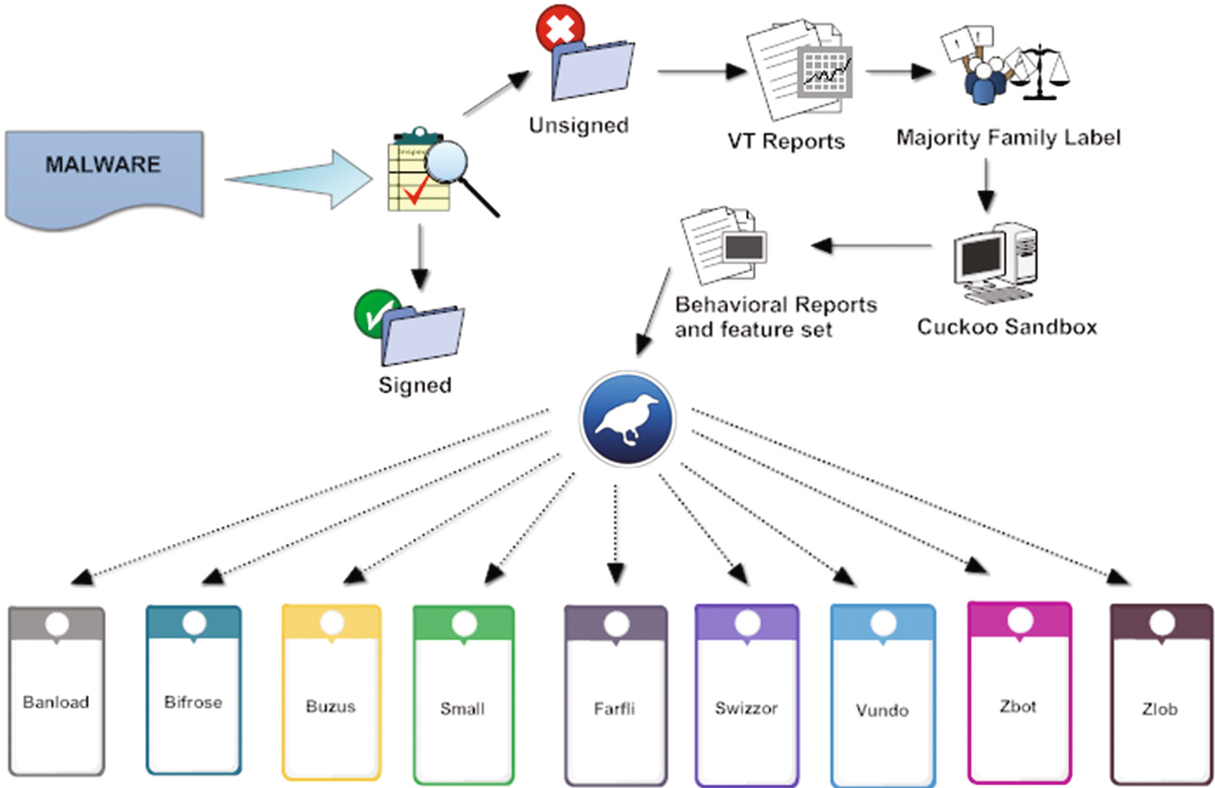 Figure 1: The proposed framework flow from sample collection to classification.
Experimental Battleground
The researchers tested three major algorithms: Naive Bayes, J48 (Decision Tree), and Random Forest.
The Performance Winner
Random Forest emerged as the champion. Why? Because malware behavior is inherently non-linear and features (API calls) are interdependent. Random Forest's ensemble nature handles these interactions better than the high-bias Naive Bayes.
 Table 1: Random Forest consistently outperformed other models in Precision and AUC.
Deep Dive into Family Results
The results revealed a fascinating "functional overlap" between families:
- Swizzor & Vundo (99%+ accuracy): These have highly distinct behaviors (adware injection and browser manipulation) that are easy to fingerprint.
- Small (86% accuracy): This family is a "generalist"—it acts as a downloader for many other threats, leading to feature overlap and occasional misclassification.
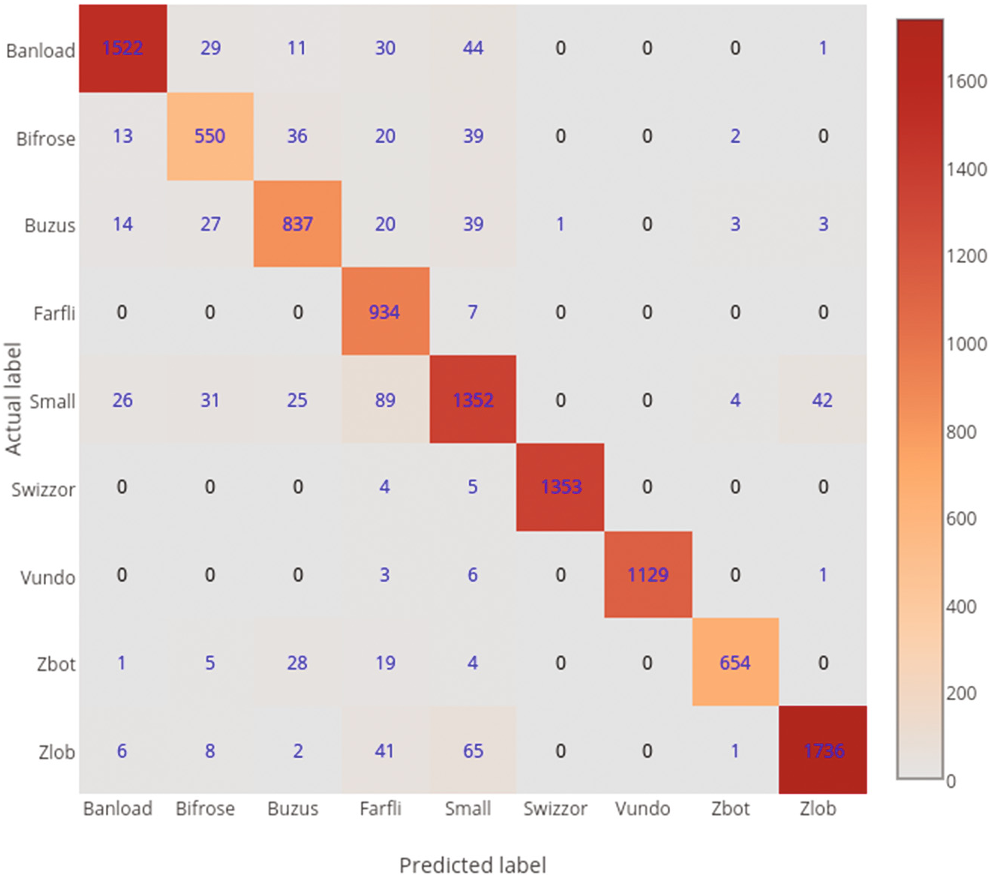 Figure 2: Confusion matrix showing high-confidence predictions for most families.
Critical Insight & Future Outlook
The heavy lifting in this study isn't just the machine learning—it's the feature engineering. By using regex to capture "trademark behaviors" in API arguments, the authors provide a template for building classifiers that are resilient to minor code changes.
Limitations: The system still faces hurdles with "environment-aware" malware (like the Hupigon family), which can detect a VM and stop its activity to avoid analysis.
Conclusion: This hybrid approach proves that combining broad API tracking with specific behavioral signatures is the most viable path forward for automated malware triage in SOC (Security Operations Center) environments.