
Hybrid Community Detection: Bridging Structure and Homophily in Multilayer Networks
Hybrid community detection approach in multilayer social network: Scientific collaboration recommendation case study
The paper introduces a hybrid community detection approach for multilayer social networks, specifically targeting scientific collaboration recommendation. It proposes a Multiplex Information Graph (MIG) model and a combined optimization metric solved via Particle Swarm Optimization (PSO), achieving superior performance in balancing network structure and participant homophily.
TL;DR
In real-world social networks, we aren't just connected by one type of link; we share co-authorships, friendships, and professional ties simultaneously. This paper presents a Hybrid Community Detection approach that doesn't just look at "who knows whom" across multiple layers, but also "who is like whom." By combining structure and similarity into a single optimization problem, the authors provide a more robust way to recommend scientific collaborators.
Context & Motivation
Most social network analysis treats the world as a monoplex—a single-layer graph. If you want to analyze a laboratory, you might look only at co-publications. But what about their shared interests or their professional connections on LinkedIn?
The authors identify two fatal flaws in existing SOTA:
- Loss of Information: Aggregating multiple layers into one (Network Aggregation) flattens the nuances of different relationship types.
- Structural Bias: Most multilayer algorithms only care about the density of edges, ignoring the homophily—the tendency of individuals to associate with similar others.
Methodology: The Multiplex Information Graph (MIG)
The core innovation lies in the Multiplex Information Graph (MIG).
1. The Model
The authors represent the network as a set of layers , where each layer is an "Information Graph." This means nodes aren't just IDs; they carry weights representing their profile similarity to a "problem holder" (the person seeking a collaborator).
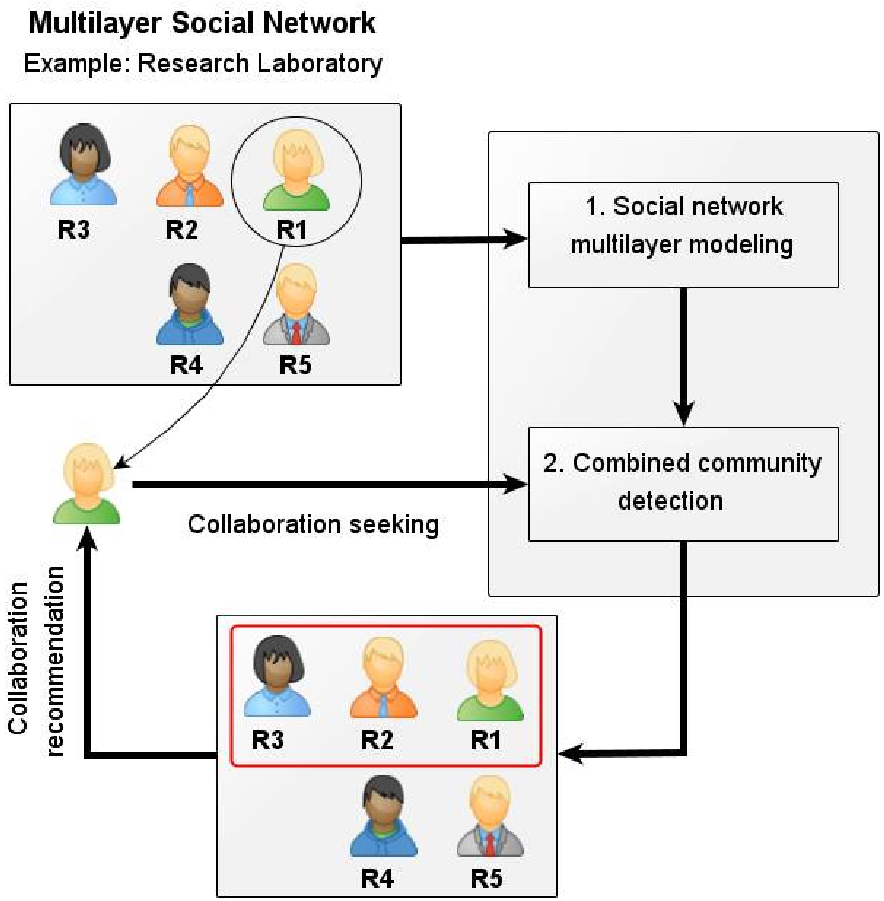 Fig 4: The workflow from multilayer modeling to recommendation.
2. The Hybrid Metric ()
To find the best community, the authors propose a dual-objective function:
- (Multiplex Modularity): Ensures the community is structurally dense across all layers.
- (Inertia): Ensures the community members are "close" to each other in terms of their attributes/profiles.
To solve this NP-hard problem, they employ Particle Swarm Optimization (PSO), which mimics the social behavior of birds to find the global optimum faster than traditional genetic algorithms.
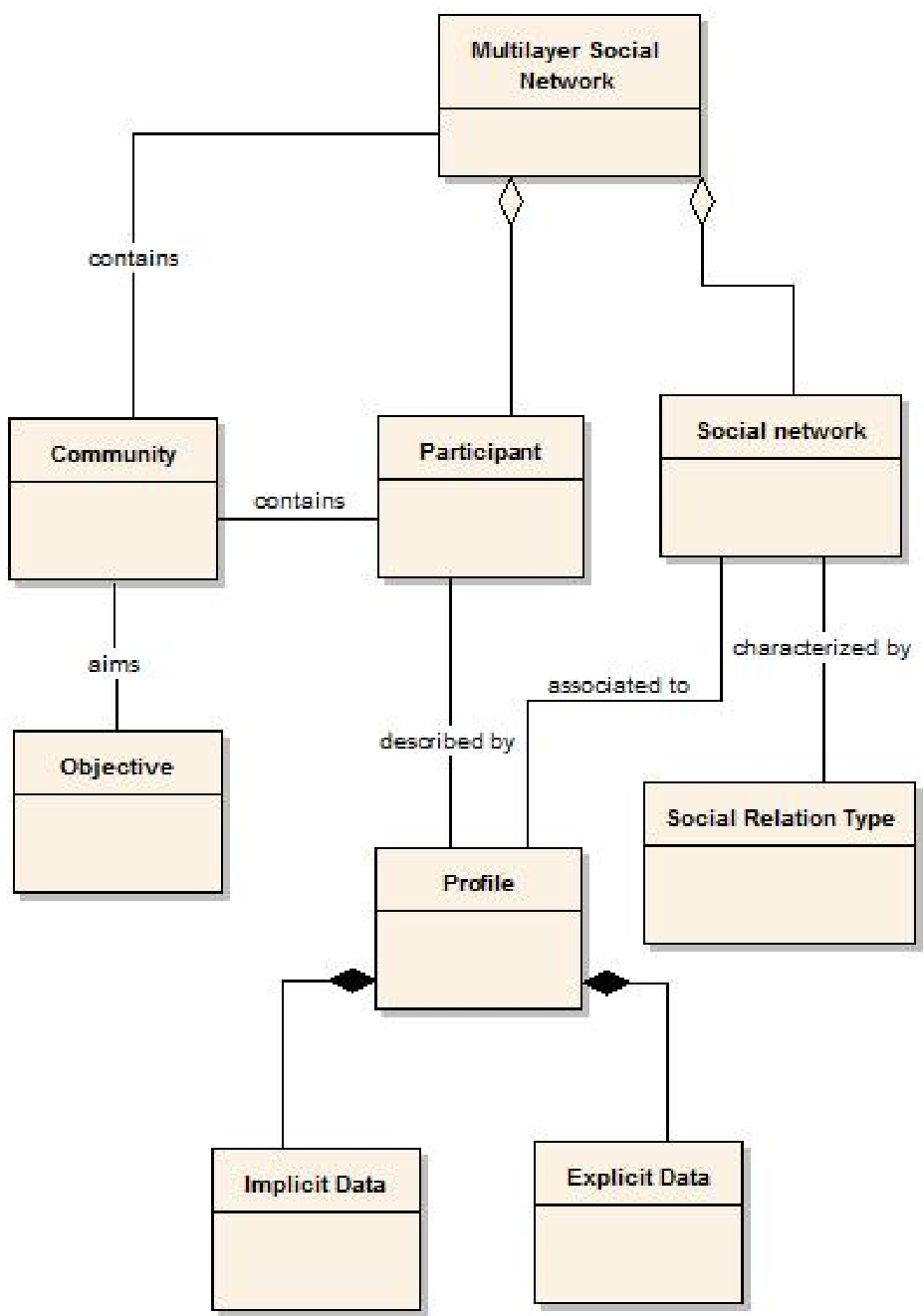 Fig 6: Abstract representation of the Multiplex Information Graph (MIG).
Experiments & Results
The authors tested their approach on the RIADI laboratory dataset, scaling from 155 nodes to 3,000 nodes using the Barabási-Albert model.
Performance Highlights:
- Efficiency: In large-scale scenarios (D6 dataset), the proposed hybrid method converged in roughly 4.6 minutes, whereas the Generalized-modularity optimization took a staggering 195 minutes.
- Quality: The hybrid approach maintained high Inertia (around 0.67–0.96), meaning the detected communities were much more relevant to the user's specific profile/problem than those found by the Louvain algorithm (which dropped to 0.04 in large networks).
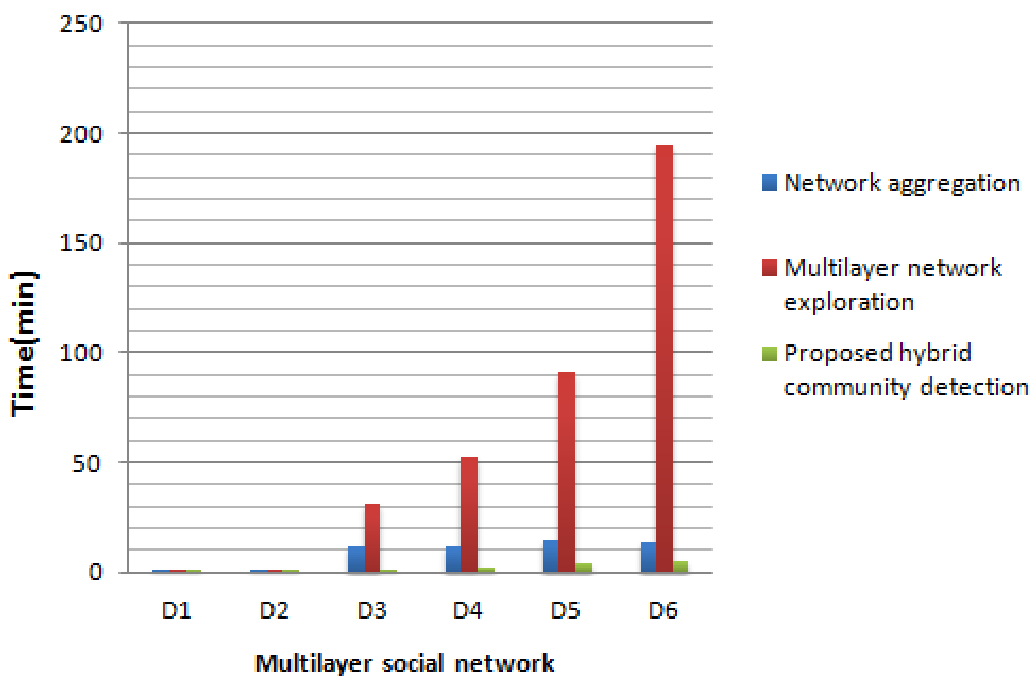 Fig 8: Comparison of execution times showing the superior scalability of the PSO-based hybrid approach.
Critical Insight & Conclusion
This work demonstrates that for professional recommendations, topology is not enough. A group of people might be highly connected (high modularity), but if their skills don't match the task at hand (low inertia), the community is useless for collaboration.
Limitations: The current model uses static weights for and . In future iterations, dynamically learning the importance of different layers (e.g., weighing "Professional" links higher than "Friendship" links for work tasks) could further refine the results.
Takeaway: By integrating PSO with a multi-objective quality metric, we can detect communities that are both structurally sound and semantically coherent, even as the network scales to thousands of nodes.