
Predicting Talent Flight: A Hybrid SOM-ANN Approach to Tech Turnover
Hybrid Self-Organizing Map and Neural Network Clustering Analysis for Technology Professionals Turnover Rate Forecasting
This paper proposes a hybrid data mining approach combining Self-Organizing Maps (SOM) and Artificial Neural Networks (ANN) to forecast turnover trends among technology professionals. By clustering multidimensional employee data, the model achieves a high classification accuracy of 92.7% in identifying high-risk turnover groups.
TL;DR
Retaining key talent is a strategic imperative for technology firms. This research introduces a hybrid computational intelligence model that combines Self-Organizing Maps (SOM) and Artificial Neural Networks (ANN) to predict turnover trends. By analyzing 28 psychological and demographic variables, the model achieves a staggering 92.7% accuracy, revealing that leadership quality and supervisor loyalty—not just salary—are the primary drivers of retention.
Problem & Motivation: The "Truth Gap" in HR
Predicting why employees leave is notoriously difficult. Traditional HR methods rely on exit surveys, where departing employees often provide "polite" rather than "true" reasons. Mathematically, turnover is a multi-causal phenomenon. Previous attempts using Logistic Regression or simple Back-propagation Networks (BPN) struggled with the noise and non-linearity of human behavior data. The authors recognized that to predict turnover effectively, one must first group employees by latent characteristics before attempting to classify their flight risk.
Methodology: The Two-Phase Hybrid Engine
The core innovation lies in the serial combination of two distinct neural architectures to overcome the limitations of single-model approaches.
Phase 1: SOM Unsupervised Clustering
The Self-Organizing Map (SOM) acts as the "feature organizer." It takes the high-dimensional input (28 variables covering anxiety, salary, marital status, leadership, etc.) and maps them onto a lower-dimensional grid. This phase identifies the natural "clusters" of employees without needing pre-labeled data.
Phase 2: ANN Refinement and Prediction
Once the SOM establishes the cluster boundaries (e.g., High Trend, Medium Trend, etc.), an ANN (Back-propagation Network) is trained to classify new data into these clusters. This hybrid approach ensures the model doesn't get stuck in the local optima that often plague standalone ANN models.
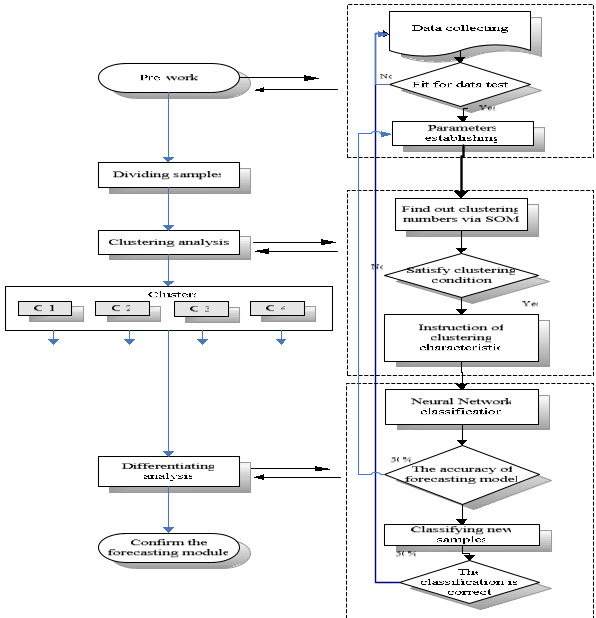
Figure 1: The systematic workflow from data preprocessing to hybrid clustering.
Experimental Results: Precision Matters
The study analyzed 421 valid samples from Taiwan's tech sector. The model was tested against standard benchmarks to prove its superiority.
Performance Benchmarking
- SOM+ANN Hybrid: 92.7% Accuracy
- Standalone BPN: 87.2% Accuracy
- K-means Clustering: 63.5% Accuracy
The significant jump from K-means to SOM+ANN demonstrates that linear clustering is insufficient for human resource data.
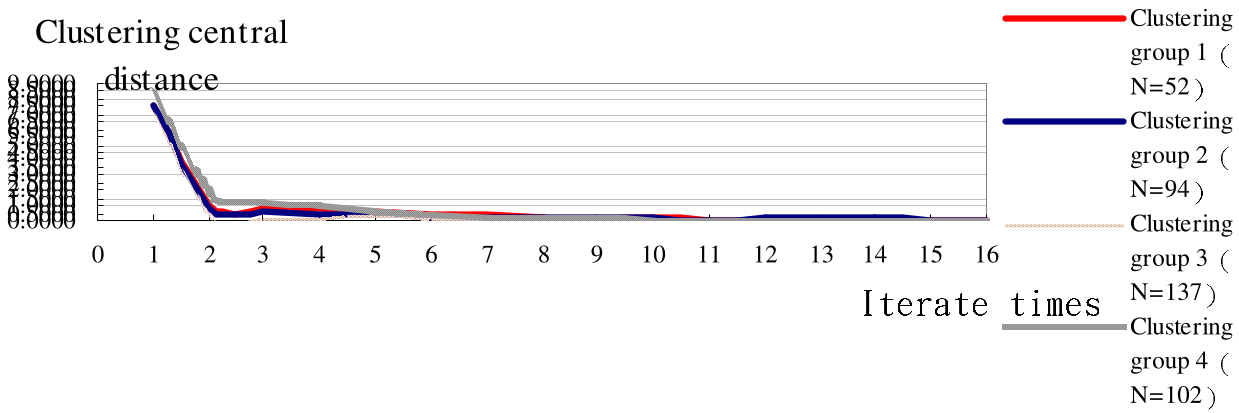
Figure 2: The learning curves show rapid convergence (by iteration 16) for the 4-group clustering model.
Key Insight: The Loyalty Shift
A fascinating outcome of this study is the technical proof of a cultural nuance: Supervisor Commitment is a stronger predictor of turnover than Organizational Commitment. In the tech sector, employees quit managers, not companies. Identifying "non-identification with leadership" early through this model allows for intervention before the actual resignation occurs.
Critical Analysis & Conclusion
Takeaway
The hybrid SOM-ANN model provides a robust framework for HR departments to move from descriptive analytics (what happened?) to prescriptive analytics (who will leave and why?).
Limitations & Future Work
While highly accurate, the model is based on a specific snapshot of the Taiwanese tech industry (2009). The authors suggest that future iterations should incorporate Fuzzy Theory and Multiple Criteria Decision Making (MCDM) to handle the inherent ambiguity in human emotions even more effectively. Additionally, the inclusion of "trap" questions in surveys could further purify the data quality before it hits the neural network.
By bridging the gap between computational intelligence and organizational behavior, this paper provides a blueprint for the "Smart HR" of the future.