
Hybrid Simulation: Bridging the Gap Between Demography and Healthcare Demand
Modelling Population Dynamics Using a Hybrid Simulation Approach: Application to Healthcare
This paper presents a hybrid simulation approach combining System Dynamics (SD) and Discrete Event Simulation (DES) to model population dynamics and forecast healthcare demand in the Wrocław Region. The core method integrates a continuous SD aging chain with a discrete time-step control engine to facilitate long-term health policy planning through 2035.
TL;DR
Predicting healthcare needs decades into the future requires more than just raw census data; it requires understanding how a fluctuating population translates into individual doctor visits. This paper introduces a hybrid simulation framework that merges the holistic, continuous flow of System Dynamics (SD) with the granular, event-driven nature of Discrete Event Simulation (DES). By calibrating demographic "aging chains" using evolutionary optimization, the authors provide a high-precision tool for regional health policy planning.
Problem & Motivation: The Blending Problem
Standard demographic models used in health policy often struggle with the "Blending Problem." When representing a population as a series of age cohorts (e.g., 0-4 years, 5-19 years), the continuous drainage of these cohorts due to deaths and migration often results in a "bluring" effect. If the maturation rates aren't perfectly calibrated, the model fails to match historical reality, leading to skewed forecasts.
The authors argue that health policy makers need a "multi-scale" view:
- Macro-scale: How is the total population aging over 20 years? (SD territory)
- Micro-scale: How many 65-year-old females will arrive at a specific clinic next Monday? (DES territory)
Methodology: The Hybrid Engine
The researchers developed their model in the ExtendSim environment, utilizing a unique dual-library construct.
1. The SD Aging Chain
The population is divided into ten state variables (stocks) representing age-gender cohorts. Flows like births, deaths, and migration move individuals between these stocks. Unlike traditional continuous SD, this model uses a discrete time-step mechanism. This allows the system to "sample" the population and assign individual attributes (age, sex, health status) to discrete "objects" (patients).
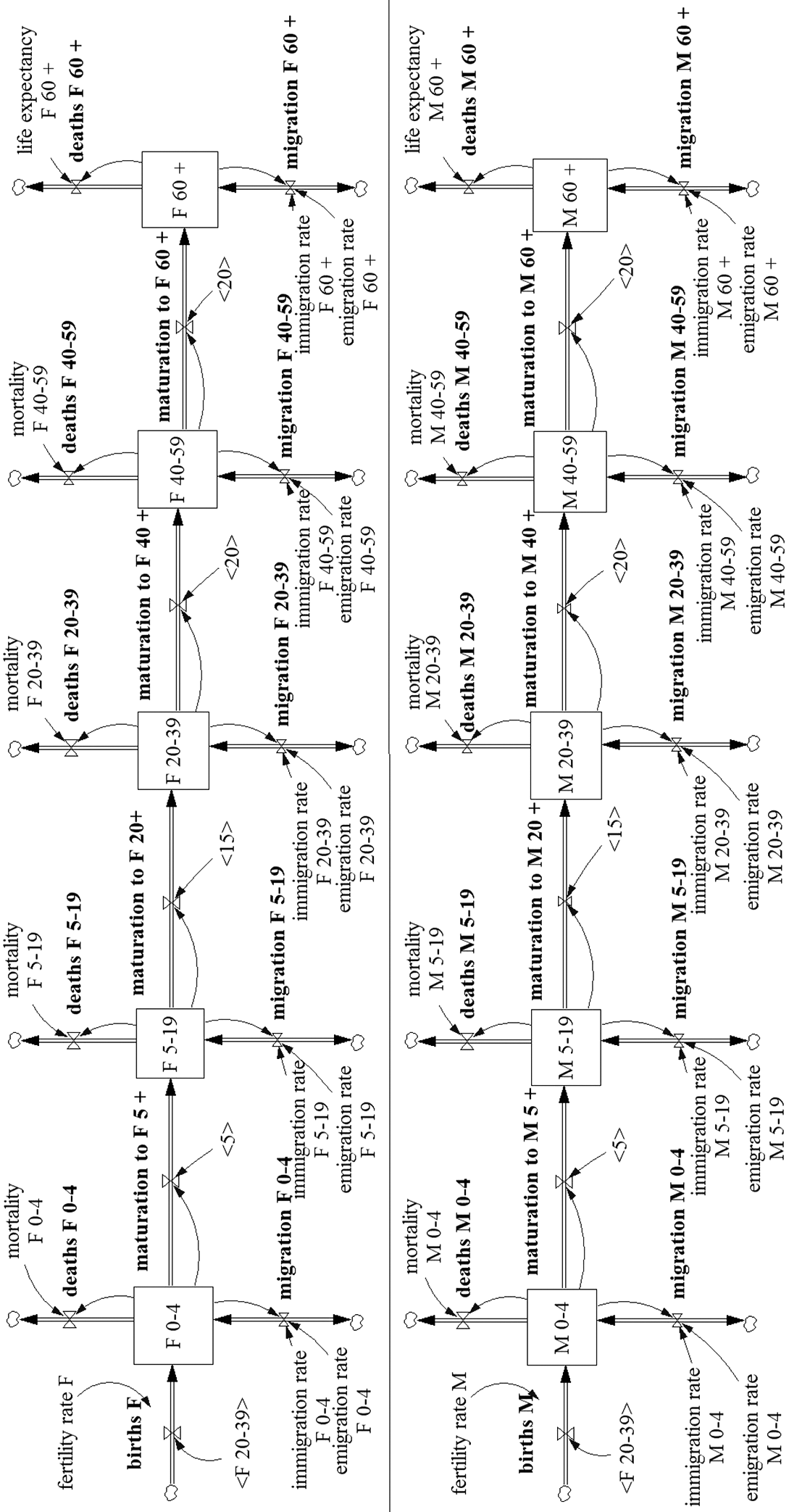 Figure 1: The SD structure showing the flow from birth through various age cohorts to 60+.
2. Optimization and Calibration
To combat the blending problem, the authors applied an Evolutionary Optimization Algorithm. Instead of using theoretical maturation times (e.g., exactly 5 years for a 0-4 age group), they allowed the optimizer to search for "effective" maturation times that minimized the error against historical Polish Central Statistical Office (CSO) data.
Experiments & Results: Precision Through Calibration
The impact of the optimization was dramatic. Before calibration, the model had an error rate of nearly 6%. After optimization, the Mean Absolute Percentage Error (MAPE) dropped to under 2% for the male population and a remarkable 0.43% for the female population.
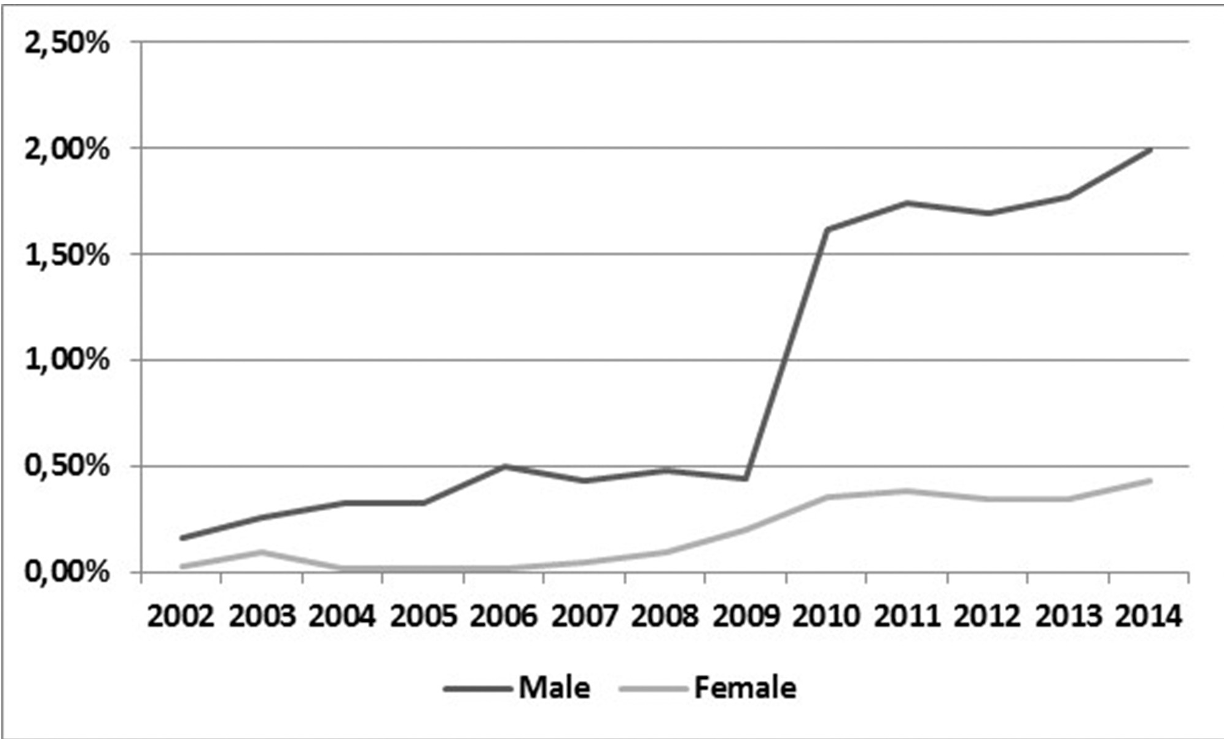 Figure 2: Alignment between historical demographic data (dark) and simulation results (light).
Projections for 2035
Using official CSO scenarios, the model predicts several critical shifts for the Wrocław Region:
- Irreversible Aging: The old-age rate will climb to over 25%.
- Gender Gap: The female population is projected to exceed the male population by 13%.
- Increased Demand: By sampling the SD stocks into a DES arrival engine, the model demonstrates how an aging population translates into a higher frequency of "needs-for-service" events.
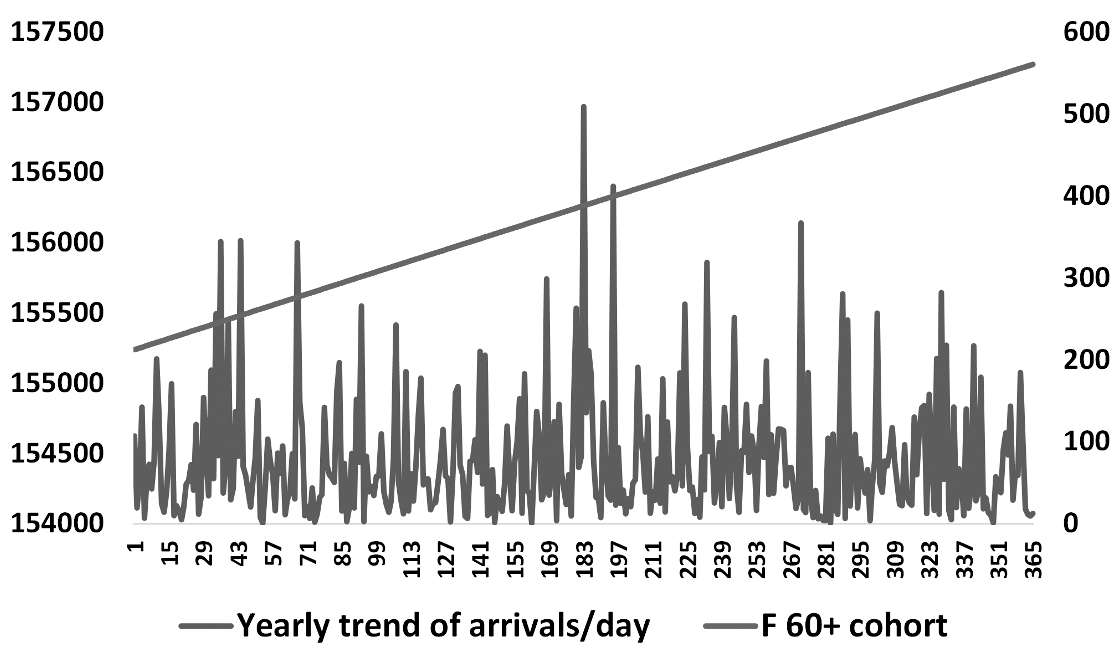 Figure 3: Translating aggregate cohort data into daily healthcare arrival trends.
Critical Analysis & Conclusion
This paper successfully bridges a significant gap in healthcare modeling. By allowing the "Holding Tanks" of System Dynamics to parameterize the arrival distributions of a Discrete Event model, the authors have created a tool that can "see" the individual within the mass.
Limitations & Future Work
- Computational Intensity: A single simulation run currently takes 25 minutes, making large-scale stochastic replications difficult.
- Static Morbidity: The current model assumes that illness rates per age group remain stable, ignoring potential medical breakthroughs or changes in lifestyle.
- Next Steps: The authors plan to integrate socio-economic factors, such as the Polish "Family 500+" program, to see how financial incentives might alter fertility rates and subsequent healthcare demand.
Final Takeaway: For researchers in public health, this study confirms that Hybrid Simulation is no longer a luxury but a necessity for managing the complex, non-linear challenges of an aging global population.