
Hybrid Trust in VSN: Bridging the Gap Between Social Graphs and Autonomous Vehicles
A Hybrid Trust Management Framework for Vehicular Social Networks
This paper introduces a hybrid trust management framework for Vehicular Social Networks (VSN), integrating VANETs with Online Social Networks (OSN). It proposes two primary trust mechanisms—email-based social trust and social network-based trust—to secure information exchange across three newly defined architectural frameworks: SoDVanet, SoVanet, and VaSoNet.
TL;DR
As vehicles transition from simple transport pods to connected social entities, establishing trust becomes a multi-dimensional challenge. This paper proposes a hybrid framework that uses your email interaction frequency and social network circles to validate the data your car receives from others. By defining three new architectures (SoDVanet, SoVanet, and VaSoNet), the authors provide a roadmap for secure, peer-to-peer information sharing on the road.
Background: Why VANETs Need a Social Life
Standard Vehicular Ad hoc NETworks (VANETs) are great at knowing who a car is (via cryptographic certificates) but terrible at knowing if the message (e.g., "there is a traffic jam ahead") is actually true. This paper argues that by merging VANETs with Online Social Networks (OSNs), we can use existing human relationships to anchor digital trust.
The Problem: The Credibility Gap
Current systems rely on "First Line Defense" (PKI), which confirms identity but ignores data intent. If a legitimate node turns malicious or "selfish," the network collapses. Furthermore, the high mobility of cars makes building long-term reputation difficult.
Methodology: The Hybrid Trust Engine
The core innovation lies in using the human social graph to solve a robotic networking problem.
1. Architectural Frameworks
The authors categorize VSN interactions into three distinct flows:
- SoDVanet (Social Data-driven): Pure VANETs pulling data from social media to update drivers.
- SoVanet (Social VANET): Infrastructure-less social interaction where cars share experiences (e.g., restaurant reviews) directly.
- VaSoNet (VANET Data-driven Social Networks): OSN users querying the vehicular cloud for real-time traffic photos or data.
2. The Trust Calculation Logic
Trust isn't binary; it's a gradient. The system uses a weighted formula to determine the trust value () of a neighbor node :
- : Direct encounters (how often have I seen this car?).
- : The priority factor, giving more weight to direct experience over hearsay.
- : Recommendations from other "friend" nodes.
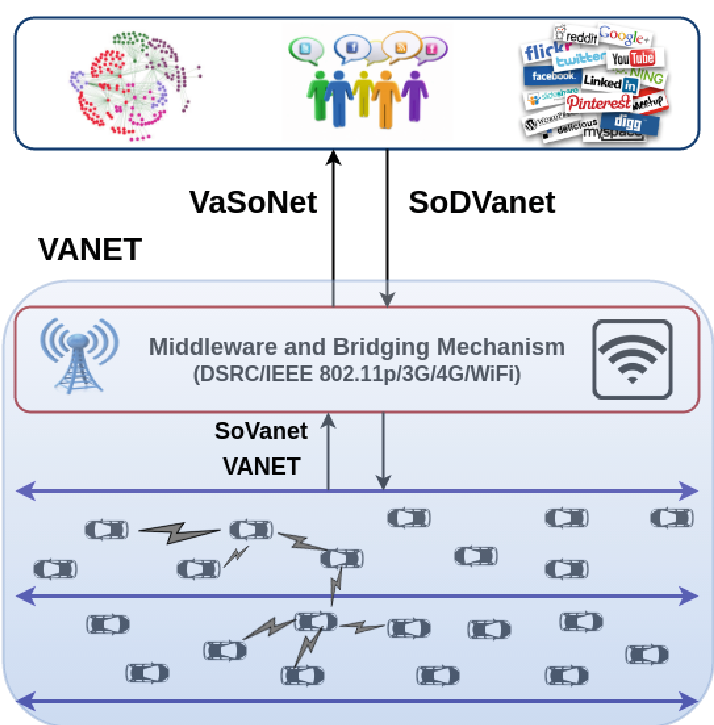 Figure 1: The integration of RSUs, OBUs, and Social Network Servers.
Experiments & Taxonomy
The researchers categorized applications into domains like crowdsourcing and vehicular clouds. They found that by using Email-based Social Trust, they could leverage "Confidence Values" () to prioritize messages from family or close friends over random encounters.
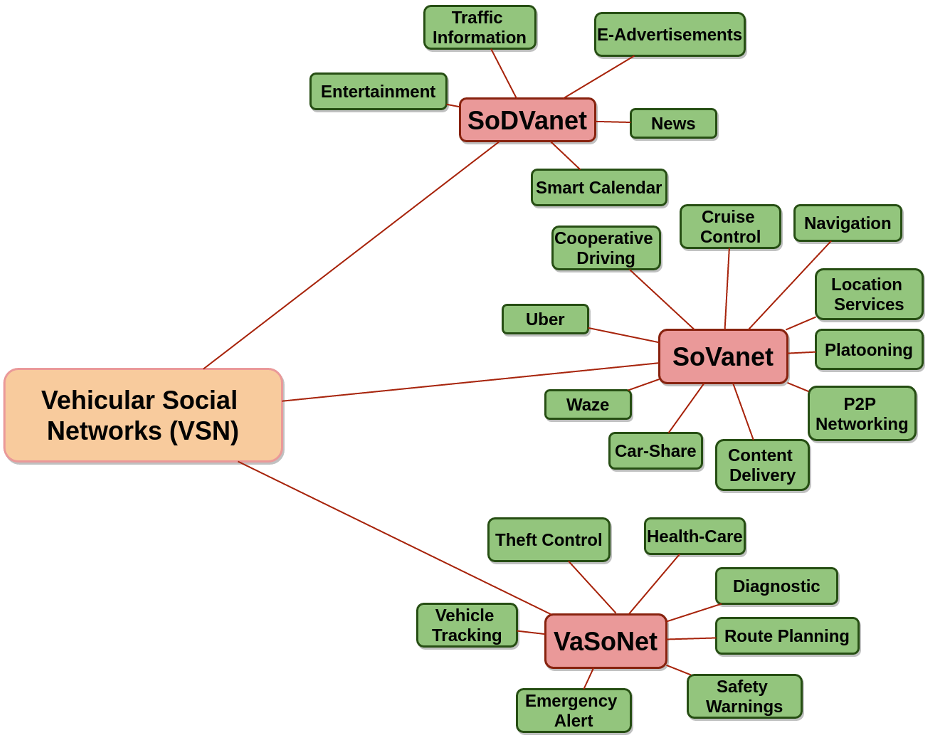 Figure 2: Classification of VSN applications based on the proposed frameworks.
Critical Insight: The Challenge of Decay
One of the most profound points made by the authors is Information Decay. Trust in a vehicular setting is highly temporal. A car that was trustworthy ten minutes ago might have left the area or its data might have become stale. Setting the "Lifetime Parameter" for trust is an open research problem that determines whether these networks can actually scale.
Conclusion & Future Outlook
This work acts as a "stepping stone" toward a secure VSN. By moving trust from a purely cryptographic domain to a social-behavioral one, the framework mimics how humans actually evaluate information—by looking at the source's reputation within a known circle.
Key Takeaways for Future Devs:
- Implicit Trust: Don't build reputation from scratch; borrow it from email/social logs.
- Hybridity is Key: Use local sensing for immediate threats, but use social graphs for long-term reliability.
- Privacy Paradox: The more social data we use to build trust, the more we risk user privacy—requiring robust pseudonym systems.