
HYPE: Why Cuff-less Blood Pressure Monitoring Isn't Ready for Reality Yet
HYPE: Predicting Blood Pressure from Photoplethysmograms in a Hypertensive Population
The paper introduces HYPE, a novel dataset focusing on hypertensive subjects to evaluate blood pressure (BP) estimation from Photoplethysmography (PPG) signals. It compares traditional handcrafted feature extraction against deep learning-based image representations (spectrograms/scalograms) using ML models like LightGBM and ResNet18, revealing the high difficulty of cuff-less monitoring in non-clinical environments.
TL;DR
While many papers claim that Photoplethysmography (PPG) can replace the traditional blood pressure cuff, most are based on ICU data or healthy students. This study, HYPE, tests these claims on actual hypertensive patients during daily activities. The verdict? Real-world noise and physiological complexity make accurate prediction far harder than previously reported, with errors nearly doubling in uncontrolled 24-hour settings.
Perspective: The Gap Between Lab and Life
Is it possible to monitor hypertension using just a smartwatch? In the academic world, the answer often seems to be a resounding "Yes," with many papers reporting Mean Absolute Errors (MAE) as low as 4 mmHg. However, these results typically emerge from the MIMIC dataset—data from patients in Intensive Care Units (ICUs) who are stationary and often on medication that stabilizes their physiology.
The authors of this paper challenge this status quo. They argue that if a model is to be useful, it must work for hypertensive patients (those who actually need it) and during daily life (when motion artifacts are rampant).
Methodology: Features vs. Images
The study utilizes two datasets: HYPE (hypertensive subjects) and EVAL (healthy subjects). To crack the code of PPG-to-BP translation, the researchers compared two distinct technical philosophies:
- Handcrafted Features: Extracting specific landmarks from the PPG pulse wave (systolic upstroke time, diastolic width at various percentages, etc.).
- Deep Learning Embeddings: Converting PPG signals into frequency-based images (Spectrograms and Scalograms) and using a pre-trained ResNet18 to extract 512-dimensional feature vectors.
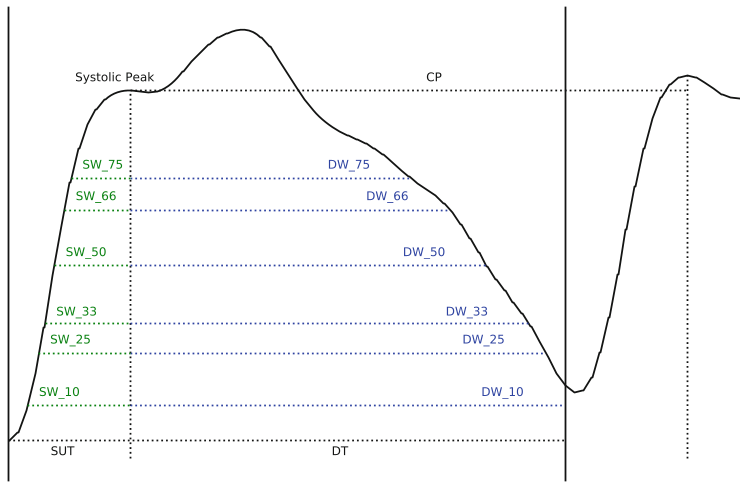 Figure 1: Traditional landmark extraction from a single PPG cycle.
By using Scalograms (Continuous Wavelet Transform), the authors hoped to capture low-frequency components better than standard Spectrograms. These embeddings were then fed into powerful regressors like LightGBM and Gradient Boosting Machines (GBM).
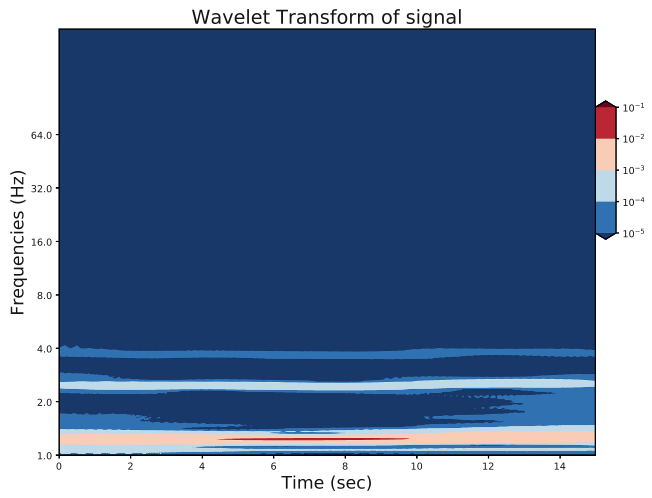 Figure 2: Visual representations (Spectrogram and Scalogram) of 15-second PPG snippets used for deep learning.
The Reality Check: Experimental Results
The findings were a sobering wake-up call for the "AI in Health" community:
- The "Daily Life" Penalty: In the HYPE 24-hour monitoring (uncontrolled environment), the SBP error jumped to 14.44 mmHg. For context, the clinical standard (AAMI) requires an error below 5 mmHg.
- Simpler is Better (For Now): On the HYPE dataset, handcrafted features consistently performed better than the high-tech ResNet embeddings. This suggests that with small-to-medium clinical datasets, deep learning might be "overthinking" the noise.
- SBP vs DBP: Predicting Systolic Blood Pressure (SBP) consistently proved more difficult than Diastolic (DBP), likely due to the higher variability of SBP during stress.
| Dataset | Handcrafted (GBM) | Spectrogram (LGBM) | Scalogram (LGBM) |
|---|---|---|---|
| HYPE Stress Test (SBP) | 8.79 | 12.15 | 12.83 |
| HYPE 24-h (SBP) | 14.83 | 17.07 | 17.30 |
Critical Analysis: Why Can't We Match the Literature?
The authors provide a rare, honest look at the "reproducibility crisis" in PPG research. The small error ranges claimed in earlier MIMIC-based studies (3-4 mmHg) simply did not hold up when applied to hypertensive patients in the real world.
Two main reasons account for this:
- Motion Artifacts: Even with sophisticated "motion removal" based on 3-axis accelerometers, the subtle distortions in the PPG signal during 24-hour living are difficult to filter out.
- Dataset Bias: Hypertensive patients have stiffer arteries. Models trained on healthy, elastic arteries or sedated ICU patients fail to capture the vascular dynamics of a 60-year-old with chronic high blood pressure.
Conclusion & Future Outlook
This work serves as a vital benchmark. It tells us that while PPG sensors in wearables are convenient, the algorithms interpreting them are still "fair-weather" friends—they work in the lab, but struggle in the street.
The path forward requires larger, multi-center datasets of hypertensive individuals and perhaps a pivot toward Temporal models (LSTMs/Transformers) that can better model the time-series nature of the PPG signal rather than treating snippets as static images. Until then, hold onto your physical blood pressure cuff; the clinical relevance of PPG remains an "open question."