
I-CARE: Bridging the Gap Between Textual Semantics and Human Context in Emotion AI
I-CARE: Intelligent Context Aware system for Recognizing Emotions from text
This paper introduces I-CARE, an Intelligent Context-Aware system designed to recognize emotions from textual data using mobile computing. The framework integrates emotion indicators from text, general sociological context, and personalized user perception using a hybrid approach involving Case-Based Reasoning (CBR) and unsupervised machine learning.
Executive Summary
TL;DR: I-CARE is a novel framework that transforms emotion recognition from a pure Natural Language Processing (NLP) task into a context-aware mobile sensing challenge. By combining linguistic analysis with real-time metadata (location, events) and historical user behavior, it mitigates the inherent ambiguity of text-based communication.
Context: Within the academic landscape, this work represents a transition from "context-free" lexical classifiers toward personalized hybrid systems. It addresses the "cold start" problem of language evolution by using unsupervised learning and reinforces accuracy through a Case-Based Reasoning (CBR) cycle.
The "Context" Problem: Why Words Aren't Enough
In the realm of affective computing, text is notoriously difficult. A word like "death" typically triggers a "sadness" classification. However, the emotional weight changes drastically if the user is at a funeral versus discussing a character in a video game.
Existing SOTA models often focus on the what (the text) while ignoring the who, where, and why. I-CARE aims to solve this by identifying that emotion is a result of Personal Perception + General Context + Textual Indicators.
Methodology: The Triple-Threat Architecture
The I-CARE system operates on a client-server model. As the user types on their smartphone, the system builds a Context Tuple (CT) consisting of .
1. The Decision Engine
The system calculates three distinct probability scores:
- (Textual Indicator): Uses the UNSET algorithm to calculate semantic relatedness between NAVA words (Nouns, Adjectives, Verbs, Adverbs) and emotion categories without requiring labeled training for every iteration.
- (General Knowledge): Accounts for societal factors (e.g., a religious holiday in the user's specific region).
- (Personal Perception): Uses Case-Based Reasoning. If a new situation matches a historical "Case" in the system's memory, it assumes a similar emotional response.
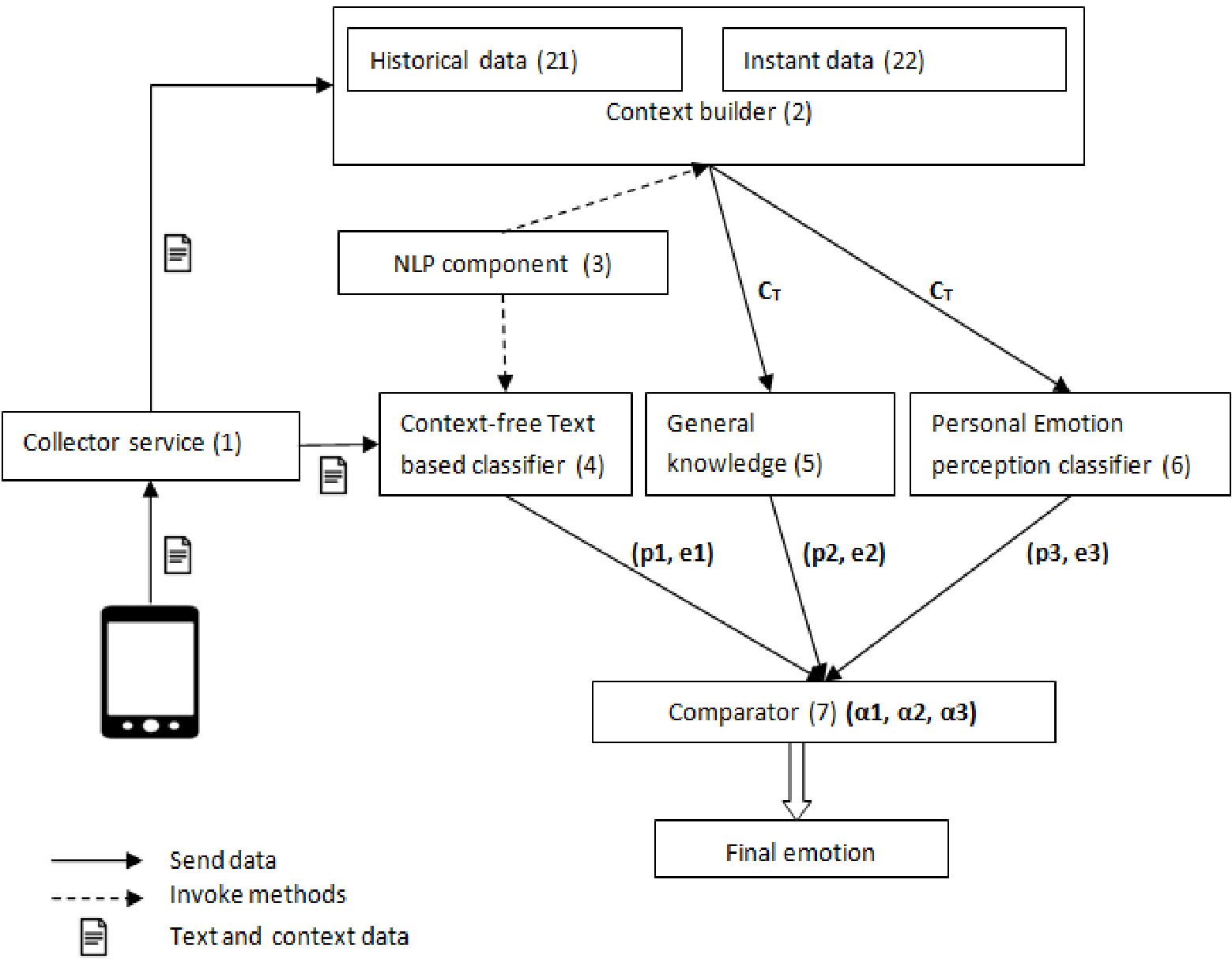 Figure 1: The hierarchical processing flow from mobile sensing to the weighted comparator.
2. The Weighting Mechanism
The final decision is a weighted geometric mean: Initially, the system trusts textual indicators () the most. However, as the user interacts and provides feedback (Agree/Disagree), the system dynamically adjusts , allowing the Personal Perception module to eventually take the lead for highly personalized results.
Experimental Insights
The authors leveraged the Stanford CoreNLP suite for linguistic preprocessing, specifically utilizing Dependency Parsing to identify the cause of emotions (triggers).
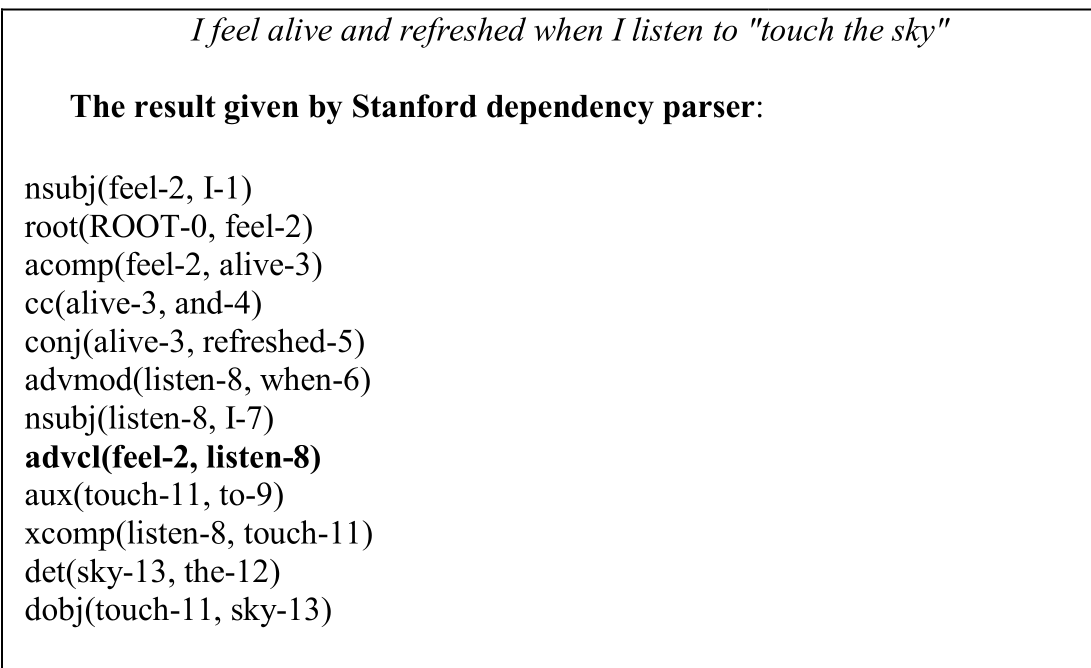 Table 1: Example of extracting triggers (e.g., "listening to music") from short-form YouTube-style text.
Key Findings:
- Style Matching: By training on YouTube comments, the model better handles the "shorthand" and "emoji-heavy" nature of modern Instant Messaging.
- Contextual Boosting: Integrating location and events allows the system to differentiate between neutral text and emotionally charged subtext.
Critical Analysis & Future Outlook
Contribution: The primary value of I-CARE is its dynamic weight update system. It doesn't just classify; it learns the user's unique emotional "profile" over time.
Limitations:
- Privacy: Collecting granular location and IM data raises significant ethical and privacy concerns.
- Computational Overhead: Moving data to a remote server for processing introduces latency, which could be mitigated by Edge AI in future iterations.
Future Work: The authors plan to refine the convergence speed of the weights () and expand the dataset to include diverse volunteer interactions. This path likely leads toward Edge-based Affective Computing, where the entire loop resides on-device for maximum privacy and speed.