
i-Stylist: Decoding Personal Fashion Taste through Social Network Analysis
i-Stylist: Finding the Right Dress Through Your Social Networks
The i-Stylist system is a personalized clothing recommendation framework that analyzes a user's social network images to suggest items from e-commerce sites. It utilizes a 5-tuple feature vector (CNN, color, category, material, pattern) and a fully connected graph model to achieve SOTA performance in user-centric fashion retrieval.
TL;DR
Searching through thousands of online clothing items is an efficiency nightmare. i-Stylist is a personalized recommendation system that mines your social media photos to build a "User Graph Model." By fusing deep learning features with semantic metadata like fabric and pattern, it significantly narrows down choices to match your unique style, outperforming traditional regression-based baselines.
Background: Beyond Popularity-Based Recommendations
Most shopping platforms recommend what is popular, not what is personal. If everyone is buying a specific leather jacket, the system assumes you want it too. However, fashion is deeply individual. The authors identified two major gaps in the status quo:
- Privacy & Generality: Collaborative filtering needs data from other users, which is often restricted.
- Semantic Ignorance: Many systems see "pixels" but don't understand that a user specifically loves "houndstooth pattern" or "silk material."
Methodology: The User Graph Model
The core innovation of i-Stylist is treating a user's wardrobe as a fully connected graph ().
1. The 5-Tuple Feature Vector
Instead of relying solely on a single CNN vector, every clothing item is represented by:
- DL 4096: Global visual features from a fine-tuned CNN (ClothCNN).
- Color 100: A Hue-SIFT based color histogram.
- CAT/MAT/PAT: Semantic labels for Category, Material (e.g., denim, lace), and Pattern (e.g., floral, tartan).
2. Probability Inference
The system calculates the likelihood of a user liking a shop item () using a similarity function that aggregates distances across all vertices in the personal graph:
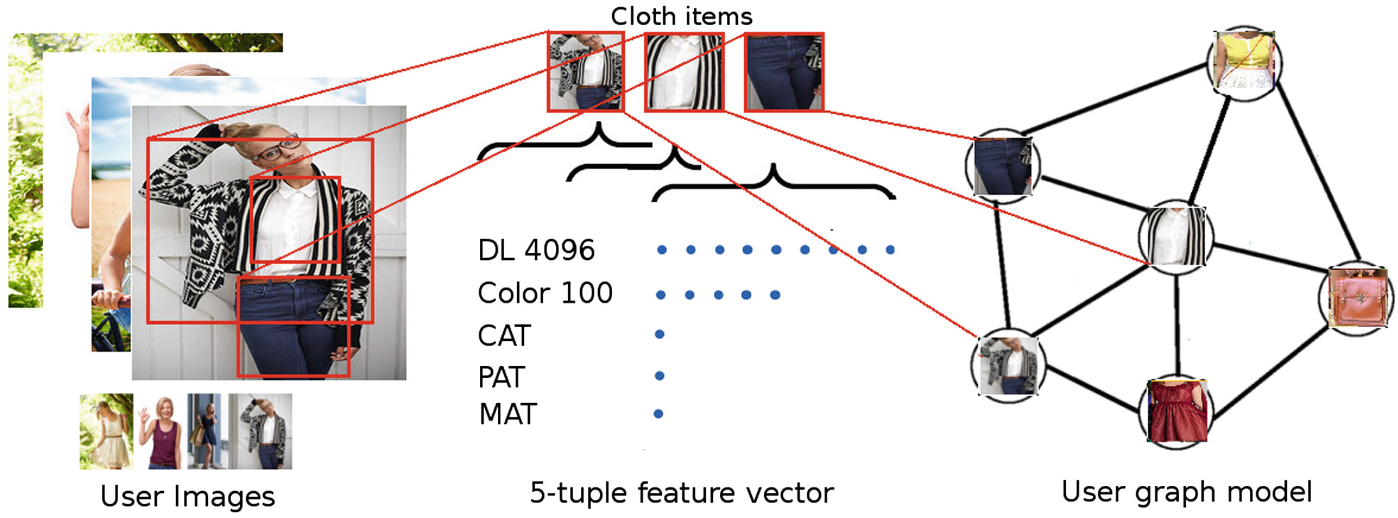 Figure 1: The flow of i-Stylist from social images to graph-based recommendation.
3. Interactive Refinement
The system isn't static. It employs a Human-in-the-Loop approach. When a user selects or discards recommended items, the graph adds new vertices or adjusts weights, effectively "learning" the user's style evolution in real-time.
Experiments & Performance
The authors validated i-Stylist using three datasets: Fabric & Pattern, People Images, and the Street2shop benchmark.
Visualizing the Latent Space
Using t-SNE, the authors mapped the high-dimensional ClothCNN features into 2D space, demonstrating that the fine-tuned model successfully clusters similar styles together, providing a robust foundation for retrieval.
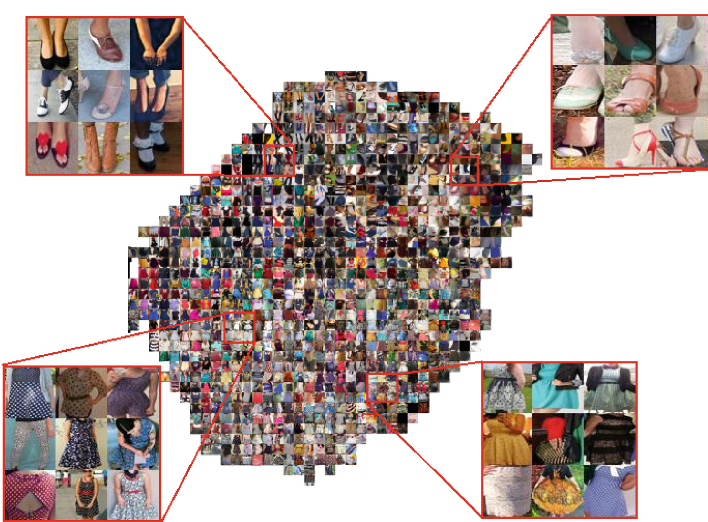 Figure 2: Precision-Recall curves comparing ClothCNN against Overfeat and Color SIFT.
User Evaluation Results
In a subjective study involving independent reviewers:
- Similarity: The Graph model significantly beat the SVM baseline as iterations increased.
- Trust: Users found the Graph model's suggestions more coherent and aligned with their input than random or standard regression models.
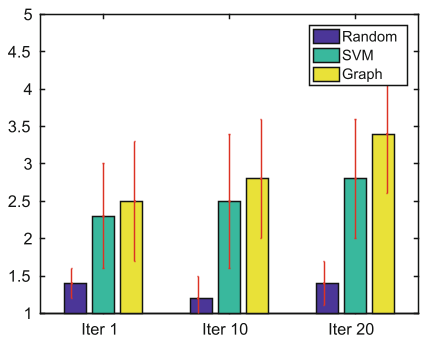 Figure 3: Statistical result of the user study across 20 iterations.
Critical Insights & Conclusion
The success of i-Stylist lies in its Inductive Bias: it assumes that a user's style is a manifold represented by their existing photos. By using a graph model rather than a flat SVM, the system maintains the "diversity" of a user's taste while remaining focused on their specific aesthetic.
Takeaway: Future e-commerce will move away from "one-size-fits-all" popularity rankings toward "Small Data" models like i-Stylist that can extract deep personal insights from just a handful of social media images.
Limitations: The system relies heavily on the accuracy of the initial clothing parser. If the parser fails to segment the garment correctly, the resulting graph vertex becomes "noisy," leading to irrelevant suggestions.