
From Likes to Innovations: Hacking Facebook for Idea Management
Idea Management in Social Networks: A Study of how to Tap into the Ideas of Facebook Communities
This paper proposes a method for conducting Idea Management (IM) directly within Facebook communities rather than using dedicated, siloed IM platforms. It maps traditional IM functions (submission, voting, moderation) to native Facebook features (Posts, Comments, Likes) and validates the approach through case studies with a restaurant and a non-profit.
TL;DR
Instead of forcing users to register for yet another dedicated "Innovation Portal," this research explores a pragmatic shift: conducting Idea Management (IM) directly where people already spend their time—Facebook. By mapping structured innovation workflows to native social features (Comments as ideas, Likes as votes), the study demonstrates that organizations can capture high-value insights from their existing social followers, despite significant limitations in data synthesis.
The "Deserted Portal" Problem
The biggest hurdle for modern Idea Management isn't the software; it's the community. Most dedicated IM platforms (like IdeaScale or Spigit) are "ghost towns"—half of all public initiatives have fewer than 40 contributors.
The authors argue that organizations are making a strategic mistake by trying to move their communities to the software, rather than moving the software's logic to the community. Since billions are already active on Facebook, why not "tap into" that latent creativity?
Methodology: Mapping IM to Facebook's DNA
The core of the paper is a structural mapping that transforms a standard social network into a pseudo-innovation pipeline:
| IM Feature | Facebook Implementation |
|---|---|
| Problem Submission | Multimedia posts labeled with specific #hashtags. |
| Idea Submission | Participants post ideas as comments to the campaign post. |
| Evaluation (Voting) | Using the Like button to signal agreement. |
| Collaboration | Using Nested Replies to refine or critique ideas. |
| Moderation | Native "Hide Comment" and "Block User" functions. |
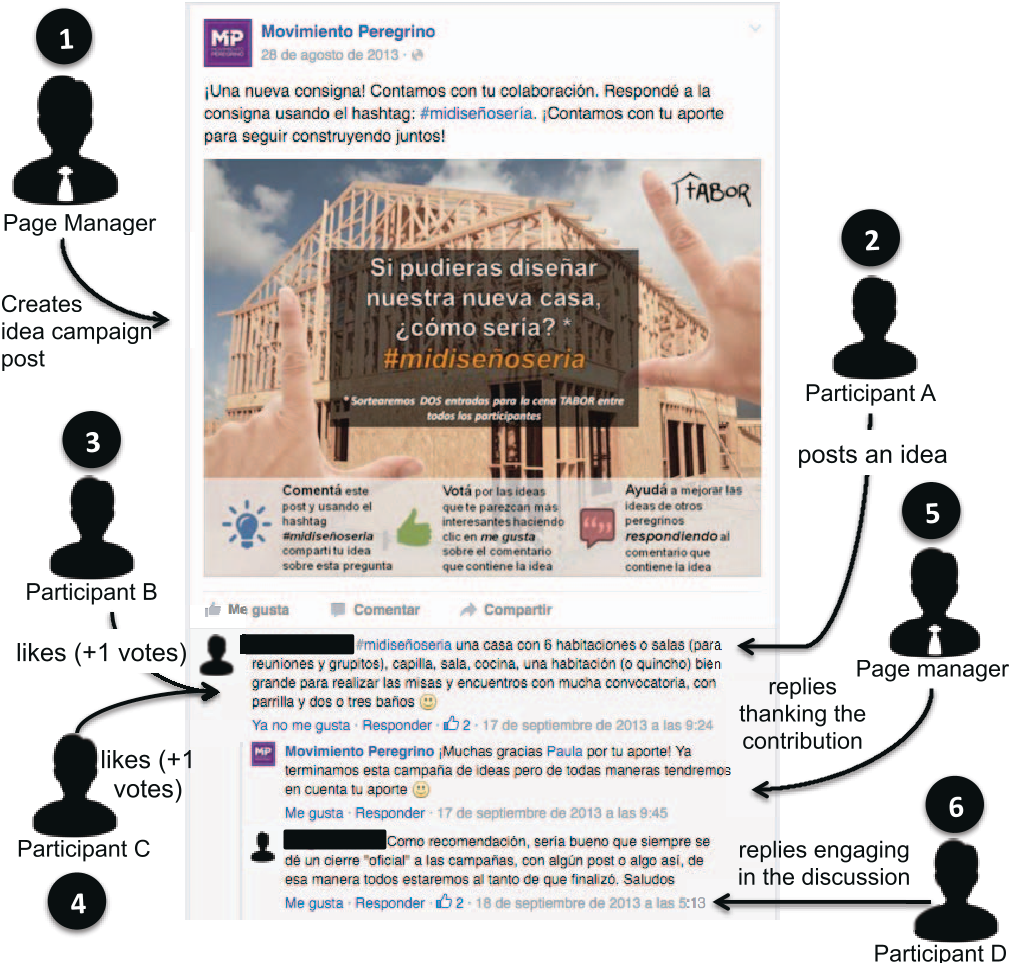 Figure 1: The visual mapping of an idea campaign from problem launch to community feedback.
Case Study: Pizza and Non-Profits
To test the effectiveness, the authors ran two campaigns:
- Indigo (Pizza Restaurant): Asked fans for a new pizza flavor.
- Movimiento Peregrino (NGO): Asked members for design ideas for a new headquarters.
Key Findings:
- Actionability: The quality of ideas was surprisingly high. The restaurant added two fan-suggested flavors to their menu, and the NGO moved 22 ideas into their planning phase.
- Participation Paradox: Even on Facebook, participation followed a "Power Law." A few "super-contributors" generated 60% of the content.
- The Identity Barrier: Some users reported that Facebook's "Real Name" policy made them hesitant to share controversial or highly creative opinions for fear of social judgment.
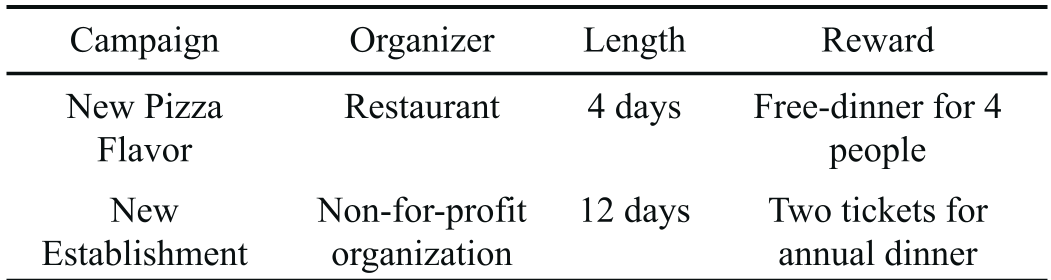 Table 1: Comparison of the two case studies and their engagement metrics.
The Hard Truth: Suitability & Limitations
While Facebook is great for collection, it is a nightmare for analysis. The study highlights several "friction points":
- Information Overload: Facebook provides zero tools for deduplication. If 50 people suggest "Pepperoni," the organizer has to manualy count and merge them.
- The "Like" is Too Simple: Users pointed out that a "Like" could mean "I like the idea," or it could just mean "I like the person who posted it." It lacks the granularity of a 5-star rating or a "Complexity vs. Impact" matrix found in professional IM tools.
- The Content Split: Every time a moderator "re-promotes" the campaign with a new post, the conversation fragments across multiple threads, making centralizing the data nearly impossible without external API-based tools.
Conclusion & Future Outlook
The paper concludes that Facebook is a viable front-end for idea management but a poor back-end. For organizations looking to innovate:
- Don't build a new platform if you already have a Facebook Page with 1,000+ fans.
- Do use hashtags religiously to keep content searchable.
- Anticipate manual labor: Be prepared to export comments to a spreadsheet for actual evaluation.
The future of this field likely lies in "Social Spreadsheets" or AI-driven bots that can sit on top of Facebook to cluster and score ideas in real-time.