
DKIE: Beyond Follower Counts—Identifying the True "Core" of Niche Social Influence
Identification and classification of best spreader in the domain of interest over the social networks
This paper introduces the De-duplicated K-shell Influence Estimation (DKIE) model, a dual-phase framework designed to identify and classify influential spreaders in Online Social Networks (OSNs). By combining entropy-based k-shell decomposition for structural analysis with N-gram similarity for domain categorization, DKIE achieves a 91% recall rate in identifying expert spreaders on Twitter.
TL;DR
In the world of viral marketing, having a million followers doesn't make you an expert. The research paper "Identification and classification of best spreader in the domain of interest over the social networks" introduces DKIE, a method that cuts through the noise of "core-like groups" (redundant clusters) and uses N-gram linguistic analysis to find nodes that actually drive conversations in specific domains like Sports or Politics.
Problem & Motivation: The Follower Fallacy
Most brands make the mistake of equating "Degree Centrality" (number of followers) with "Spreading Efficiency." However, academic research has long noted two major friction points:
- Redundant Links: Many high-degree nodes are part of "core-like groups" that circulate information only within a tight-knit bubble, leading to over-inflated influence scores.
- Topical Genericness: A user might be influential in politics but entirely irrelevant in rugby. Most k-shell methods are "topic-blind."
The authors argue that to find the best spreader, we must first clean the network of structural redundancy and then validate the "Intent" of the spreader through textual analysis.
Methodology: The DKIE Two-Step
The De-duplicated K-shell Influence Estimation (DKIE) model operates in two distinct phases:
1. Structural De-duplication (Finding the True Core)
Instead of just running a standard k-shell decomposition, the authors introduce an Entropy Function. This measures the global diversity of a node's connections. If a node connects to multiple layers of the network, its entropy is high—indicating a "True Core" node. If it only connects within its own shell, it's flagged as a "Core-like" redundant node.
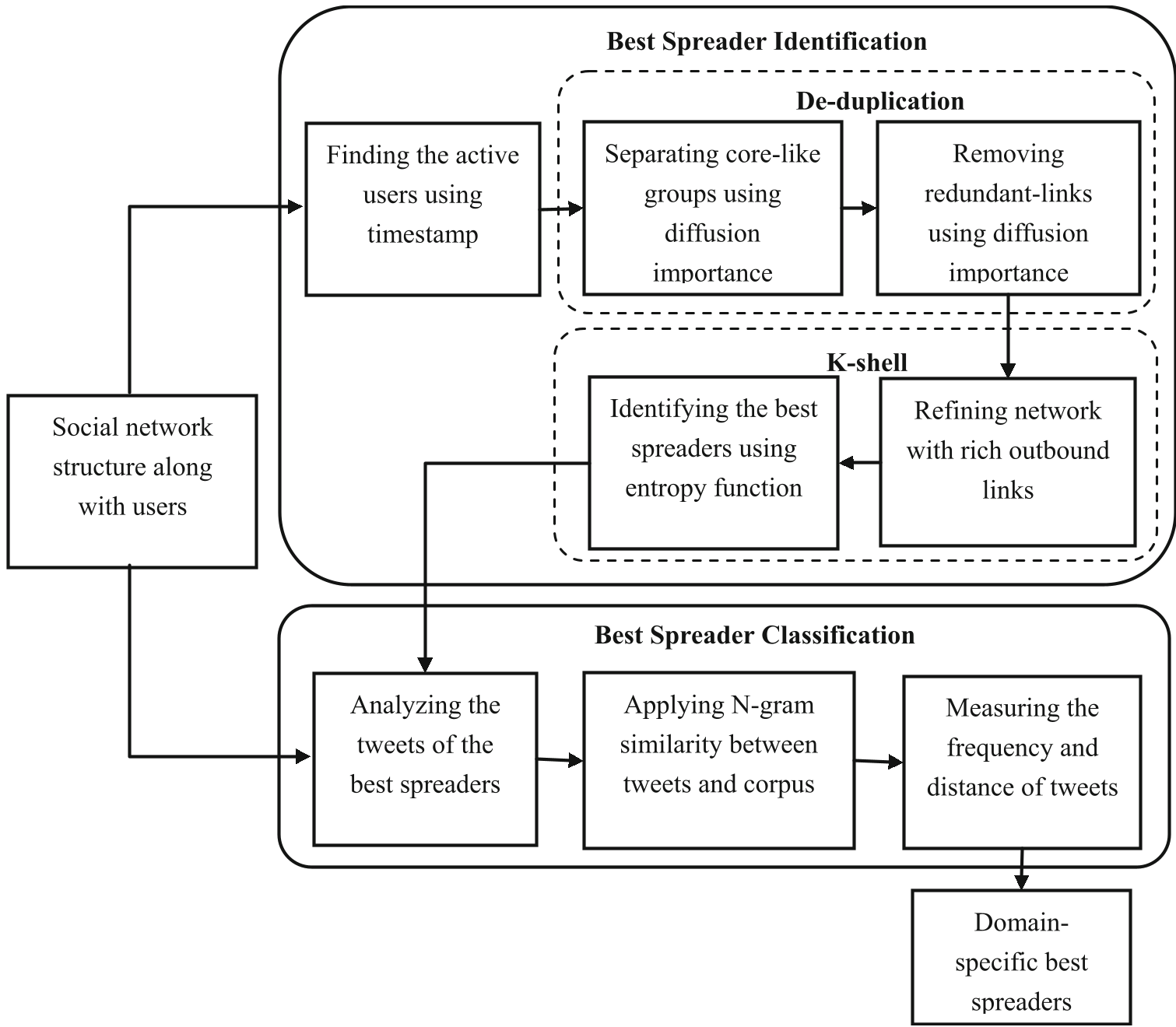 Fig 1. The DKIE Workflow: From active user identification to domain-specific ranking.
2. Domain Classification (N-Gram Similarity)
Once the structurally superior spreaders are identified, DKIE analyzes their tweets. Using N-gram similarity and WordNet ontology, the system calculates how closely a spreader's content aligns with a specific domain corpus (e.g., Football vs. Politics). It then factors in Retweet Capability (RTC)—measuring how often people actually "adopt" and pass on that specific user's topic-specific content.
Experimental Results
The authors tested DKIE against TopicRank on a massive Twitter dataset.
- Scalability: As the number of users grew to 2.5 million, DKIE's precision remained remarkably stable (only a 0.94% drop), while existing methods plummeted.
- The Power of Retweets: The "Domain-Specific Retweet Influence" (DSRI) metric showed that DKIE is significantly better at predicting which users will trigger a viral chain reaction within a specific niche.
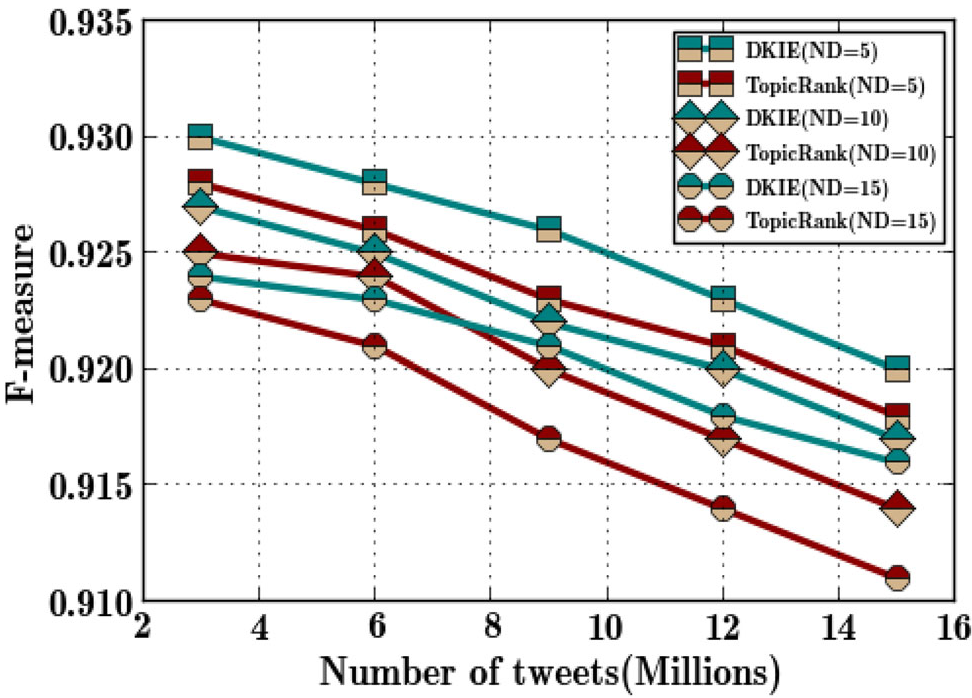 Fig 2. F-Measure comparison across varying tweet volumes and domains.
Critical Analysis & Conclusion
Takeaway
The DKIE model proves that the "Best Spreader" is a hybrid of Structural Coreness and Niche Authority. By filtering out redundant links, the model avoids the trap of "local influence" and finds users with "global reach."
Limitations
- Text Processing Latency: Using N-grams and WordNet for millions of tweets is computationally expensive compared to pure graph-based methods.
- Slang & Evolving Language: While N-grams handle minor errors well, they might struggle with rapidly changing internet slang or coded language compared to modern Transformer-based embeddings (like BERT).
Future Outlook
The next step for this research is clearly the integration of Large Language Models (LLMs) into the classification phase. Replacing N-grams with semantic embeddings could make the domain-specific identification even more precise, allowing for the detection of "sentiment-aware" spreaders.