
SMPRank: Beyond Topology — Finding Social Influencers Through Behavioral Meta Paths
Identify Influential Spreaders in Online Social Networks Based on Social Meta Path and PageRank
This paper introduces SMPRank (Social Meta Path Rank), a hybrid algorithm designed to identify influential spreaders in online social networks. By integrating Social Meta Paths with a modified PageRank (Weighted LeaderRank), it captures both direct network topology and indirect behavioral interactions like co-location check-ins and retweets.
TL;DR
To find the most powerful "spreaders" in a network, it's no longer enough to look at follow counts. SMPRank is a new algorithm that combines the structural benefits of LeaderRank with "Social Meta Paths." It factors in retweets and physical co-location (check-ins) to find influencers that traditional PageRank-based methods miss. It boosts the accuracy of influencer detection by nearly 20% compared to previous SOTA methods.
Problem & Motivation: The Limits of Graph Structure
Why do some marketing campaigns go viral while others flop? The secret lies in identifying Influential Spreaders. For years, researchers relied on the "Follower Graph." However, the authors of this paper argue that this view is too narrow for two reasons:
- Hidden Channels: Info can jump between strangers if they attend the same event (co-location check-in).
- Interaction Intensity: Not all followers are equal; someone who retweets every post is a stronger spreader than a passive observer.
Existing solutions like LeaderRank improved convergence by adding a "ground node" but still treated every connection with a flat weight, failing to capture the nuance of real-world human behavior.
Methodology: The Power of Social Meta Paths
The core innovation is the SMPRank (Social Meta Path Rank). It redefines the "weight" of a connection between two users by analyzing three specific paths:
- MP1 (Follow): The standard direct structural link.
- MP2 (Co-location): User A → Tweet → Location ← Tweet ← User B.
- MP3 (Retweet): User A → Tweet → Retweet → User B.
The SMPRank Architecture
The algorithm calculates a transmission power score () for each path and then aggregates them into a final weight .
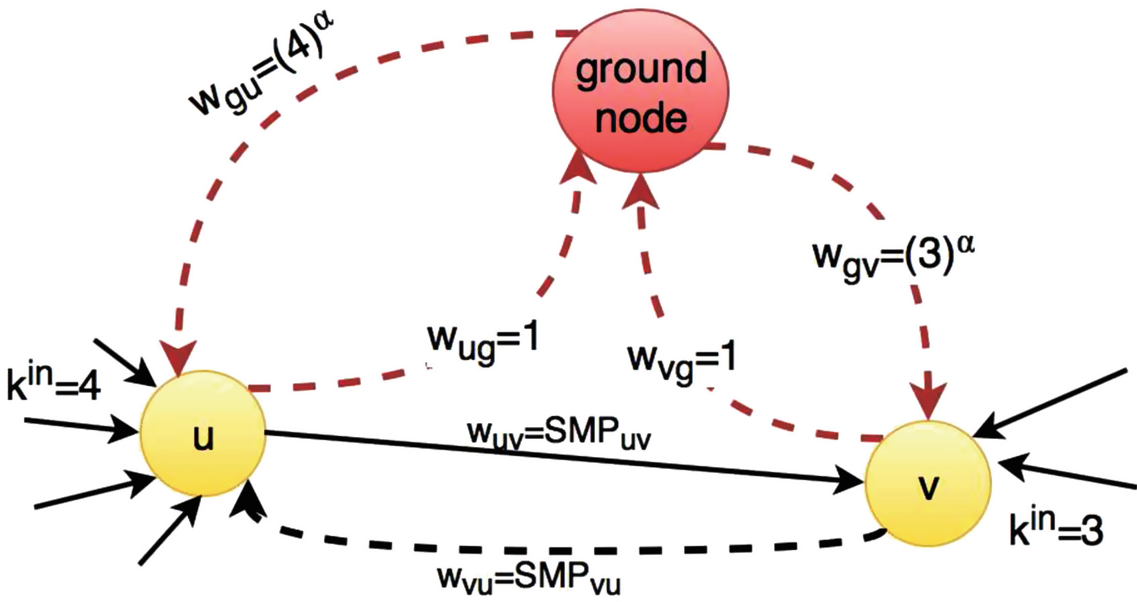
Fig 1: Illustrating the flow between User, Tweet, and Location as a heterogeneous network.
Once these weights are established, the paper applies a Ground Node strategy. This virtual node connects to every real node, effectively acting as a "reservoir" of influence that helps the algorithm converge faster and accounts for the overall network global structure.
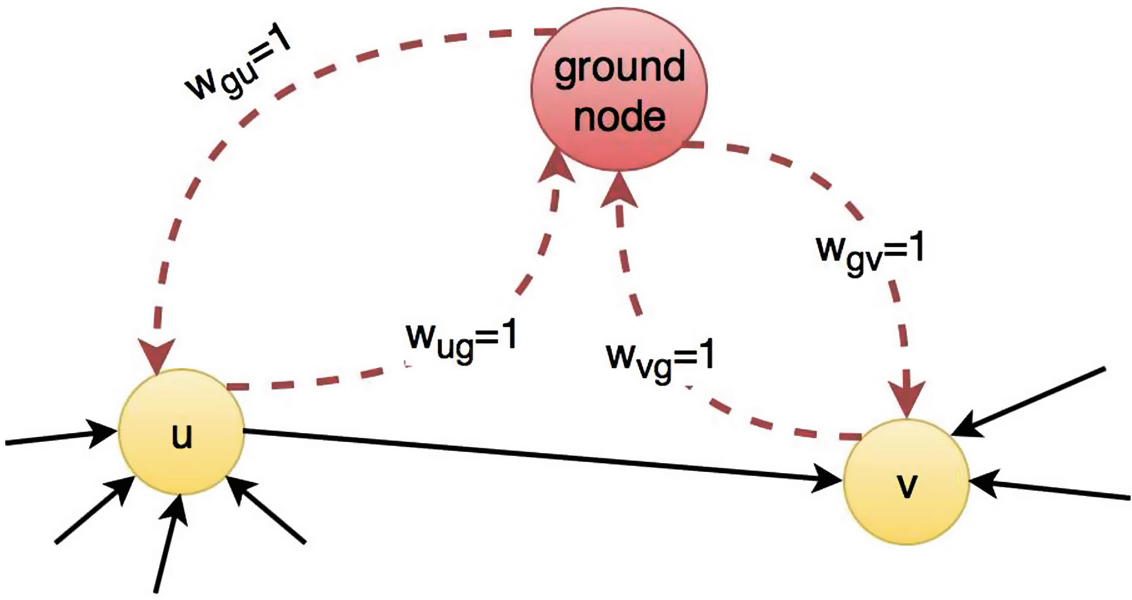
Fig 2: The Ground Node (g) approach ensures that nodes with higher in-degrees (fans) receive more score contributions.
Experiments & Results
The authors validated SMPRank using a massive Twitter dataset (76k nodes, >55M edges). They compared the algorithmic ranking against Actual Influence, which they measured by tracking real information "infection" rates in a held-out testing set.
Performance Comparison
The results were clear: by including behavioral paths (like retweets and check-ins), the correlation with reality jumped significantly.
| Method | Pearson Correlation with Actual Influence |
|---|---|
| Weighted LeaderRank | 0.713 |
| SMPRank (Proposed) | 0.852 |
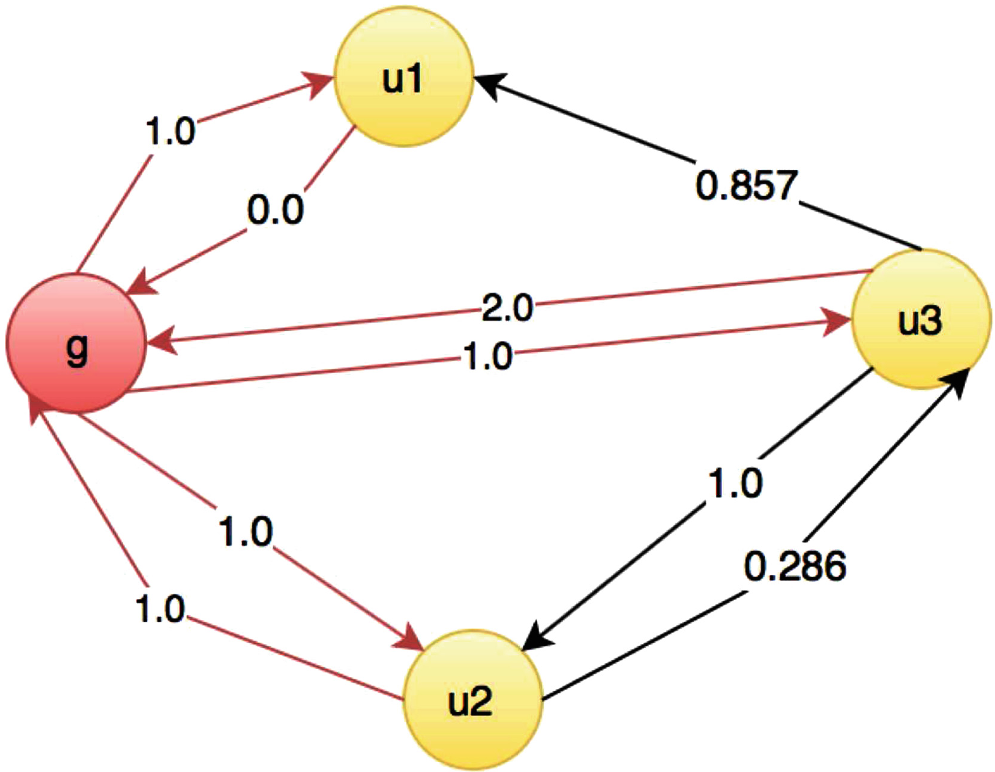
Fig 3: A simplified example of how meta-path weights are transformed into a ranking matrix.
Critical Insight & Conclusion
SMPRank succeeds because it treats a social network as a Heterogeneous Information Network (HIN) rather than a simple unweighted graph.
Key Takeaways:
- Structure is not enough: Behavior (check-ins, retweets) is a stronger predictor of influence than simple "friend" counts.
- Weighting Matters: Giving higher weights to active responders identifies "true" influencers who can actually trigger cascades.
- Limitation: The method relies on rich metadata (GPS check-ins). In platforms where location sharing is low, the boost from MP2 might diminish.
For future marketers and researchers, this paper highlights that the most "influential" person isn't just the one with the most followers, but the one whose behavior signals the strongest bridge between physical and digital worlds.