
Beyond Centrality: Why the Most "Popular" Nodes Aren't Always the Most Important
Identifying sets of key players in a social network
This paper introduces the "Key Player Problem" (KPP), distinguishing between two distinct goals in social network analysis: KPP-NEG (disrupting networks via node removal) and KPP-POS (maximizing diffusion via seed nodes). The author proposes novel metrics and a combinatorial optimization algorithm using greedy heuristics to identify optimal sets of nodes, outperforming traditional centrality measures.
TL;DR
Stephen Borgatti’s seminal work challenges the reliance on standard centrality measures for network analysis. He argues that identifying "key players" depends entirely on the objective—whether you want to fragment a network (KPP-NEG) or spread information through it (KPP-POS). The paper introduces a shift from individual importance to set-based optimization, providing metrics that account for redundancy and distance.
The "Popularity" Trap: Problems with Traditional Centrality
In social network analysis (SNA), we often assume that picking the person with the most connections (Degree) or the highest "bridge" score (Betweenness) is the best way to influence or disrupt a system. Borgatti identifies two fatal flaws in this logic:
- The Goal Issue: A node can have high Betweenness (like Node 1 in the diagram below) but removing it may not actually disconnect the network. Conversely, a seemingly "unimportant" node might be a critical bridge between two large components.
- The Ensemble Issue: The "Dream Team" isn't just a collection of star players. If you pick the two most central people, but they are friends with the exact same group of people, picking the second one adds zero value (Redundancy).
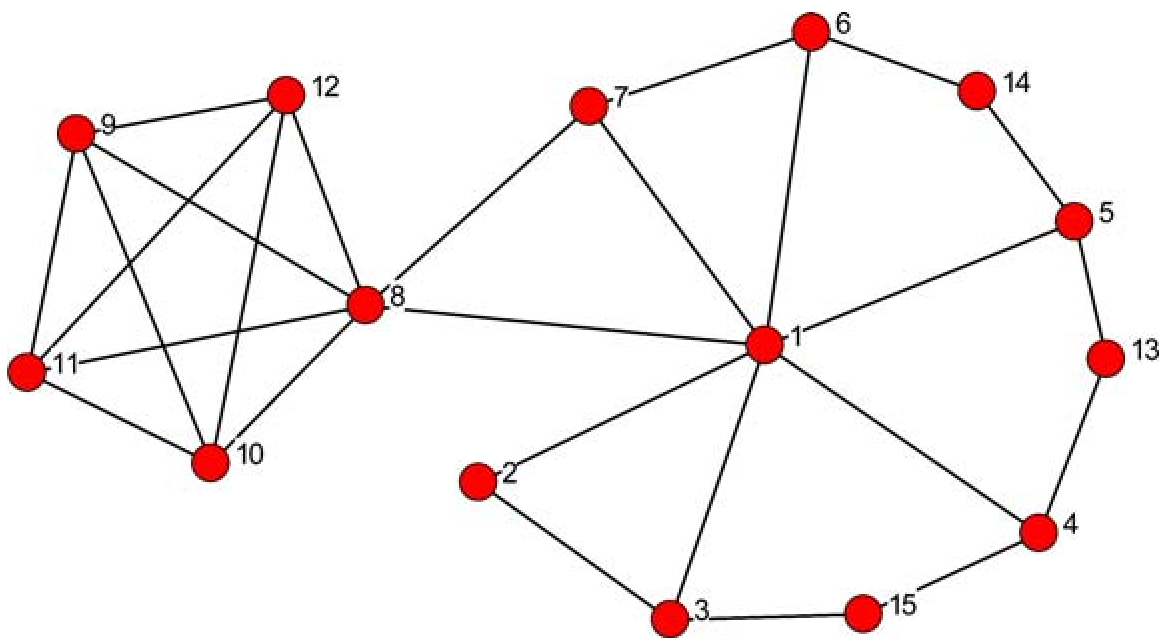 Figure 1: Node 1 is the most central, but removing it fails to fragment the graph, unlike Node 8.
Methodology: The Two Faces of Key Players
1. KPP-NEG (The Negative Problem: Interruption)
The objective is to find a set of nodes whose removal results in the "least possible cohesion." Borgatti moves beyond simple component counts to a Distance-Weighted Fragmentation measure (): This formula captures the "virtual disconnection"—if you can't fully break a network, making the "commute" between nodes incredibly long is the next best thing for disruption.
2. KPP-POS (The Positive Problem: Diffusion)
The goal is to find a set of nodes (seeds) that are maximally connected to everyone else. Here, Borgatti utilizes Distance-Weighted Reach (). The key insight is that nodes at distance 1 are more valuable than distance 2.
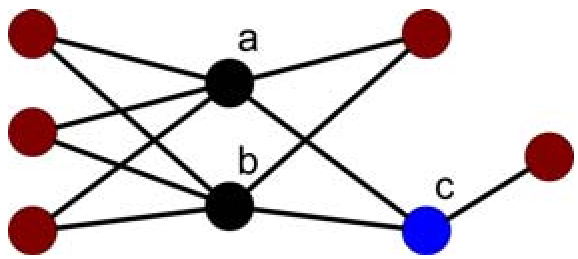 Figure 4: Nodes 'a' and 'b' are each highly central, but together they reach the same people. Pairing 'a' with 'c' covers the whole network.
Evidence: Terrorists and Consultants
Borgatti validates his approach using a real-world dataset of the 9/11 terrorist network.
- Disruption: The algorithm identifies three specific nodes that, when removed, shatter the cell into 7 components ().
- Surveillance: For KPP-POS, a different set of three nodes is found that can monitor/reach 100% of the network within just two steps.
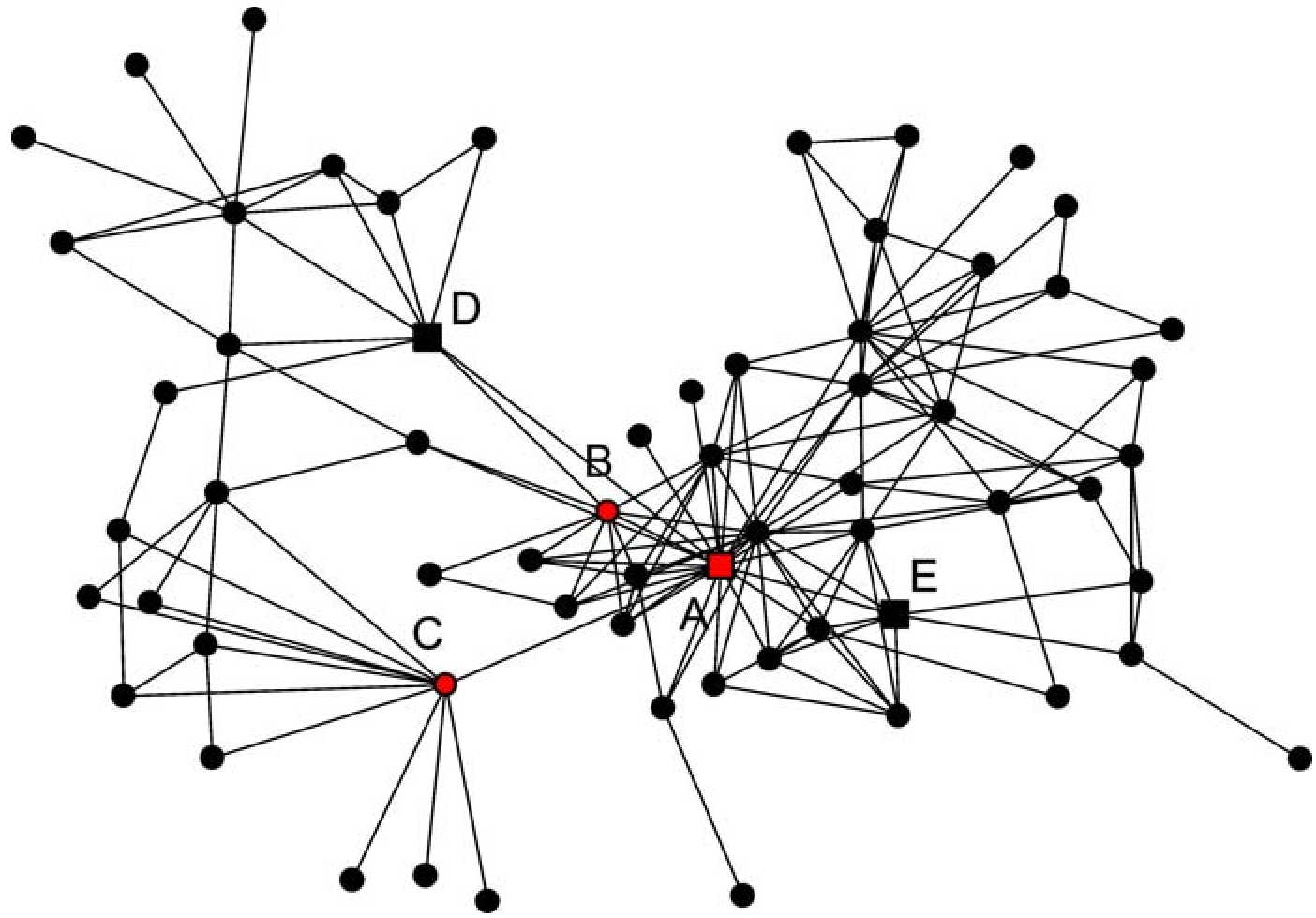 Figure 7: Optimal sets for fragmentation vs. optimal sets for reach.
The Verdict: Critical Analysis
Borgatti’s KPP framework is revolutionary because it turns a descriptive problem (who is central?) into an engineering problem (how do I optimize this set?).
Strengths:
- Practicality: It provides a concrete algorithm for resource-limited scenarios (e.g., "I only have 3 vaccines, who gets them?").
- Visual Intuition: The use of reciprocal distances () elegantly handles the "infinity" problem of disconnected graphs.
Limitations:
- Complexity: As networks scale to millions of nodes, the combinatorial swap becomes computationally heavy.
- Data Quality: The model assumes we know all the links. In criminal or covert networks, missing data can lead the algorithm to the wrong "key players."
Future Outlook
This work paved the way for modern "influence maximization" in social media marketing and "robustness analysis" in infrastructure (power grids, internet). The next step for this field is integrating actor attributes—knowing that a key player isn't just someone with links, but someone with the right skills or resources.