
Causality in the Network: Deciphering Social Influence through Randomized Trials
16399_Identifying Social Influence in Networks Using Randomized Experiments.
This paper presents a randomized field experiment conducted on Facebook with 1.4 million users to identify and quantify causal social influence. By utilizing "Treatment Randomization," the authors isolate peer influence from confounding factors like homophily and correlated external stimuli using a stratified proportional hazards model.
TL;DR
Is your friend’s new diet actually influencing you, or did you both just happen to join the same gym? This paper tackles the "Homophily vs. Contagion" dilemma by conducting a massive randomized experiment on Facebook. By manipulating the viral messaging capabilities of 1.4 million users, the authors provide a robust methodology to isolate true causal influence from mere correlation, revealing that passive notifications can often outperform personalized invitations in driving network-wide adoption.
Problem & Motivation: The Correlation Trap
In social network analysis, we often see behaviors cluster. If your friends smoke, you are more likely to smoke. However, identifying why this happens is a statistical nightmare. Is it:
- Peer Influence: Your friends convinced you (Contagion).
- Homophily: You chose friends who already had similar habits.
- External Stimuli: You all live in the same neighborhood where cigarette taxes just dropped.
Existing observational methods often struggle to disentangle these variables. If we misidentify homophily as contagion, "viral" marketing campaigns will fail because they target people who would have adopted the product anyway, wasting millions in resources.
Methodology: The "Inside-Out" Experimental Design
The authors propose a shift from observing "who influences whom" to a proactive Treatment Randomization approach. They utilized a Facebook movie application and randomized users into different groups:
- Passive Treatment: Users could send automated broadcast notifications.
- Active Treatment: Users could send personalized invitations.
- Control: Viral features were disabled.
Breaking the Dependency
Standard statistical models assume observations are independent. In social networks, they aren't. To solve this, the authors used a Stratified Proportional Hazards Model:

This model accounts for "clusters" of friends and allows the baseline risk of adoption to change as more friends in a local network join the app.
Handling "Contamination"
A major threat to network experiments is "leakage"—where a user is friends with people in different treatment groups. The authors introduced a rigorous Censoring Procedure: if a peer became exposed to multiple treatments, they were removed from the analysis at that timestamp to maintain the purity of the causal estimate.
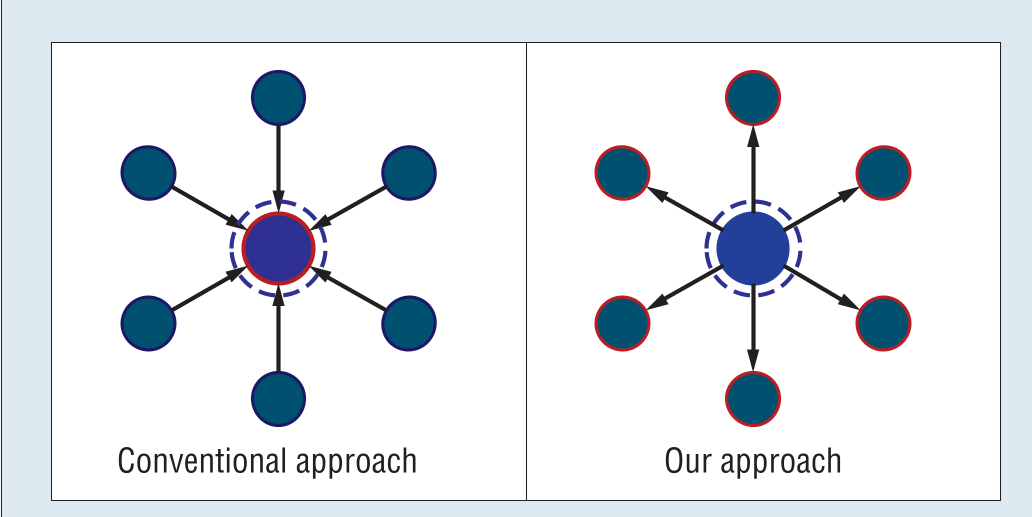 Figure 1: Comparison between conventional inward-looking observational models and the author's outward-looking experimental design.
Experiments & Results: Passive vs. Active Viral Channels
The results revealed a fascinating trade-off between message effectiveness and usage frequency:
- Notifications (Passive): Higher volume, lower effort. These led to a 246% increase in peer contagion relative to the baseline.
- Invitations (Active): Higher conversion per message, but sent much less frequently. These resulted in only a 98% increase.
The Trade-off
While the "Active" invitations were better at convincing individuals to stay with the product (sustained use), the sheer reach of "Passive" notifications drove more total growth.
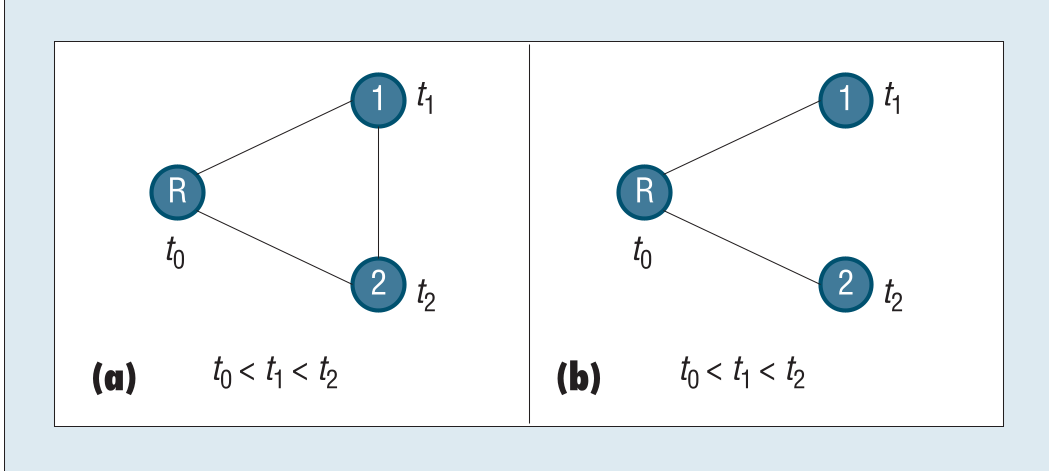 Figure 2: The logic for designating contaminated peers to prevent experimental bias.
Critical Insight & Conclusion
This work moves social network science from descriptive anecdotes to causal rigor. The main takeaway for product designers and policymakers is that friction matters. A highly effective, personalized "ask" (Invitation) might be less "viral" than a low-friction, automated "tell" (Notification) simply because users are lazy.
Limitations
- Network Distance: The study primarily looks at immediate (1-hop) peers.
- Platform Specificity: The dynamics on Facebook in 2011 (the paper's era) might differ from today's algorithmic feeds where the "network" is often hidden.
In conclusion, to truly understand social influence, we must stop just looking at the network and start carefully perturbing it.