
Intelligent Trust: Securing Identity Management with Hybrid Blockchain and Federated IRL
Identity Management with Hybrid Blockchain Approach: A Deliberate Extension with Federated-Inverse-Reinforcement Learning
The paper introduces a hybrid blockchain framework utilizing Federated Inverse Reinforcement Learning (f-IRL) for decentralized identity management in IoT and Cyber-Physical Systems (CPS). By combining a optimized PoW-PBFT consensus mechanism with federated learning, it achieves robust classification of malicious versus licit transactions across heterogeneous device data distributions.
TL;DR
As the Internet of Things (IoT) expands, traditional identity verification based on centralized authorities is becoming a bottleneck and a security risk. This paper proposes a sophisticated solution: a hybrid blockchain that uses Federated Inverse Reinforcement Learning (f-IRL) to classify transactions as malicious or licit. By merging the security of Proof-of-Work (PoW) with the efficiency of Practical Byzantine Fault Tolerance (PBFT), the system creates a self-correcting decentralized network capable of managing trillions of device identities.
Problem & Motivation: The Identity Crisis in Decentralized Systems
In our current digital ecosystem, identity is often "loaned" to us by providers like Facebook or Google. In an Industrial IoT context, this central dependency is dangerous. While Self-Sovereign Identity (SSI) allows users/devices to own their credentials, verifying the trustworthiness of a transaction in a decentralized way is computationally expensive and prone to data silos.
Existing Federated Learning (FL) models often fail here because IoT devices are heterogeneous: a sensor in a factory has a vastly different "usage pattern" than a smart car. This "distributional gap" means a one-size-fits-all security model is ineffective.
Methodology: The Bi-Focal Approach
The authors solve this by attacking the problem from two angles: the Consensus Protocol and the Learning Algorithm.
1. Hybridizing Consensus (PoW + PBFT)
Standard PoW is secure but slow; PBFT is fast but requires a fixed set of nodes. The authors use an LSTM-based vector representation of transaction logs to feed a Reinforcement Learning (RL) agent. This agent learns to select a subset of "honest" miners, effectively reducing the probability of blockchain forking while maintaining decentralization.
2. Federated Inverse Reinforcement Learning (f-IRL)
Unlike standard RL which learns from a reward function, Inverse RL learns the reward function by observing behavior. This is crucial for identity management because "maliciousness" isn't always a fixed rule—it's a pattern.
- Federated Aspect: Devices train local IRL models on their specific data.
- Inverse RL Aspect: The master model aggregates these to learn an "optimal policy" for transaction validation without ever seeing the raw device data.
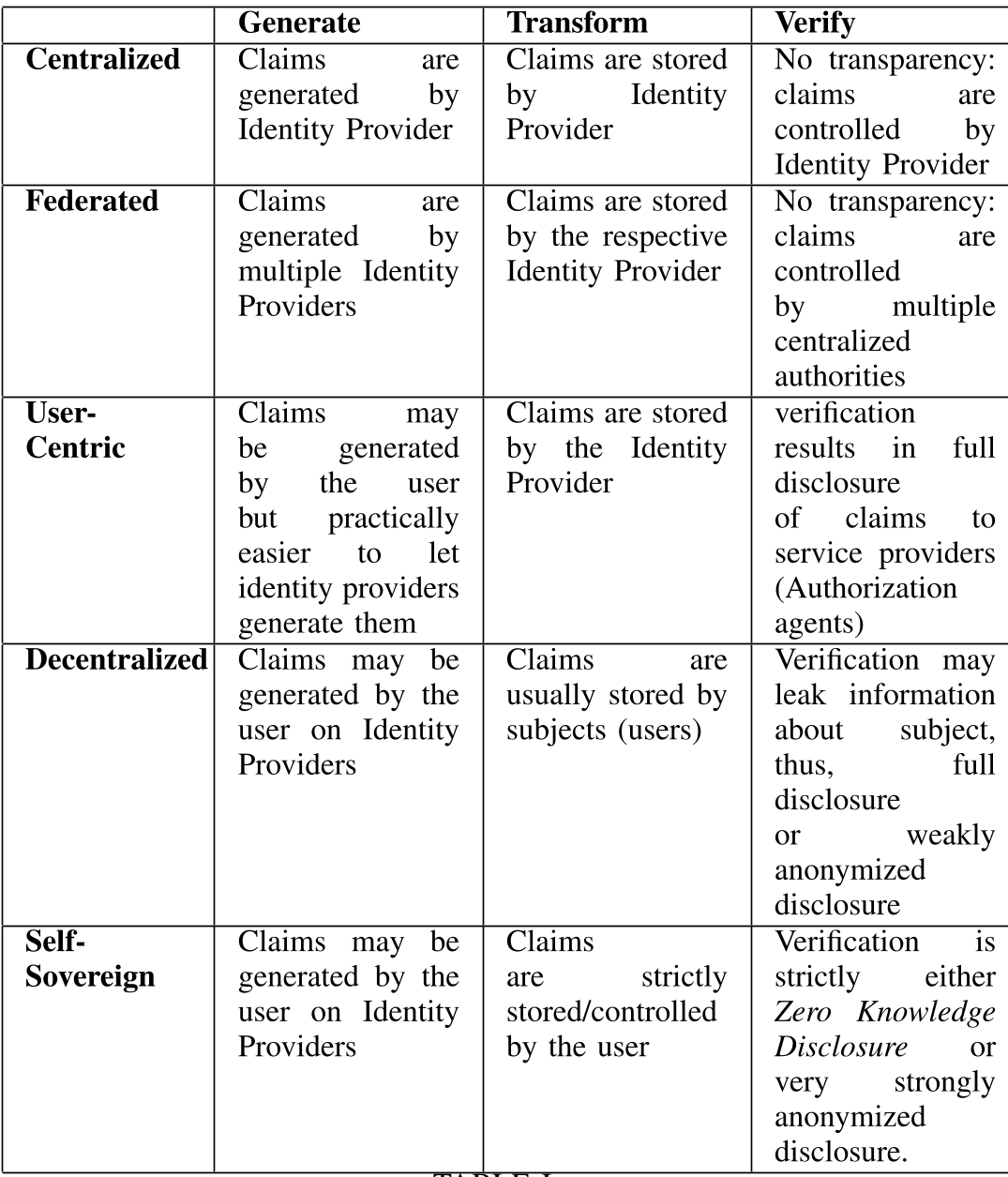 Table 1: Comparison of Identity Management Systems, transitioning from Centralized to Self-Sovereign.
Experiments & Results
The model was tested against a massive dataset containing over 200,000 nodes categorized as licit (wallets, exchanges) or illicit (scams, malware).
The findings were conclusive: the f-IRL master model using Maximum Likelihood estimation (Normal distribution assumption) was far more effective at picking "honest" nodes than traditional machine learning kernels like SVM.
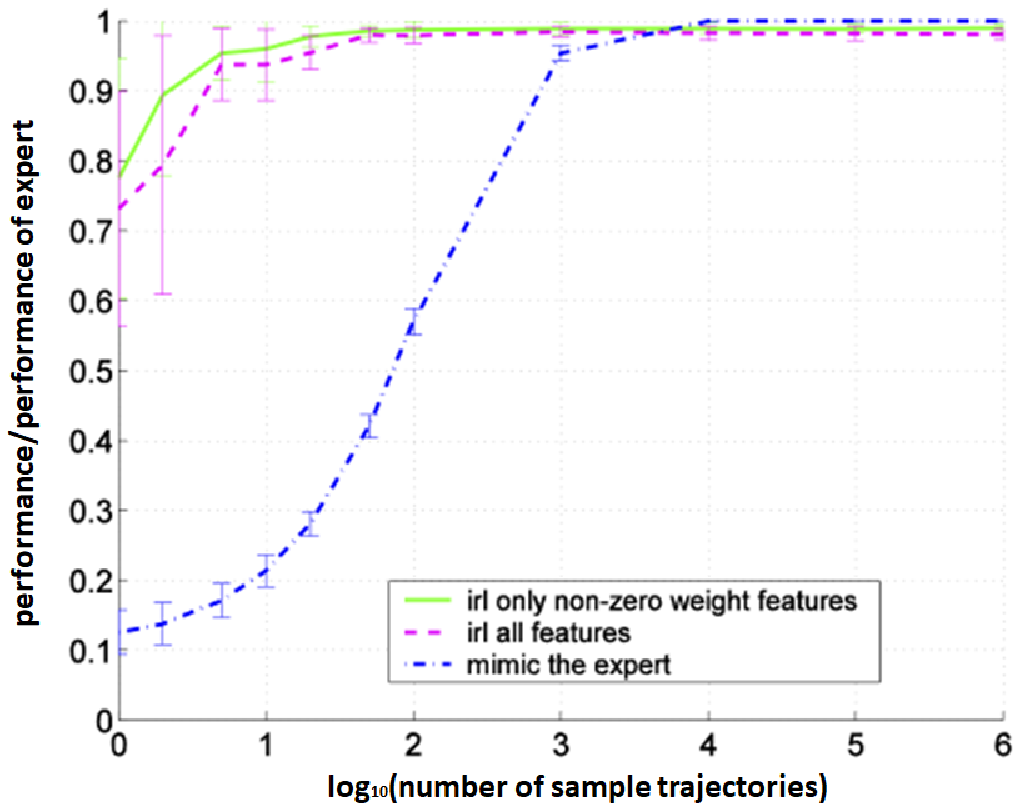 Fig 2: Multi-class simulations across different path lengths show that f-IRL can converge on expert-level transaction validation metrics even with complex, distributed data features.
Critical Insight & Future Outlook
The true value of this work lies in its adaptive security. Instead of hard-coded rules for what constitutes a "fake identity" or a "bad transaction," the system learns the "physics" of honesty through IRL.
Limitations: The authors acknowledge that this hasn't yet been deployed in a live, real-time Cyber-Physical System (CPS). The computational overhead of running an IRL agent alongside a blockchain miner remains a challenge for low-power IoT devices.
Conclusion: As we move toward a world of "Self-Sovereign" everything, the marriage of Blockchain's structure and Reinforcement Learning's intelligence will be the bedrock of digital trust.