
Beyond Subjective Scoring: Leveraging Data Mining for University Education Evaluation
An Ideological and Political Education Evaluation Method of University Students Based on Data Mining
This paper presents a data-driven evaluation framework for university ideological and political education using the K-means clustering algorithm. By analyzing counselor assessment scales across multiple dimensions, the method shifts from subjective traditional scoring to an objective, data-mining-based classification of management effectiveness.
TL;DR
This research introduces a data mining framework specifically designed to evaluate the effectiveness of ideological and political education in universities. By utilizing the K-means clustering algorithm, the authors transform subjective "counselor assessment scales" into objective performance categories, significantly improving the accuracy and scientific rigor of administrative evaluations.
Background & Positioning
In the era of Big Data, higher education institutions are no longer just places of learning; they are massive data generators. However, the evaluation of "soft" educational components—specifically ideological and political management—has historically remained stuck in the realm of subjective scoring and empirical observation. This paper positions itself as a bridge between traditional pedagogy and modern data science, moving from simple data storage to active Knowledge Discovery.
Problem & Motivation: The Flaws of Absolute Scoring
The authors identify a critical bottleneck in university management: Traditional analysis methods depend on absolute scores.
- Lack of Objectivity: Individual biases in student surveys often skew counselor ratings.
- Latent Inefficiency: Schools collect massive datasets that remain "cold," with no mechanism to find hidden rules or patterns.
- Complexity of Attributes: Evaluating a counselor isn't just about one number; it involves a multidimensional interplay of attitude, ability, and methodology.
The motivation was to find an unsupervised learning method that could group these complex attributes naturally, revealing the true distribution of management quality.
Methodology: The K-Means Framework
The core of the proposed method is the application of the K-means algorithm, chosen for its efficiency with large datasets.
1. Data Preprocessing & Attribute Selection
The authors condensed various metrics into four primary dimensions:
- Management Attitude
- Management Ability
- Management Method
- Management Effect
2. The Clustering Logic
Using Euclidean distance as the similarity measure, the algorithm iteratively assigns data points (counselor records) to the nearest cluster center. The goal is to minimize the objective function , which is the sum of squared errors across all clusters.
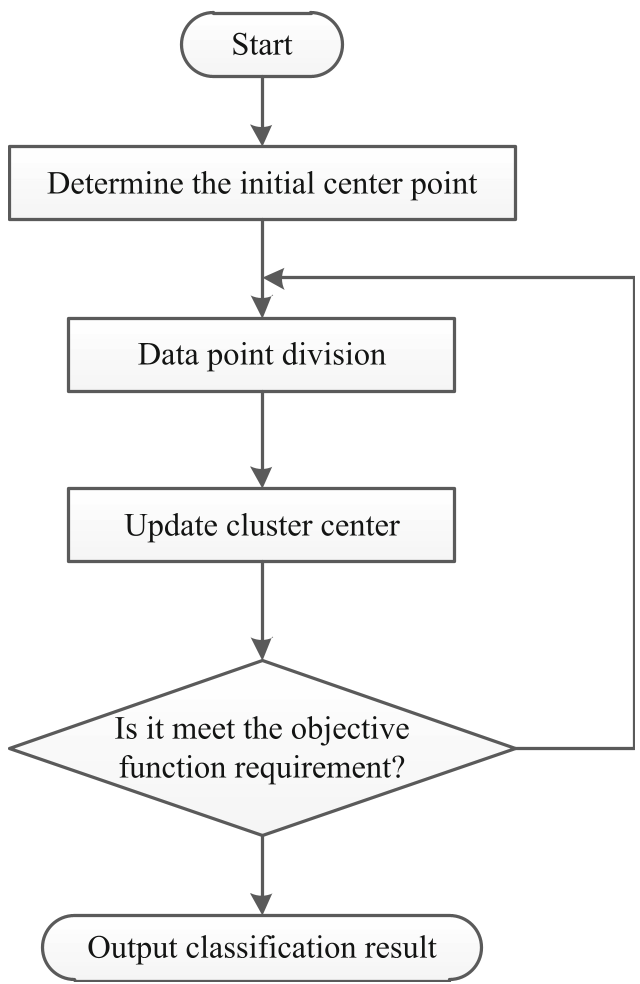 Figure 1: The standard K-means flow utilized for educator evaluation.
Experimental Analysis & Results
The study utilized 1,200 assessment tables from Inner Mongolia University for the Nationalities. The K-means algorithm (set to ) categorized the workforce into three performance tiers.
Performance Comparison
To validate the model, the authors compared the clustering results with an independent quantitative assessment of participate-based scores.
| Cluster Category | Management Attitude | Management Ability | Management Effect | Sample Number |
|---|---|---|---|---|
| Better | 0.76 | 0.75 | 0.79 | 36 |
| Medium | 0.63 | 0.58 | 0.56 | 74 |
| Poor | 0.34 | 0.30 | 0.30 | 10 |
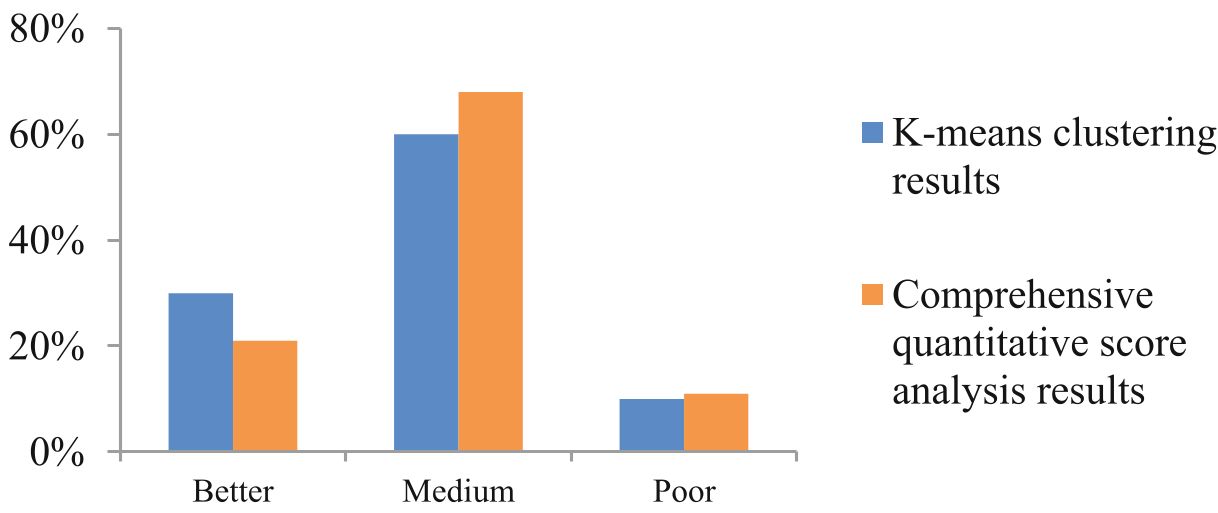 Figure 2: The high degree of correlation between the data mining results and external quantitative benchmarks confirms the model's validity.
The results demonstrated that the cluster-based categories were "basically consistent" with integrated quantitative results, yet the clustering approach provided a deeper understanding of why a counselor fell into a specific category by highlighting specific attribute weaknesses.
Critical Insight & Conclusion
Takeaway
The primary value of this work lies in its Inductive Bias—the assumption that counselor performance naturally clusters into distinct archetypes. By moving away from "top-down" scoring to "bottom-up" clustering, universities can identify specific areas for professional development (e.g., a counselor with high "Attitude" but low "Method").
Limitations & Future Work
While successful, the study relies on the K-means algorithm, which requires a pre-specified value and can be sensitive to outliers. Future research could explore Density-Based Clustering (DBSCAN) to better handle noise in student survey data or integrate Natural Language Processing (NLP) to analyze the open-ended text comments often found in student evaluations.
In conclusion, this paper successfully demonstrates that data mining is not just for commercial marketing; it is a vital tool for the scientific modernization of university governance.