
Engineering Education Excellence: Insights from the 2016 IEEE & FIE Awards
18913_2016 IEEE Education Society Awards, 2016 Frontiers in Education Conference Awards, and Selected IEEE Awards.
This document serves as an official record of the 2016 IEEE Education Society, Frontiers in Education (FIE) Conference, and ASEE ECE Division Awards. It highlights the achievements of top-tier educators and researchers, such as Kathleen E. Wage and Sanjit A. Seshia, who have advanced pedagogical tools like the Signals and Systems Concept Inventory (SSCI) and embedded systems textbooks.
TL;DR
The 2016 IEEE Education Society and Frontiers in Education (FIE) awards recognize a pivotal shift in engineering pedagogy: moving away from rote memorization toward Active Learning, Cyber-Physical System (CPS) literacy, and Inclusive Excellence. Key highlights include the success of standardized conceptual assessment tools and the global expansion of remote laboratories (iLabs).
The Core Challenge: Beyond Technical Fluency
The persistent difficulty in engineering education is not just the complexity of the material, but the Inductive Bias inherent in traditional teaching methods. Historically, subjects like Linear Systems and Signal Processing have been gatekeeper courses. The 2016 awardees were selected because they moved the needle on two fronts:
- Conceptual Assessment: Measuring if students actually "get it" rather than just solving equations.
- Diversity and Identity: Understanding the psychological barriers that prevent women and minorities from feeling like they belong in the engineering "manifold."
Methodology Spotlight: Active Learning and Standardized Inventories
One of the standout contributions highlighted is the work of Dr. Kathleen E. Wage, recipient of the Harriet B. Rigas Award. Her primary vehicle for impact was the Signals and Systems Concept Inventory (SSCI).
Why the SSCI Matters:
- Architecture: Unlike a standard final exam, the SSCI is a standardized instrument designed to isolate and measure specific conceptual "bottlenecks."
- Scalability: It has been translated into Spanish and Chinese, administered to over 2,600 students across 28 schools.
- Heuristic Value: It allows faculty to perform an Ablation Study on their own teaching methods—seeing exactly which pedagogical changes lead to better conceptual retention.
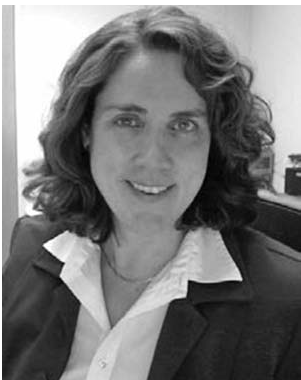 Figure 1: Dr. Kathleen E. Wage, champion of active learning and assessment instrumentation.
Modernizing the Curriculum: CPS and iLabs
Technical excellence was also recognized in the domain of Cyber-Physical Systems (CPS). Prof. Sanjit A. Seshia (Terman Award) was lauded for his work in defining the educational framework for CPS—a field where hardware and software are inextricably linked.
Similarly, the development of iLabs (by awardees like Kayode P. Ayodele and Lawrence O. Kehinde) addresses the "Hardware Access Gap." By creating remote laboratories for teaching advanced logic concepts, they have enabled students in regions like Nigeria to interact with high-end FPGA hardware through a web interface, effectively democratizing SOTA engineering tools.
Experimental Results: Quantitative Gains in Engagement
The awards don't just recognize effort; they recognize measurable impact.
- Community Growth: The New South Wales Chapter achieved an 80% increase in membership over two years by focusing on "Teaching Assistant" development and frequent technical meetings.
- Cross-Disciplinary Impact: The Benjamin J. Dasher Award-winning paper, "DISSECT," explored the relationship between computational thinking and English Literature, proving that STEM concepts can be "latent" within liberal arts curricula, increasing reach to K-12 students.
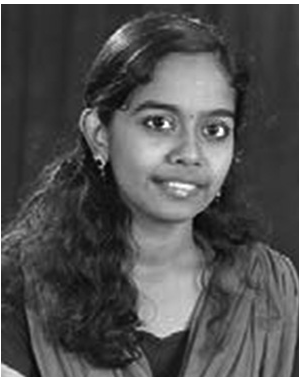 Figure 2: Recognition of the Batchman Best Paper awards, highlighting multi-institution demographic studies.
Critical Insight & Conclusion
The overarching takeaway from the 2016 proceedings is that Engineering Education is becoming a rigorous data science in its own right. Whether it is through "Interpretive Phenomenological Analysis" (as seen in the Helen Plants Award) or the use of "Random Matrix Theory" in signal processing education, the intuition is clear:
To improve the engineering output, we must first upgrade the educational operating system.
Limitations: While the move toward remote labs and active learning is strong, the report notes that sustainable implementation requires heavy institutional support and long-term funding, which remains a hurdle for many emerging programs.
Future Outlook: We expect to see further integration of Machine Learning and Big Data—not just as subjects to be taught, but as tools to personalize the learning experience for a diverse global student body.