
Scaling Radiological Safety: An IoT-Driven Architecture for Environmental Radiation Monitoring
IEEE instrumentation & measurement magazine
The paper presents a fully-integrated IoT platform for environmental radiation monitoring using a hierarchical sensor network. It leverages LoRaWAN for long-range communication and the ThingsBoard open-source platform for real-time data visualization and management.
Executive Summary
Monitoring radioactive isotopes is a critical task for both civil safety and industrial compliance. However, the industry has long struggled to balance the need for continuous, wide-area monitoring with the high-resolution data required for isotope identification.
In this paper, a research team from the University of Naples Federico II introduces a breakthrough IoT-oriented platform. By combining specialized radiation sensors with LoRaWAN and the ThingsBoard cloud platform, they have created a scalable, cost-effective network capable of not just detecting radiation, but identifying specific pollutants like Cobalt-60 in real-time.
Motivation: The Gap in Traditional Monitoring
Previous Wireless Sensor Networks (WSNs) for radiation monitoring faced a significant trade-off. Simple Geiger-based systems are low-power but "blind" to the type of isotope. Conversely, laboratory spectrometers provide detailed data but are bulky, expensive, and difficult to deploy across large geographic areas.
The authors identified that current IoT protocols like SigFox are too restrictive (limiting data to 12-byte packets), making it impossible to transmit the complex energy spectra needed for isotope identification. To solve this, they pivoted to a LoRaWAN-based architecture that supports higher data flexibility and long-range connectivity.
Methodology: The Dual-State Architecture
The core innovation lies in the system's ability to switch between two operating states:
- Monitoring State: Geiger nodes measure pulses per minute (PPM) every 30 minutes. This is a low-power "always-on" mode to detect anomalies.
- Identification State: Once a threshold is crossed, Silicon (alpha) and Scintillation (gamma) spectrometers are activated to transmit full energy histograms.
Hardware and Signal Processing
Each node utilizes a BeagleBone Black running Linux. For the spectrometers, the team developed a custom conditioning chain:
- Preamplifier & Shaping: Converts current pulses into semi-Gaussian voltage pulses.
- Peak Detector: Captures the maximum energy of the radiation event.
- DMA-driven ADC: Uses a 5.1 MHz sampling rate to build an energy histogram without taxing the CPU.
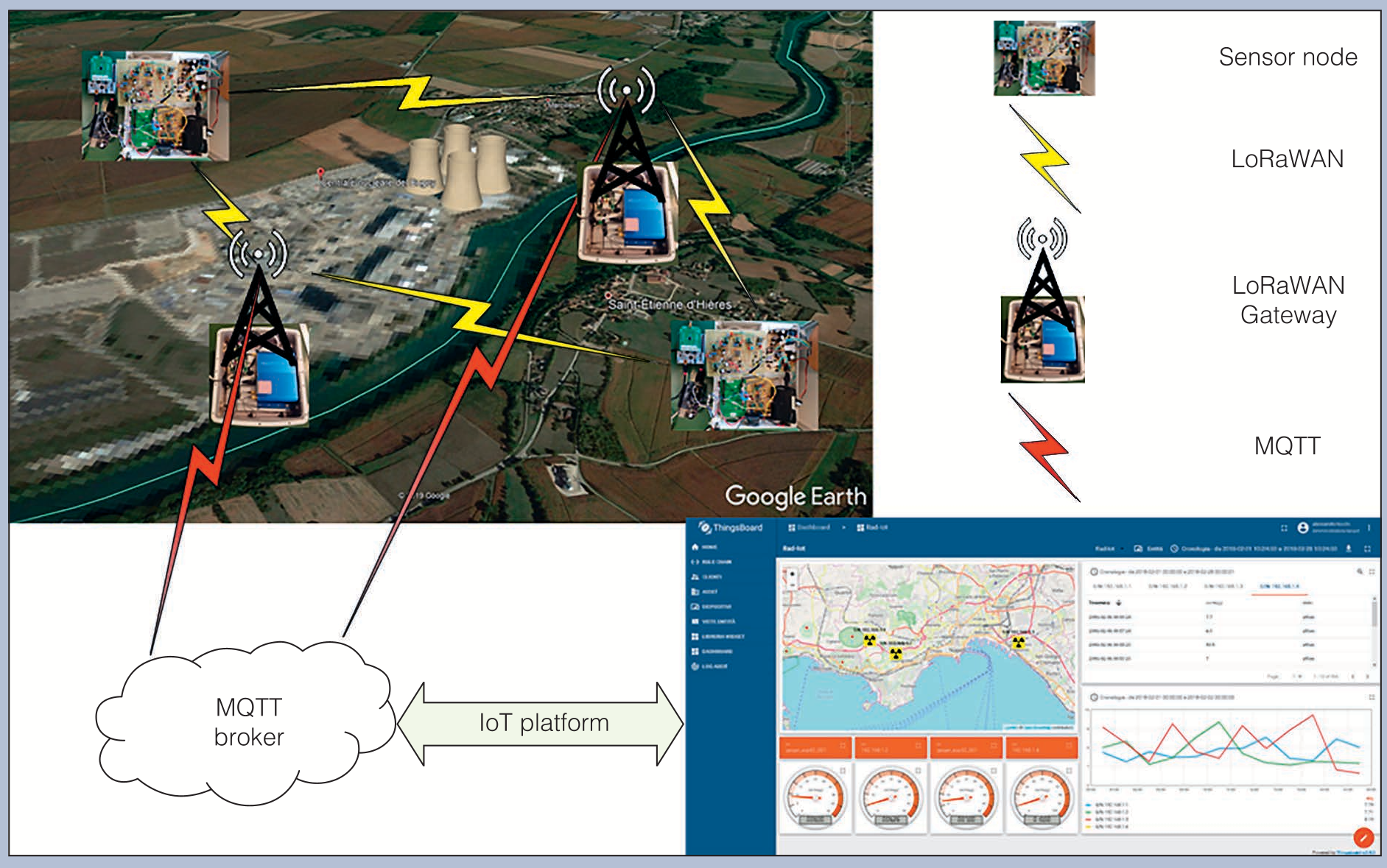 Figure 1: The proposed IoT platform architecture connecting sensor nodes via LoRaWAN to the ThingsBoard Dashboard.
Experimental Results: High-Fidelity in the Field
The researchers validated their prototype using known radioactive sources. The gamma-ray spectrometer (based on a NaI(Tl) crystal) successfully resolved the signature peaks of Cobalt-60.
- Range: 2 MeV Full-Scale.
- Resolution: 100 keV (Full Width at Half Maximum).
- Communication: Reliable data transfer over 15km in open space.
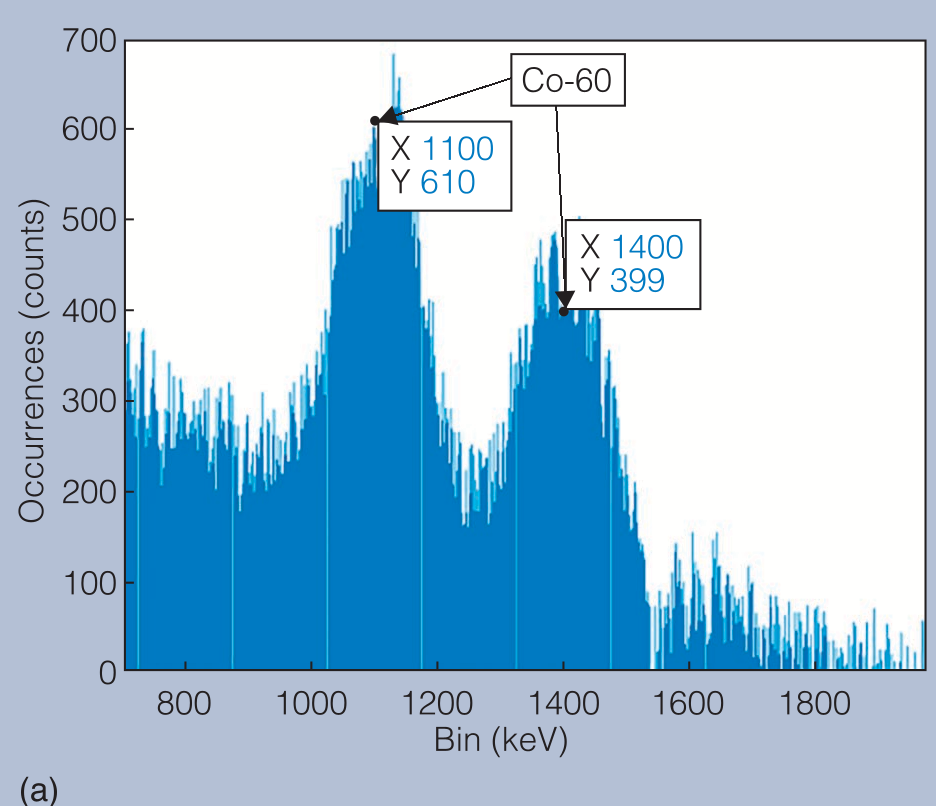 Figure 2: Energy spectrum measurement for Gamma (a) and Alpha (b) particles, demonstrating precise isotope peak identification.
Critical Insight & Conclusion
The move from closed, proprietary WSNs to an Open-Source IoT Dashboard (ThingsBoard) via MQTT signifies a major shift in industrial monitoring. It allows for:
- Georeferenced monitoring on interactive maps.
- Dynamic configuration of thresholds and sampling rates remotely.
- Scalability, enabling the addition of new chemical or physical sensors with minimal software overhead.
Takeaway: While the hardware is impressive, the true value of this work is the communication strategy. By choosing LoRaWAN over SigFox and utilizing a dual-state logic, the authors solved the "large data vs. low power" bottleneck that has plagued remote sensing for years. This architecture provides a blueprint for any environmental monitoring task where "detecting something happened" is only half the battle, and "identifying what it is" is the ultimate goal.