
ELR-DC: Boosting Location Recommendations via Community-Driven Hyper-Optimization
IEEE International Conference on Internet of Things (iThings) and IEEE Green Computing and Communications (GreenCom) and IEEE Cyber, Physical and Social Computing (CPSCom) and IEEE Smart Data (SmartData)
The paper introduces ELR-DC, an Enhanced Location Recommendation system based on Community Detection. It integrates an Improved Discrete Particle Swarm Optimization (IMDPSO) algorithm for community detection with a collaborative filtering (CF) mechanism to improve recommendation precision and solve the data sparsity issue in Location-Based Social Networks (LBSNs).
TL;DR
The paper presents ELR-DC, a framework that revolutionizes location recommendations by first "clustering" the world. By using an Improved Discrete Particle Swarm Optimization (IMDPSO) to identify user communities, the system narrows down the search for similar users, drastically improving both the speed and accuracy of Collaborative Filtering (CF) in sparse datasets.
Background & Motivation: The Sparsity Trap
In the era of Location-Based Social Networks (LBSNs), recommending the next "hot spot" is a challenge. Standard Collaborative Filtering (CF) relies on finding similar users. However, with millions of locations and users, the overlap in check-ins is often near zero—this is the Data Sparsity problem. Searching for neighbors across the whole global population is not only slow but often noisy.
The authors' insight is simple: Birds of a feather flock together. By identifying social communities first, we can find high-quality neighbors within a specific cluster, making the recommendation more relevant and computationally efficient.
Methodology: The IMDPSO Engine
The core of the paper lies in how it finds these communities. It treats community detection as an optimization problem where the goal is to maximize Modularity (Q).
1. Community Detection via IMDPSO
Traditional community detection can get stuck in local optima. The authors use an Improved Discrete Particle Swarm Optimization:
- Position & Velocity: Unlike standard PSO which works in continuous space, the discrete version redefined operators () to handle community labels.
- Modularity Optimization: The fitness function is the Modularity , which measures the density of links inside communities versus links between communities.
- Merging Strategy: To avoid fragmented clusters, a merging phase is introduced to consolidate small, highly-connected groups.
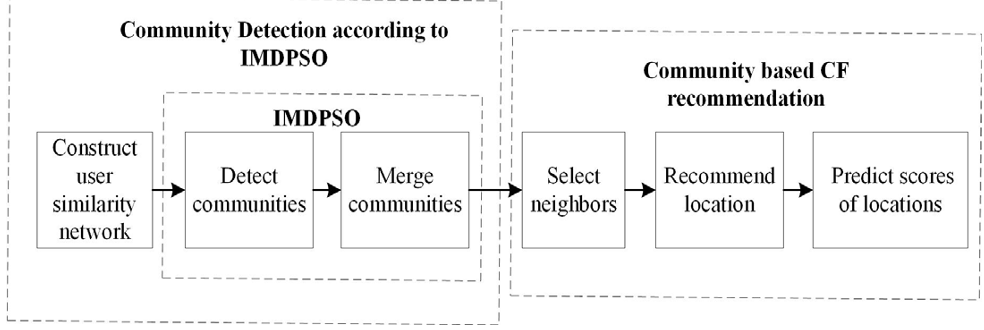 Figure 1: The ELR-DC framework showing the flow from Community Detection to Recommendation.
2. Community-Based Collaborative Filtering
Once communities are formed, the system calculates a hybrid similarity score between users within the same community: Where represents interest similarity (based on check-in frequency) and represents rating similarity (Pearson correlation).
Experimental Insights
The authors validated their approach by tracking the Modularity and comparing recommendation metrics (Precision and Recall) against baseline CF models.
- Modularity Gains: The IMDPSO achieved a modularity of 0.695, indicating very well-defined social clusters.
- Precision and Recall: The "CFCF-IMDPSO" (the paper's method) consistently outperformed other CF variants. By focusing on community neighbors, the probability of recommending a location the user actually visits (Precision) increased significantly.
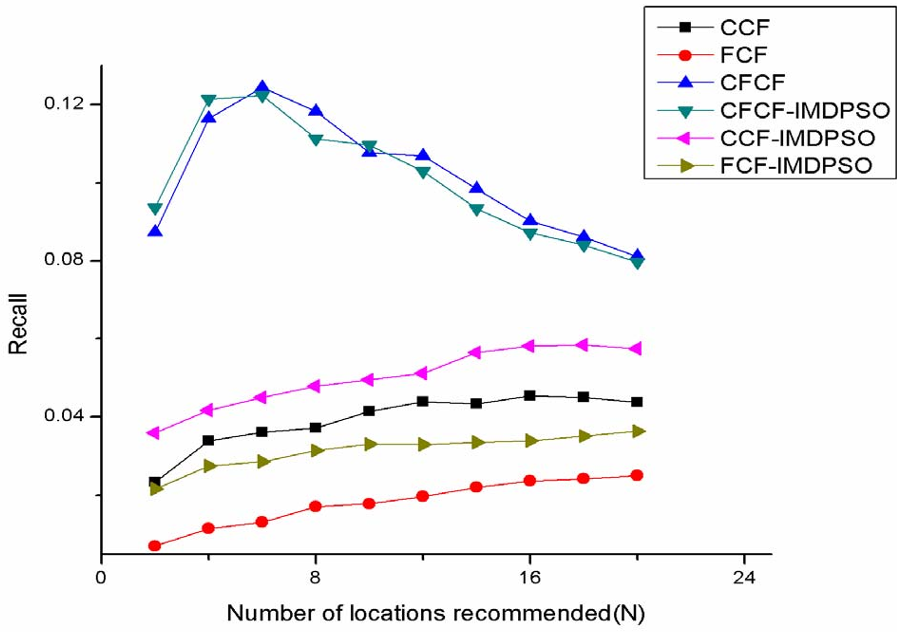 Figure 2: Performance comparison showing the superiority of the community-based approach over traditional baselines.
Critical Analysis & Conclusion
Takeaway
ELR-DC proves that the "pre-processing" step of community detection is not just an administrative task—it is a powerful inductive bias. By forcing the CF model to look at users within the same discrete swarm-optimized community, the model effectively filters out noise that plagues global CF methods.
Limitations & Future Work
While the IMDPSO is effective, the paper's reliance on a static merging strategy could be its Achilles' heel in highly dynamic networks where communities change daily. Future research could explore:
- Dynamic Evolution: How communities change over time (Temporal Community Detection).
- Cross-Domain Benefits: Applying the IMDPSO logic to multimodal check-ins (e.g., combining location with photo-content analysis).
In summary, this work provides a robust bridge between Swarm Intelligence and Recommender Systems, offering a scalable solution to one of the industry's oldest problems: making sense of sparse social data.