
RTPS: Redefining TCP Reliability through the Lens of Social Popularity
IEEE Transactions on Vehicular Technology
This paper introduces RTPS (Overhead Control with Reliable Transmission of Popular Packets), a socially-aware transport layer mechanism for Ad-Hoc Social Networks (ASNETs). It prioritizes bandwidth allocation and acknowledgment speed based on node popularity (degree centrality) to ensure reliable communication for high-impact nodes while minimizing network overhead through dynamic delayed acknowledgments.
TL;DR
In Ad-Hoc Social Networks (ASNETs), not all data is created equal. RTPS (Overhead Control with Reliable Transmission of Popular Packets) is a novel transport-layer scheme that uses degree centrality to prioritize traffic. By giving popular nodes more bandwidth and faster acknowledgments while delaying ACK packets for others to reduce collisions, RTPS boosts throughput by up to 46% and slashes latency compared to standard adaptive TCP variants.
The "Fairness" Trap: Why Standard TCP Fails ASNETs
Traditional TCP is built on a philosophy of "blind fairness," where bandwidth is shared based on Round Trip Time (RTT). However, in a social network, certain nodes act as hubs—they are "popular" because they connect various communities.
When multiple senders funnel data toward a single receiver (a common ASNET scenario), standard TCP leads to:
- Bandwidth Inefficiency: High-priority social data is dropped just as frequently as low-priority background tasks.
- ACK Collisions: In multi-hop environments, data packets and acknowledgment (ACK) packets often use the same path, leading to massive contention and "hidden node" collisions.
RTPS breaks the "fairness" mold by arguing that social importance should dictate network priority.
Methodology: The RTPS Architecture
RTPS operates entirely on the receiver side, maintaining end-to-end TCP semantics without requiring changes to intermediate routers or the standard TCP header. It consists of three pillars:
1. Link Capacity Computing Module (LCCM)
It calculates the "consumable link capacity" by observing packet arrival intervals. It dynamically senses when a flow is suffering from contention and adjusts the total target capacity accordingly.
2. Degree-Centrality based Rate Calculation (DRCM)
This is the "Social Brain" of the system. It calculates the popularity of each sender using Degree Centrality (), which measures the number of direct social connections.
- High Popularity: Receives residual bandwidth first.
- Low Popularity: Guaranteed a "least rate" to prevent total starvation.
3. Popularity-aware Flow and ACK Control (PFAOCM)
This module performs the actual traffic shaping. It adjusts the Advertised Window () to limit the sender's rate and uses a Dynamic Delayed ACK window ().
- For the most popular nodes, ACKs are sent immediately to ensure high reliability and fast recovery.
- For less popular nodes, ACKs are delayed to reduce the number of control packets on the wire, effectively "cleaning up" the airwaves for prioritized traffic.
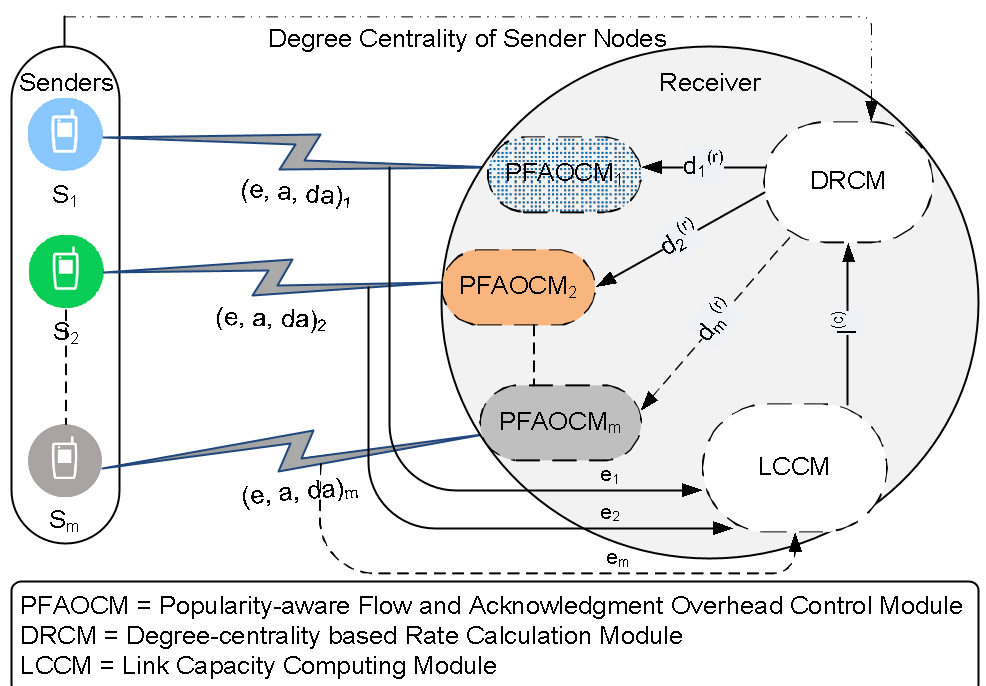 Fig 2: The RTPS framework linking social metrics to transport layer windows.
Experimental Battleground: RTPS vs. the SOTA
The researchers compared RTPS against TCP-DAAp and TCP-DCA (standard delay-ACK protocols) across various hop distances (3 to 15) and flow counts.
Throughput and Latency
As the network grows more complex (more hops), RTPS maintains a significant lead. By intelligently delaying ACKs, it prevents the "ACK storm" that typically collapses multi-hop wireless links.
- Throughput: RTPS outperformed TCP-DAAp by 39%.
- Latency: RTPS showed a 28-43% reduction in transmission delay.
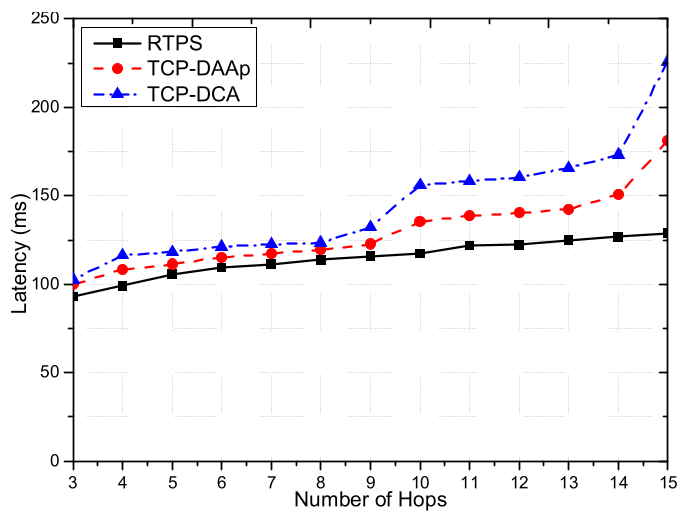 Fig 5: RTPS maintains superior throughput even as hop count increases.
Social Bandwidth Division
One of the most striking results is the bandwidth division. When a popular node (SA1) experiences local interference, RTPS doesn't just let the bandwidth go to waste. It reallocates the unused capacity to the "next-best" social node, ensuring the community's overall data throughput remains high.
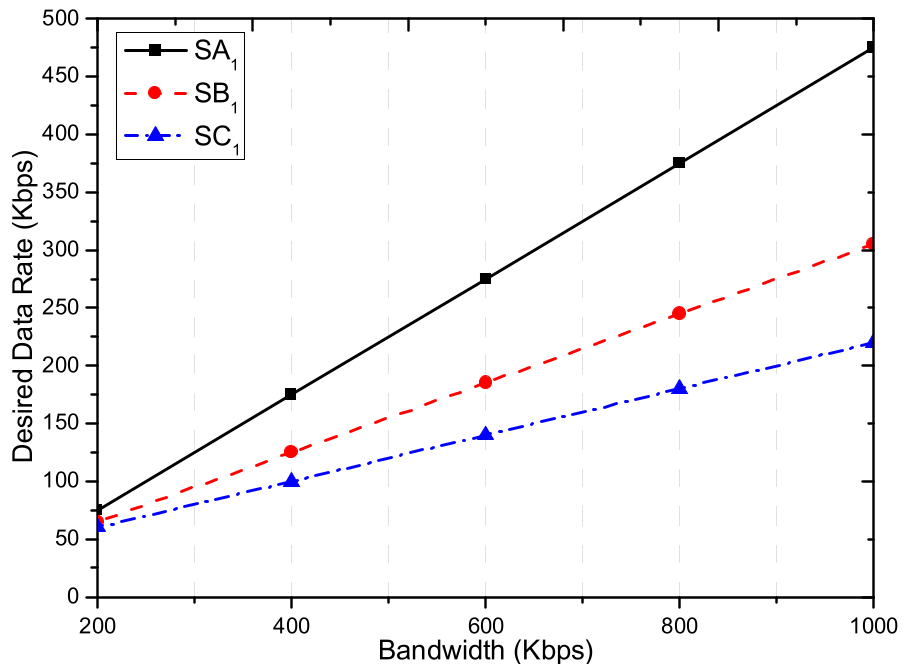 Fig 4: Dynamic bandwidth allocation between High, Average, and Low popularity nodes.
Critical Insight & Future Outlook
RTPS successfully proves that Social Centrality is a powerful proxy for Network Demand. By prioritizing "Popular Packets," the system inadvertently optimizes the most critical paths of a social network's graph.
Limitations: Currently, RTPS uses a static community structure. In reality, human mobility is fluid. The next frontier for this research—as noted by the authors—will be integrating dynamic mobility patterns and addressing "selfish nodes" that might try to spoof high popularity to hog bandwidth.
Takeaway: RTPS is a masterclass in cross-domain optimization, showing that the best way to fix a technical problem (TCP congestion) might actually lie in understanding human behavior (social popularity).