
RTPS: Prioritizing "Social Influencers" in Ad-hoc Networks to Solve TCP Congestion
IEEE Transactions on Vehicular Technology
The paper proposes RTPS (Overhead Control with Reliable Transmission of Popular Packets), a socially-aware transport layer mechanism designed for Ad-hoc Social Networks (ASNETs). It prioritizes data transmission and acknowledgment based on node popularity (degree centrality) while dynamically adjusting acknowledgment delays to mitigate congestion and MAC-layer overhead.
TL;DR
In Ad-hoc Social Networks (ASNETs), not all data is created equal. RTPS (Overhead Control with Reliable Transmission of Popular Packets) is a novel transport-layer protocol that borrows the concept of Degree Centrality from social science to optimize TCP. By giving more bandwidth and faster acknowledgments to "popular" nodes, it boosts throughput by up to 46% while drastically reducing the collision-induced overhead that plagues traditional wireless networks.
Problem & Motivation: The "Social" Failure of Traditional TCP
Traditional TCP was designed for stable, wired environments where fairness is defined by RTT (Round Trip Time). In the dynamic world of ASNETs—where human mobility and community structures dictate traffic—this "one-size-fits-all" fairness becomes a bottleneck:
- ACK Contention: In multi-hop wireless paths, data packets and acknowledgment (ACK) packets often use the same path, leading to massive collisions.
- Hidden/Exposed Node Problems: These issues cause packet drops near the receiver, which TCP misinterprets as network congestion, leading to unnecessary rate throttling.
- Social Blindness: A "popular" node with high social connectivity often acts as a data hub. If its packets are treated with the same priority as an isolated node, the entire community's data flow suffers.
Methodology: Engineering Social Intelligence into the Transport Layer
The RTPS framework operates at the receiver side to maintain end-to-end semantics without requiring changes to intermediate routers or the physical layer.
1. Popularity Calculation via Degree Centrality
RTPS uses Degree Centrality () to quantify a node's popularity, calculated by the number of direct relationships it maintains within its social community. This score becomes the weight for bandwidth allocation, ensuring that "influential" nodes receive a larger slice of the consumable link capacity.
2. The Three-Module Architecture
- LCCM (Link Capacity Computing Module): Observes packet inter-arrival times to estimate the actual available bandwidth at the receiver.
- DRCM (Degree-centrality based Rate Calculation Module): Redistributes this bandwidth. It first ensures a "least rate" for all nodes to prevent starvation, then allocates residual bandwidth based on popularity scores.
- PFAOCM (Popularity-aware Flow and ACK Overhead Control Module): The "engine" that controls the advertised window () and the delayed ACK window ().
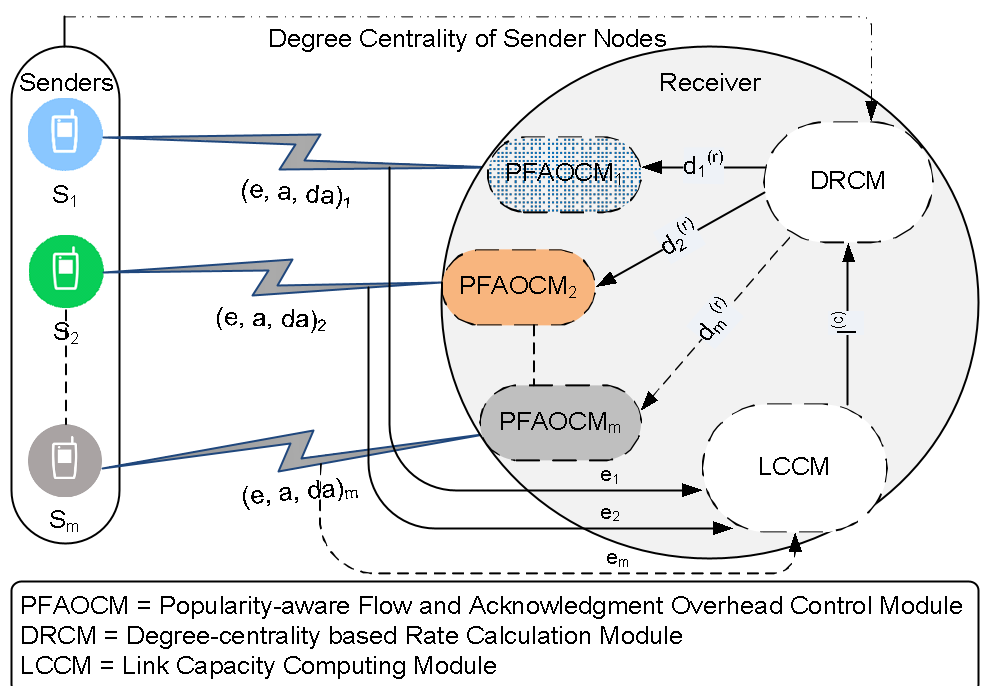 Fig 1: The RTPS design showing the interaction between the popularity calculation and window control.
3. Dynamic Delayed Acknowledgments
Unlike standard TCP which might ACK every 1-2 packets, RTPS uses a dynamic window ().
- For Popular Nodes: ACKs are sent more frequently (smaller ) to ensure the sender can quickly ramp up its window.
- During Congestion: is increased to reduce the number of control packets on the air, effectively quieting the network and reducing collisions.
Experiments & Results: SOTA Performance
RTPS was evaluated against two major baselines: TCP-DAAp and TCP-DCA.
Throughput and Scalability
As the number of hops increases, the throughput of all protocols drops due to increased contention. However, RTPS maintains a significantly higher baseline. At 15 hops, RTPS outclasses its rivals because its dynamic windows adapt to the "network state" rather than relying on fixed thresholds.
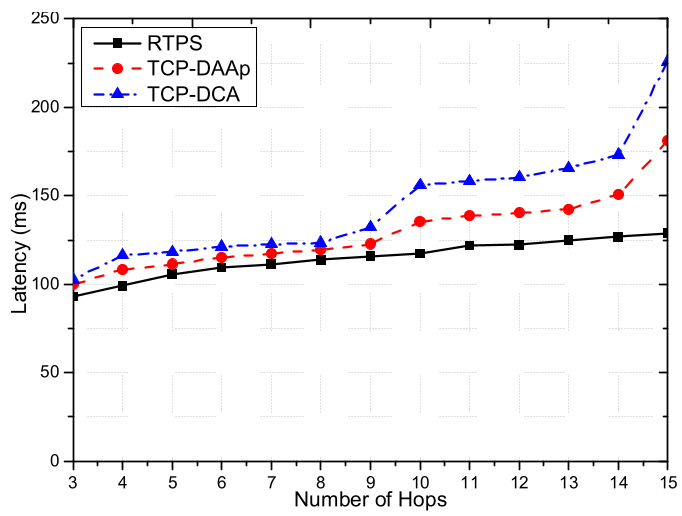 Fig 2: Performance comparison in terms of throughput over increasing hops.
Overhead Reduction
RTPS shines in Overhead Control. By strategically delaying ACKs for less critical flows, it reduces the "Monitoring Overhead Ratio" (ACKs per data packet) and "Coordination Overhead" (unnecessary retransmissions). Experimental data showed a significant drop in these ratios as the number of concurrent flows increased compared to TCP-DAAp.
Critical Insight: Why it Works
The brilliance of RTPS lies in its asymmetric treatment of reliability. In a bandwidth-constrained wireless environment, forcing perfect fairness actually degrades the experience for everyone. By prioritizing the "heavy hitters" (popular nodes) and using them to drive efficient link utilization, RTPS ensures that the most critical social data reaches its destination with minimal retransmission.
Conclusion & Future Work
RTPS proves that social metadata is a powerful tool for cross-layer optimization. It successfully mitigates the "ACK storm" problem while respecting the social hierarchy of the nodes it serves. Future Outlook: The authors suggest integrating Human Mobility Patterns and exploring "selfish" node behavior, where nodes might not cooperate in routing, requiring even more robust transport-layer incentives.
Key Takeaway: Don't just optimize for the pipe; optimize for the people using it. RTPS is a step toward a truly "socially-aware" internet stack.