
FoodLog: Mining Dietary Patterns for Automated Social Communities
Image-based dietary information mining for community creation in a social network
The paper introduces an image-based dietary information mining framework for FoodLog, a specialized social network. By utilizing the Expectation Maximization (EM) algorithm on nutrient data extracted from meal photos, the system achieves automated community formation based on users' actual eating habits and dietary balance.
TL;DR
Researchers from the University of Tokyo have developed a way to automatically build healthy communities by analyzing what people eat. By applying clustering algorithms to food photos uploaded to the FoodLog social network, the system groups users with similar dietary habits, enabling automated peer support and nutritional intervention.
Background: Beyond Manual Calorie Counting
In 2010, the "Web 2.0" wave brought diet-tracking apps, but most relied on manual entry—a chore few users maintained. FoodLog changed the game by allowing users to simply snap a photo. However, the problem remained: how do we connect users who share the same struggles or goals? This paper tackles the challenge of Automated Community Creation by looking at the "Latent Variables" of our eating habits.
The Problem & Motivation
Manual searching for communities is inefficient. Most SNS platforms suggest friends based on static profiles or interests. The authors argue that in healthcare, behavior is more important than stated interest. If you eat a high-grain, low-vegetable diet, you should be grouped with others in that situation to either seek advice or share recipes.
Methodology: From Pixels to Nutrients
The core of the system is a two-step transformation:
- Image Analysis: Using SVM (Support Vector Machines) and SIFT features, images are classified as food and then broken down into five components: Grains, Meat, Vegetables, Fruit, and Dairy (measured in "Servings" or SV).
- The Normalized Distance (d): To evaluate "healthiness," the authors proposed a mathematical formula that measures the Euclidean distance from an "Ideal Balance."
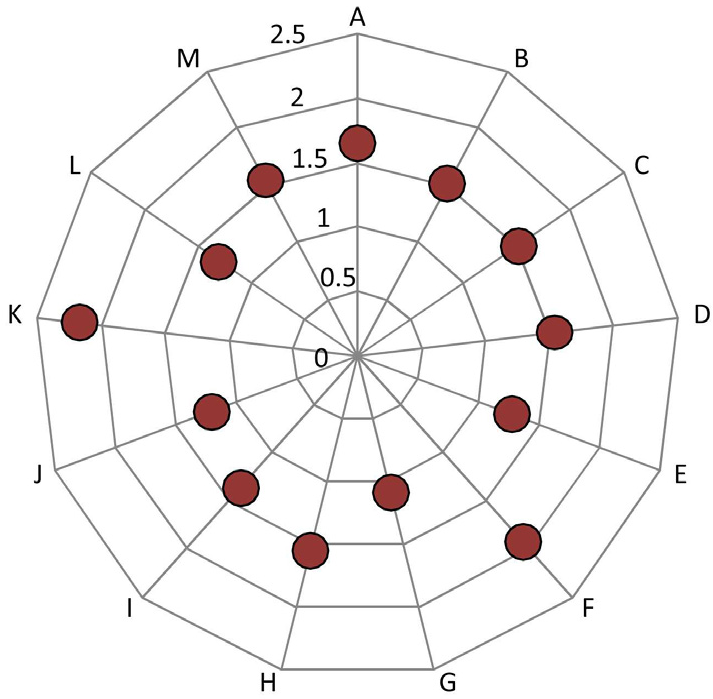
Clustering via EM Algorithm
The researchers applied the Expectation Maximization (EM) algorithm to group 1,293 reviewed images into 7 clusters. Unlike K-Means, EM is particularly adept at handling latent variables—the underlying preferences that explain why a user consistently chooses a specific type of meal.
Experimental Analysis: What do the clusters say?
The results revealed clear "natural groupings":
- Cluster 1: Light meals (Cereal, Coffee).
- Cluster 3: Packed/Convenience food (very common among busy users).
- Cluster 6: High-balance meals with a wide variety of dishes.
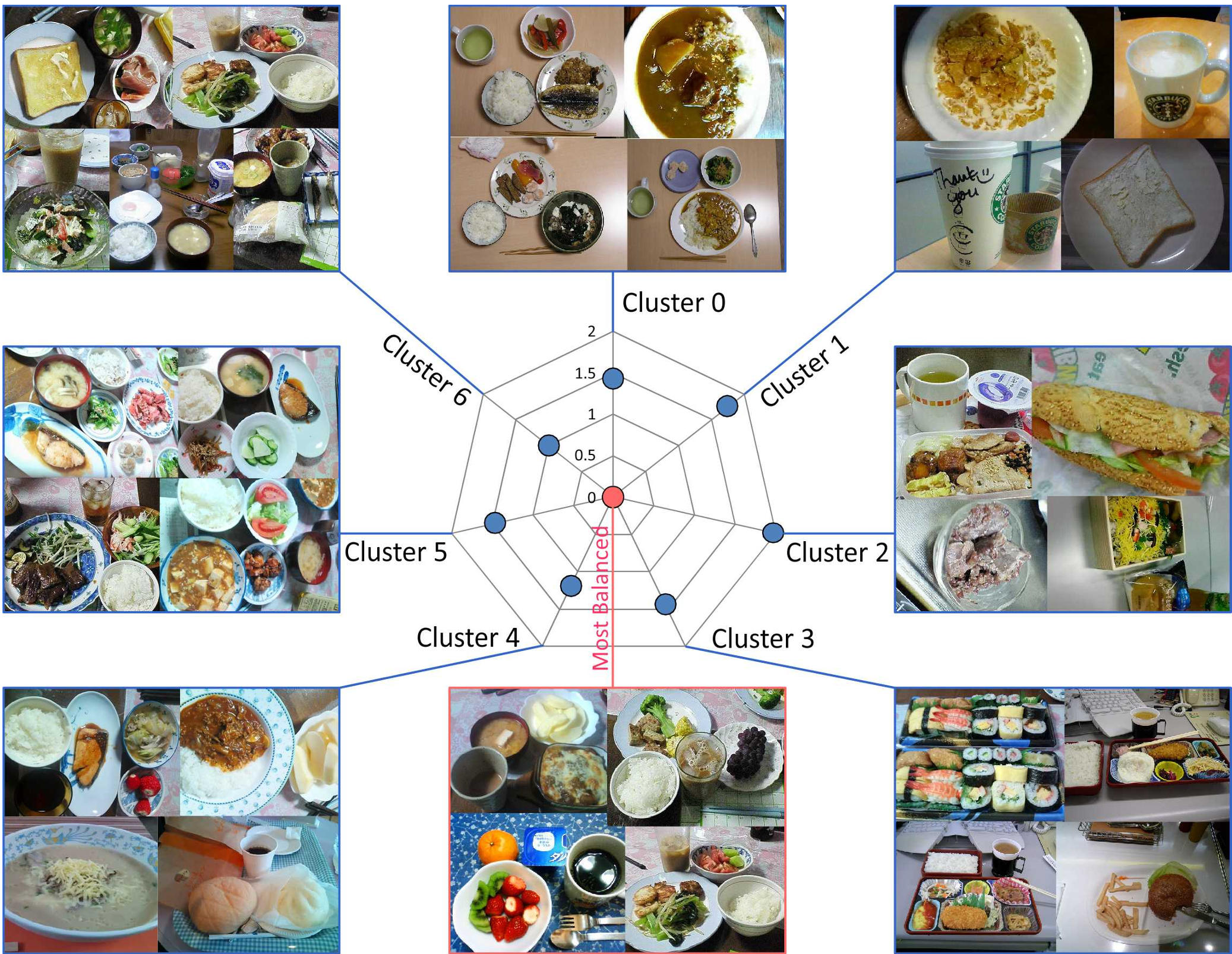
One fascinating insight was the "User-Cluster Membership." As shown in the table below, most users don't belong to just one category; they have a "primary" cluster but drift between others, reflecting the variety of human eating habits.

Critical Insight & Future Outlook
While the method is promising, it highlights a major hurdle in tech-mediated health: Data Accuracy. The researchers found that errors in "Meat or Beans" detection (an over-estimation bias) could lead to incorrect community assignments if the data isn't manually "reviewed" by users.
However, the Takeaway is powerful: By mapping users into a multi-dimensional nutritional space, we can create social networks that accurately reflect our lifestyles. Future iterations involving Deep Learning (CNNs/Transformers) could solve the accuracy issue, making FoodLog-style community creation a standard feature in modern health-tech ecosystems.
Conclusion
This work represents an early but significant step in image-based social discovery. It moves us away from self-reported data toward behavioral data, ensuring that the communities we join are truly relevant to our daily lives.