
ImageSense: Redefining the Human-Computer Partnership in Creative Ideation
ImageSense: An Intelligent Collaborative Ideation Tool to Support Diverse Human-Computer Partnerships
ImageSense is an intelligent, collaborative digital mood board tool designed to support professional designers in "human-computer partnerships." It integrates multi-modal features like Semantic Search, ImageCascade (serendipitous browsing), and AI Suggestions via a cooperative contextual bandit to facilitate both divergent and convergent ideation.
TL;DR
ImageSense is a sophisticated digital mood board tool that bridges the gap between human intuition and machine intelligence. By combining collaborative work areas with AI-driven semantic search, serendipitous image streams, and "reflection" tag clouds, it transforms the solitary act of image collection into a dynamic partnership between designers and intelligent agents.
Academic Positioning: This work is a pivotal study in CSCW (Computer-Supported Cooperative Work) and CST (Creativity Support Tools), moving beyond simple recommender systems toward a framework of "Shared Agency."
The Problem: The "Blank Page" and the Limits of Keywords
Professional designers rely on mood boards to visualize ideas that are often "hard-to-express." However, existing tools create two major friction points:
- Semantic Gap: Typing "organic" into a search engine might return thousands of literal plant photos, missing the feeling of organic texture a designer actually seeks.
- Agency Rigidness: Most AI tools either do too much (overriding the designer's intent) or too little (acting as a basic search bar).
Methodology: The Core Engine of ImageSense
The authors designed ImageSense to support three distinct modes of inspiration:
1. The ImageCascade (Serendiptious Discovery)
Rather than a static grid, the Cascade allows images to flow downward at varying speeds. This mimics the "magazine flipping" experience, allowing for low-stakes, serendipitous encounters with visual material.
2. Semantic Search & The Suggest-o-matic
This is where the "Intelligence" resides. By extracting 10 semantic labels and word associations for every image, the tool understands the context of the board.
- The Contextual Bandit: The system learns from the designer's actions. If the designer uses the "Surprise Me" setting, the AI intentionally deviates from the current color and semantic cluster to "push" the designer out of a creative rut.
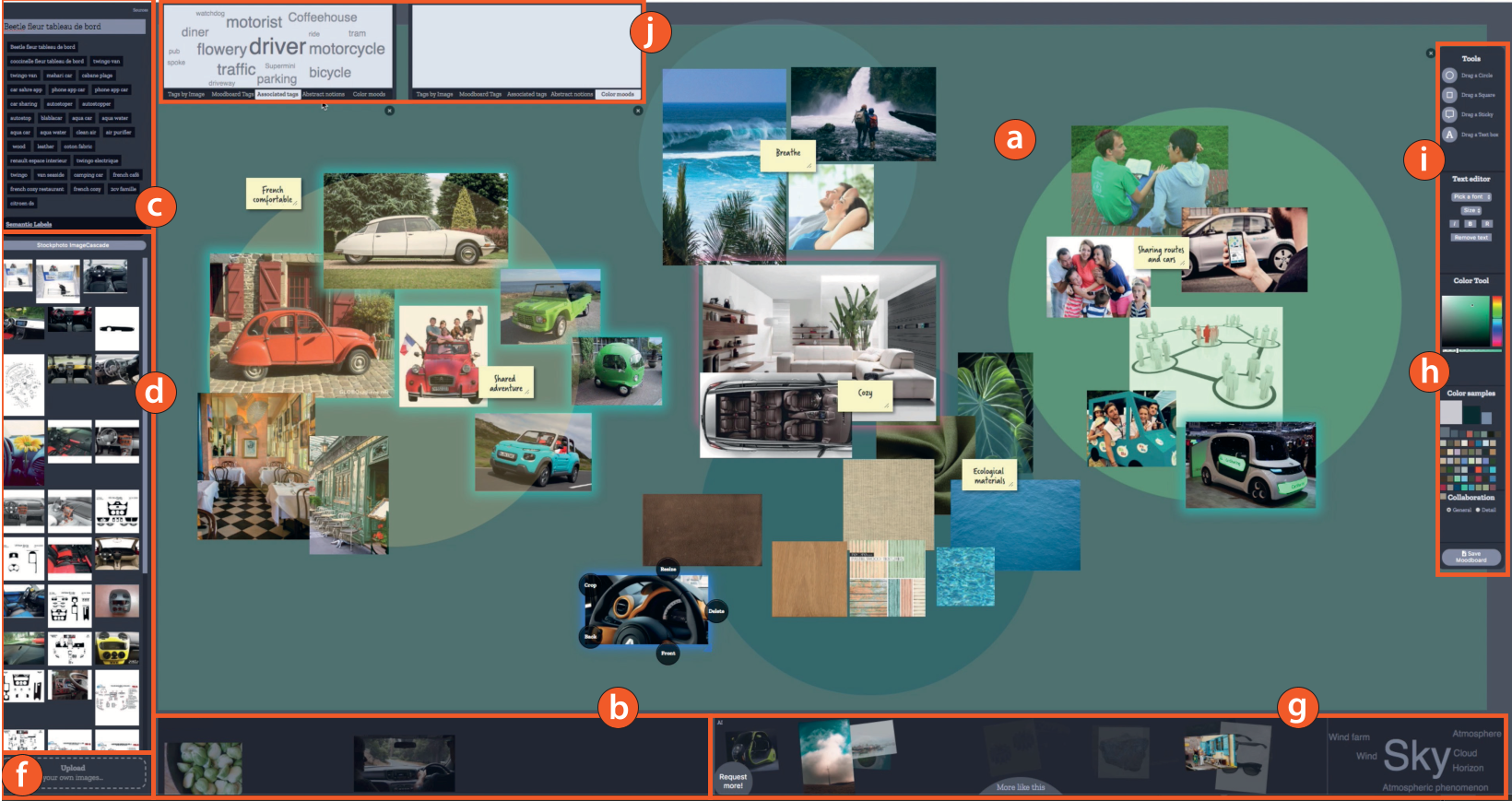 Figure 1: The ImageSense interface featuring the Mood Board Canvas (a), Maybe Area (b), and AI Suggestion Panel (g).
3. Reflection Tools (Sense-making)
The system generates "Abstract Notion" and "Color Mood" tag clouds. These don't just describe what is there; they provide the vocabulary for why it works—conceptually translating visual pixels into design narratives.
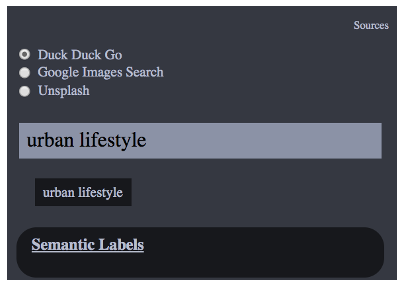 Figure 2: Editable semantic labels that bridge the gap between visual intent and textual search.
Experimental Insights: Who is the Better Partner?
The study involved nine professional designers collaborating with a "confederate" (a remote expert designer). The findings provide a roadmap for future AI integration:
- The AI as the "Provocateur": When designers were "stuck," they preferred AI suggestions even over the human partner. The AI's ability to provide "shocking" or "out of reach" imagery helped break cognitive fixation.
- The Human as the "Evaluator": When it came to high-level strategy and "making sense" of the board as a whole, designers reverted to human-to-human discussion.
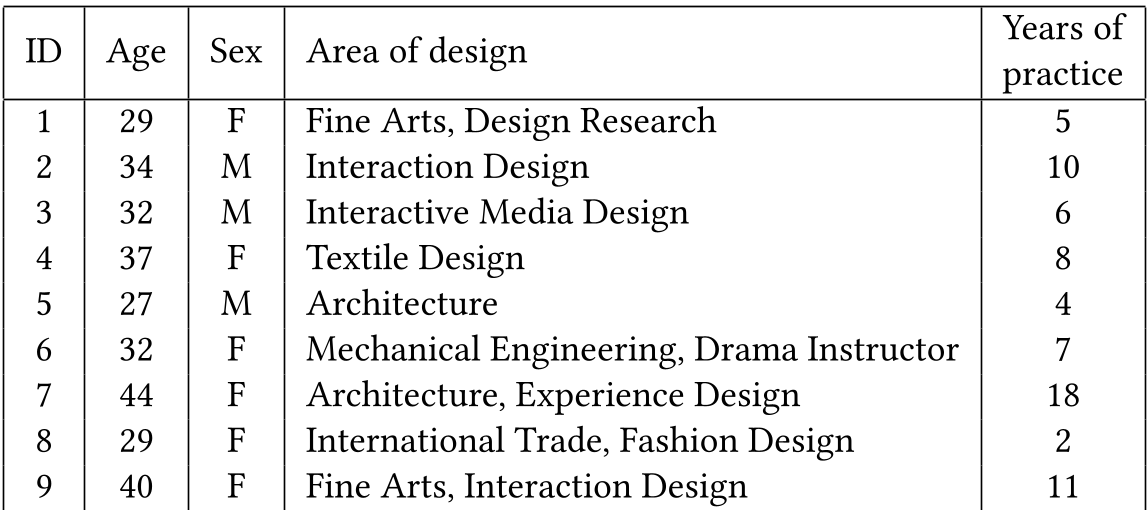 Table 1: Participant demographics showing the professional expertise required for valid creative tool testing.
Critical Analysis & Conclusion
ImageSense proves that AI's greatest value in design isn't just "generating content," but facilitating reflection. By providing a "traceability of thoughts," the tool allows collaborators to see why an image was chosen, not just what was chosen.
Takeaway: The future of design tools lies in fluid agency. Sometimes the designer wants to lead; sometimes they want to be inspired. ImageSense provides the "knobs and dials" to control that relationship, ensuring the machine remains a partner, not a replacement.
Limitations: While powerful, the system relies on predefined Vision APIs and word-association banks. With the advent of modern Diffusion models and LLMs, the "generative" aspect of ImageSense could be even more disruptive, potentially creating new images on-the-fly to fill identified semantic gaps.