
Turning Smartphones into X-Ray Vision: Real-Time NLOS Imaging with Consumer LiDAR
Imaging Hidden Objects with Consumer LiDAR via Motion Induced Sampling
This paper introduces a system for imaging objects outside the direct line-of-sight (NLOS) using consumer-grade LiDAR sensors. By leveraging a novel Motion-Induced Aperture Sampling (MAS) model and multi-frame fusion, the researchers demonstrate 3D reconstruction, multi-object tracking, and camera localization on smartphone-grade hardware (e.g., ~$100 sensors).
TL;DR
Researchers have unlocked the ability to "see around corners" using the cheap, low-resolution LiDAR sensors found in modern smartphones. By treating motion—previously a source of blur—as a mathematical advantage (Motion-Induced Aperture Sampling), they've demonstrated real-time 3D tracking and reconstruction of hidden objects without expensive lab equipment.
Perspective: From Scientific Curiosity to Consumer Utility
For years, Non-Line-of-Sight (NLOS) imaging was the "Ferrari" of optical research: high-performance, incredibly expensive and confined to controlled laboratory tracks. Using ultra-fast lasers and SPAD (Single-Photon Avalanche Diode) detectors costing tens of thousands of dollars, scientists could reconstruct hidden 3D scenes by timing the flight of light bouncing off walls.
The transition to consumer hardware (like the LiDAR in an iPhone or a $100 STMicroelectronics sensor) was deemed impossible due to three "deal-breakers":
- Low Signal (SNR): Eye-safety regulations limit laser power.
- Low Resolution: Fixed, sparse pixel grids.
- Motion Blur: Handheld movement ruins the precise timing required for reconstruction.
This paper flips the script: it argues that motion is not a bug, but a feature.
The Problem & Intuition: The Virtual Mirror
Imagine a wall as a diffuse mirror. When a LiDAR hits a wall, most light scatters back, but a tiny fraction travels to a hidden object and back to the sensor (the "third bounce").
The authors realized that as a user moves their phone, they are essentially creating a Synthetic Aperture. Just as a telescope with a wider mirror sees more detail, a moving sensor "samples" the wall from different angles, accumulating enough data to overcome the low resolution of a single frame.
Methodology: The MAS Model & Particle Filtering
The core innovation is the Motion-Induced Aperture Sampling (MAS) model.
1. Mathematical Unified Model
The authors leverage the Light-Cone Transform (LCT), which simplifies the complex physics of light propagation into a 3D convolution. By doing this, they can treat object translation as a simple shift in "LCT-space."
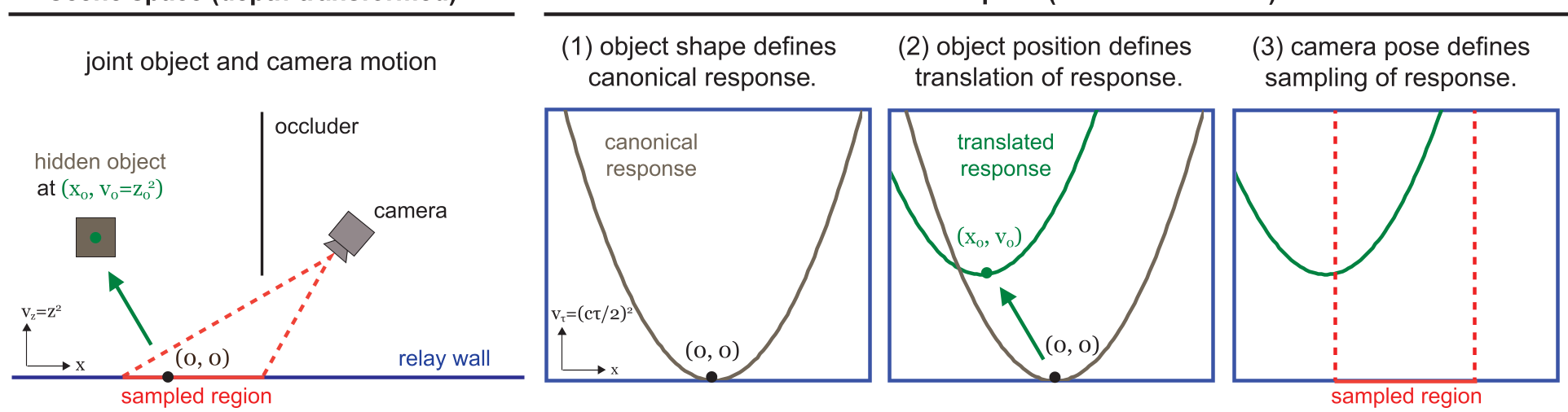 Figure 1: The MAS model decouples object shape (canonical STIR) from time-dependent motion and camera pose.
2. Particle Filtering for Real-Time Inference
Instead of solving a massive, slow optimization problem to find a hidden object, the authors use Particle Filtering.
- Propagation: Generate 1,000 "guesses" (particles) of where the object might be.
- Evaluation: For each guess, "render" what the LiDAR should see and compare it to the actual noisy data.
- Resampling: Keep the guesses that match the data and kill the ones that don't.
This allows for fluid, 30Hz tracking on mobile-class processors.
Key Results: Breaking the Lab Barrier
The experiments prove that this isn't just theoretical. The researchers demonstrated:
- 3D Tracking: Tracking hidden moving objects with ~4cm accuracy.
- Multi-Object Support: Simultaneously tracking two hands or a moving object alongside a static one.
- Camera Localization: Using a hidden object as a "visual anchor" to navigate in a room with completely white, featureless walls—a nightmare for standard computer vision.
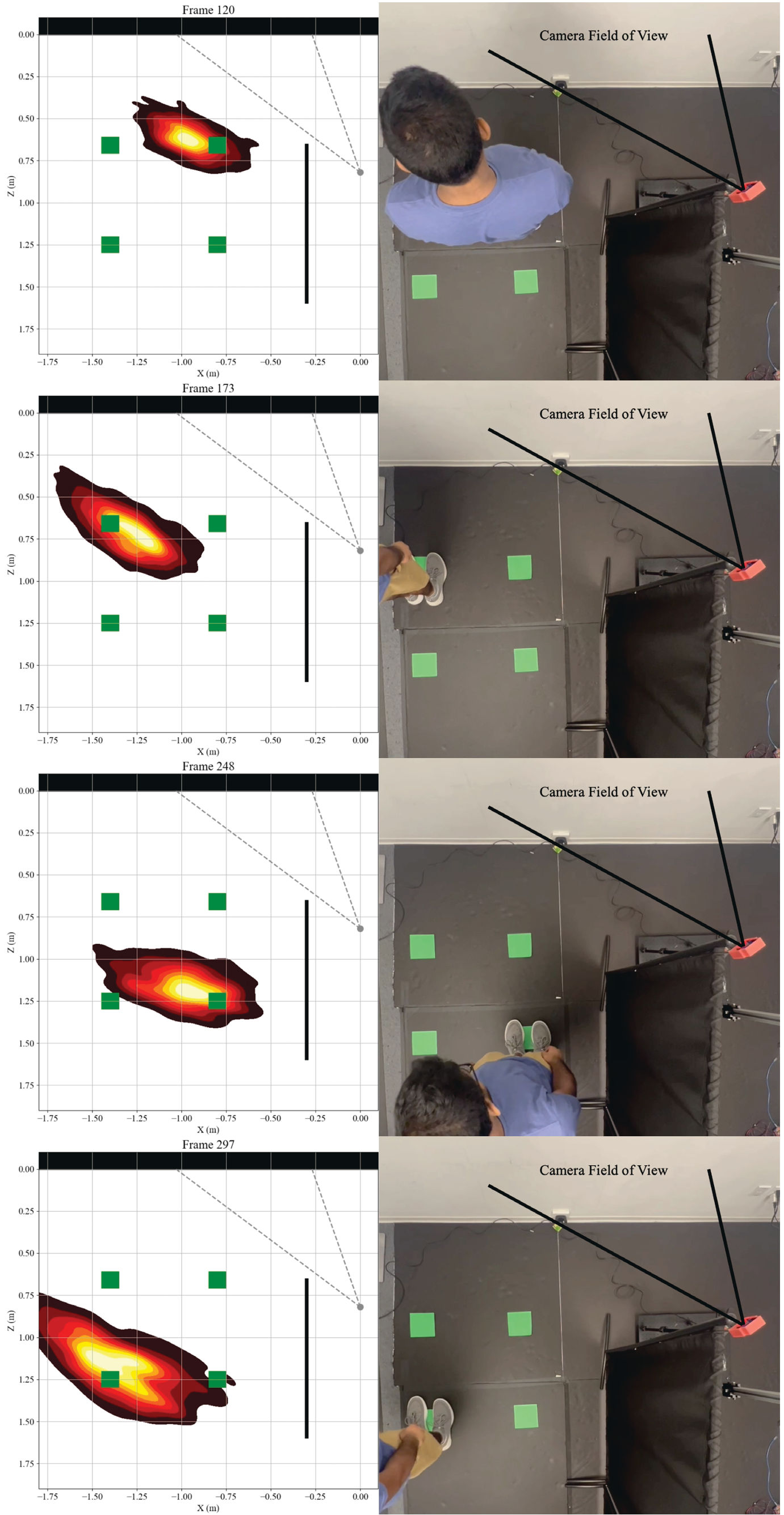 Figure 2: Real-time tracking using the off-the-shelf ST VL53L8CX sensor, demonstrating "plug-and-play" capability.
Critical Analysis & Future Outlook
The Impact: This work effectively democratizes NLOS. It shifts the focus from "how do we build better sensors?" to "how do we write better algorithms for the sensors we already have?"
Limitations:
- Reflectivity: The strongest results still rely on retroreflective materials (like high-vis tape). While they showed results for diffuse (normal) objects, the SNR drop is significant.
- Prior Knowledge: The tracking assumes you know the general shape of the object (e.g., you know you are tracking a person or a hand).
Future Work: The integration of Machine Learning to learn the "score functions" for particle evaluation could likely overcome the current reliance on handcrafted physical models, eventually allowing smartphones to see through fog or around corners in complex, dynamic urban environments.
Conclusion
By treating handheld motion as a synthetic aperture and utilizing robust probabilistic filtering, this research bridges the gap between high-end computational photography and everyday mobile devices. We are one step closer to a world where our devices see not just what is in front of them, but the entire hidden world around them.