
Seeing Around Corners with Your Phone: Demystifying Consumer NLOS Imaging
Imaging Hidden Objects with Consumer LiDAR via Motion Induced Sampling
The paper introduces a "Motion-Induced Aperture Sampling" (MAS) model to enable Non-Line-of-Sight (NLOS) imaging using smartphone-grade, low-cost LiDAR sensors. By employing a multi-frame fusion strategy and particle filtering, the authors achieve 3D reconstruction, multi-object tracking, and camera localization via hidden objects, essentially turning everyday diffuse surfaces into virtual mirrors.
TL;DR
Researchers have unlocked the ability to see hidden objects around corners using the low-cost LiDAR sensors found in modern smartphones. By treating motion as an asset rather than a liability, the Motion-Induced Aperture Sampling (MAS) model fuses multiple noisy frames to perform 3D tracking and reconstruction, achieving "Plug-and-Play" Non-Line-of-Sight (NLOS) imaging for less than $100.
The "Laboratory vs. Pocket" Gap
For years, NLOS imaging—the sci-fi-like ability to see objects outside the direct field of view—was confined to optical laboratories. These setups used bulky, $10,000+ femtosecond lasers and sensitive detectors.
The transition to consumer devices (like the iPhone's LiDAR) was thought impossible due to:
- Low SNR: Eye-safety regulations limit laser power, making the the multi-bounce signal (light hitting a wall, then an object, then the wall again) nearly invisible.
- Sparse Sampling: Consumer sensors often have fewer than 100 pixels, leading to massive aliasing.
- Dynamic Complexity: In the real world, both the camera (handheld) and the hidden object (a person or robot) are moving, creating a nightmare of motion blur.
The Insight: Motion as a Virtual Lens
The authors propose a shift in perspective. Instead of trying to reconstruct a perfect image from a single snapshot, they recognize that camera motion actually increases the "Synthetic Aperture." As you move your phone, you are effectively sampling the "virtual mirror" on the wall from different angles.
1. The MAS Model: Decoupling Reality
The core technical contribution is the Motion-Induced Aperture Sampling (MAS) model. It uses the Light-Cone Transform (LCT) to project messy time-of-flight data into a coordinate system where object shape and motion become a simple 3D convolution.
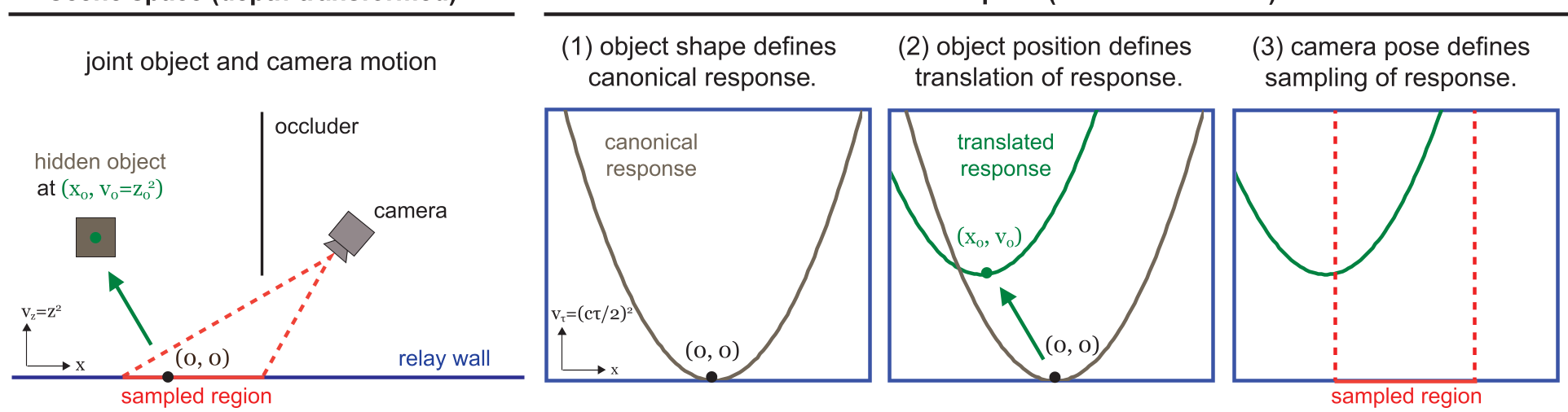 Figure 1: The MAS model explains how object shape defines a canonical signal, while object motion and camera pose determine how we sample that signal in space-time.
By pre-computing a "Canonical STIR" (the signature of the object's shape), the system can render predicted measurements in real-time by simply indexing into this voxel cube based on the current guess of the object's position.
2. Particle Filtering: Embracing Uncertainty
Since the data is incredibly noisy, the authors don't look for a single "best" point. They use Particle Filtering.
- Propagation: Move 1,000 "hypothetical" object positions based on a motion prior (e.g., the object probably didn't jump 5 meters in 1/30th of a second).
- Evaluation: For each particle, render what the LiDAR should see and compare it to the actual messy measurement.
- Resampling: Keep the particles that match reality and kill the ones that don't.
Breakthrough Results
The researchers demonstrated three "superpowers" on a standard smartphone-grade LiDAR:
- 3D Tracking: Tracking a hidden moving object with centimeter-level accuracy.
- Multi-Object Tracking: Identifying two distinct hidden signatures (e.g., a left and right hand) simultaneously.
- NLOS Localization: Using a hidden static object as a "landmark" to tell the camera where it is, even when the camera is facing a blank white wall.
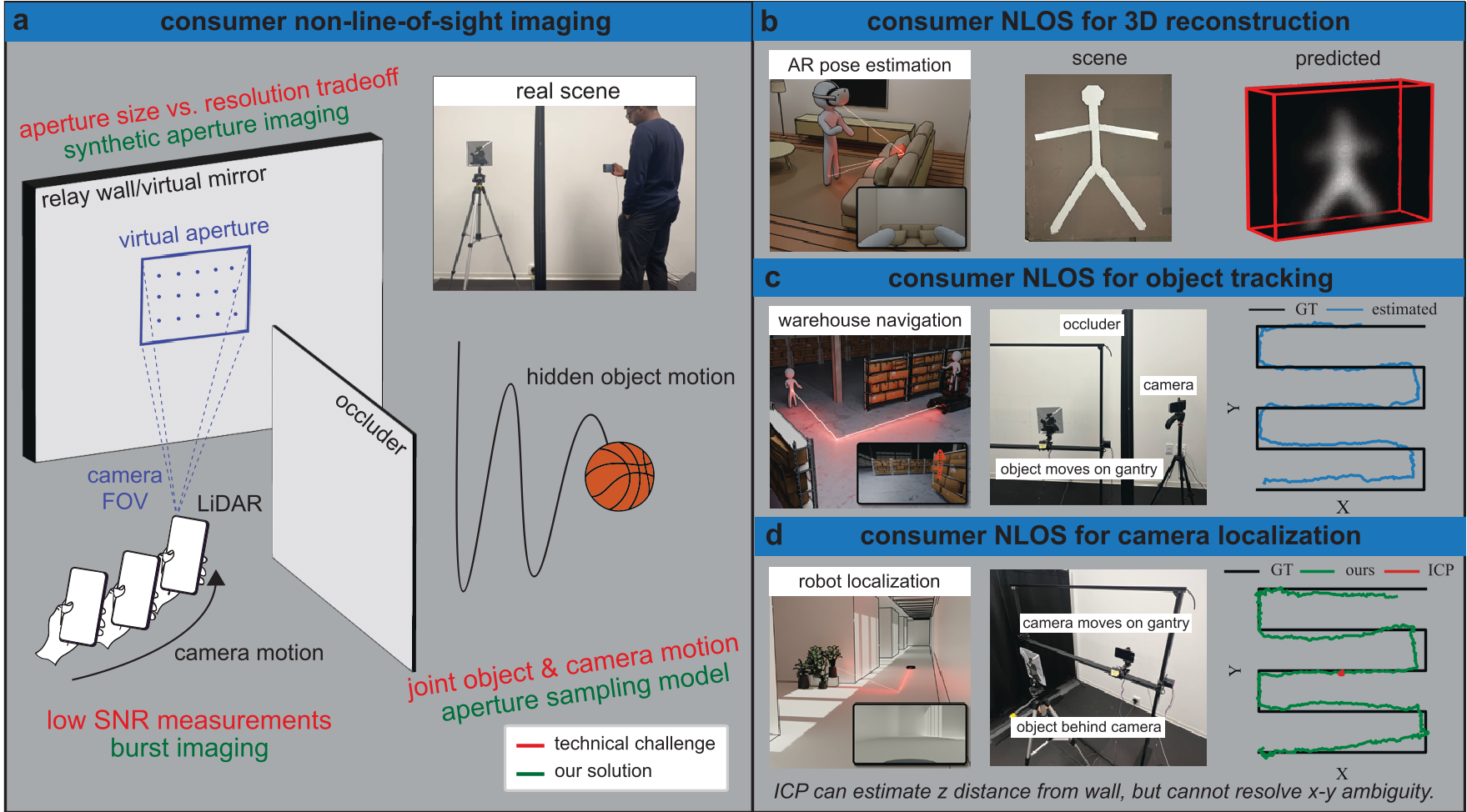 Figure 2: Applications in 3D reconstruction, multi-object tracking, and camera localization.
Notably, they proved this works even on diffuse (non-shiny) objects, though retroreflective materials (like safety vests) yield significantly higher precision.
Critical Analysis & The Future
Why this matters
The significance of this paper isn't just the math—it's the democratization. By releasing code that works on an $8 sensor (ST VL53L8CX), NLOS imaging moves from an academic curiosity to a feature that could be integrated into:
- AR/VR: Tracking a user's body parts that are currently "occluded" from the headset's cameras.
- Robotics: Warehouse robots sensing a forklift coming around a blind corner before a collision occurs.
- Emergency Response: Locating people in smoke-filled or obscured environments using handheld devices.
Limitations
The current model assumes we know either the object's shape or its motion. The ultimate goal—solving for shape, motion, and camera pose simultaneously (NLOS-SLAM)—remains the "Holy Grail" and is currently hindered by degenerate geometric cases (e.g., when the camera and object move in perfect sync).
Takeaway
We are entering an era of Plug-and-Play NLOS. The walls around us are no longer just barriers; to a computationally-aware LiDAR, they are data-rich mirrors waiting to be decoded.