
From Hidden to Visible: Democratizing NLOS Imaging with Consumer LiDAR
Imaging Hidden Objects with Consumer LiDAR via Motion Induced Sampling
This paper introduces a real-time Non-Line-of-Sight (NLOS) imaging framework using smartphone-grade LiDAR sensors. By proposing a Motion-Induced Aperture Sampling (MAS) model and a multi-frame fusion strategy, it enables 3D reconstruction, multi-object tracking, and camera localization using hidden objects on devices costing less than $100.
TL;DR
Researchers have unlocked the ability for everyday smartphones to "see around corners." By treating nearby walls as virtual mirrors and applying a novel Motion-Induced Aperture Sampling (MAS) model, this work enables real-time 3D tracking and reconstruction using 50k lab equipment.
The "Invisible" Challenge: Why Consumer LiDAR Fails at NLOS
Non-Line-of-Sight (NLOS) imaging has long been the "holy grail" of computational photography. The goal: reconstruct objects hidden from view by analyzing how light bounces off a relay wall. Until now, this required massive lasers and picosecond-accurate sensors.
Consumer devices (like the iPhone or AR headsets) face three massive hurdles:
- Low SNR: Eye-safety regulations limit laser power, making the faint signals from hidden objects nearly indistinguishable from noise.
- Low Resolution: While a lab scanner covers thousands of points, a mobile sensor has as few as 64-100 pixels.
- Motion Blur: In the real world, both the camera (handheld) and the target (moving person) are in motion, breaking traditional static reconstruction algorithms.
Methodology: The MAS Model and Particle Filtering
The core insight of this paper is that motion is not a bug, but a feature. By moving the camera, we effectively create a "Synthetic Aperture," providing more viewpoints and higher resolution than a static shot.
1. Motion-Induced Aperture Sampling (MAS)
The authors utilize the Light-Cone Transform (LCT)—a mathematical trick that turns the complex travel time of light into a 3D convolution. The MAS model proves that a shift in object position matches a linear shift in the measurement space. This allows the system to pre-calculate a "canonical" response for an object and then simply "slide" it around to match real-time data.
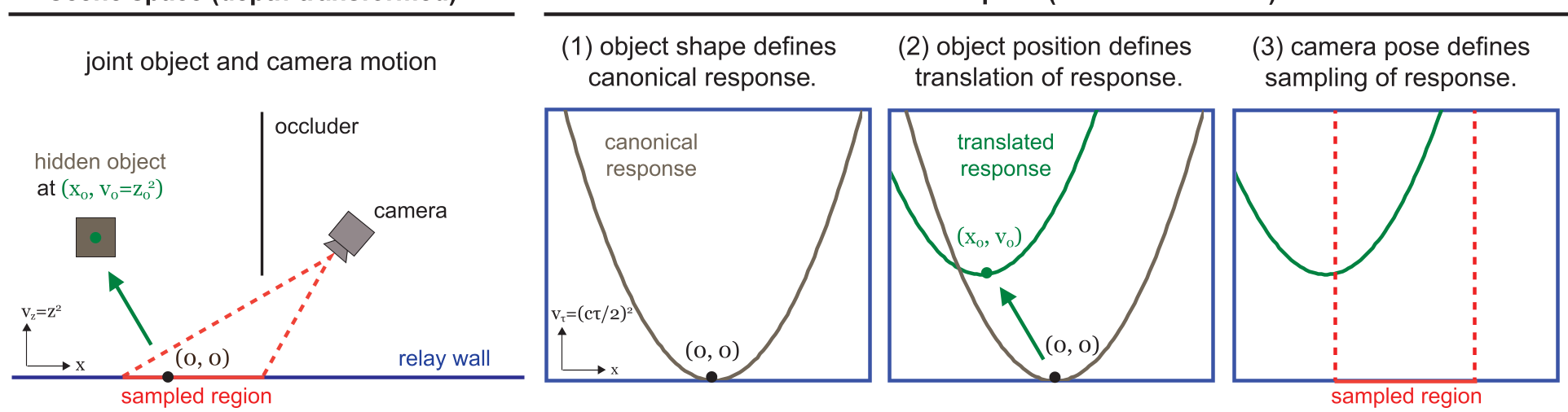 Figure 2: The MAS model decouples object shape (static) from object/camera motion (dynamic).
2. Bayesian Tracking via Particle Filters
Because the signal is so noisy, a single frame can be ambiguous. The system uses a Particle Filter to maintain 1,000 "guesses" (particles) of where the hidden object might be.
- Propagation: Moves particles based on where the object was (Motion Prior).
- Evaluation: Scores particles by comparing the expected signal to the actual SPAD measurement.
- Resampling: Keeps the most likely guesses, naturally handling uncertainty and noise.
Experimental Breakthroughs
The team demonstrated three critical applications using smartphone-grade sensors:
- 3D Tracking: Tracking people's hands or objects behind a wall in real-time.
- 3D Reconstruction: Building a 3D point cloud of a hidden mannequin by simply waving a phone.
- NLOS Localization: Using a hidden object as a "landmark" to tell the camera where it is, even when the visible wall is a blank, textureless surface.
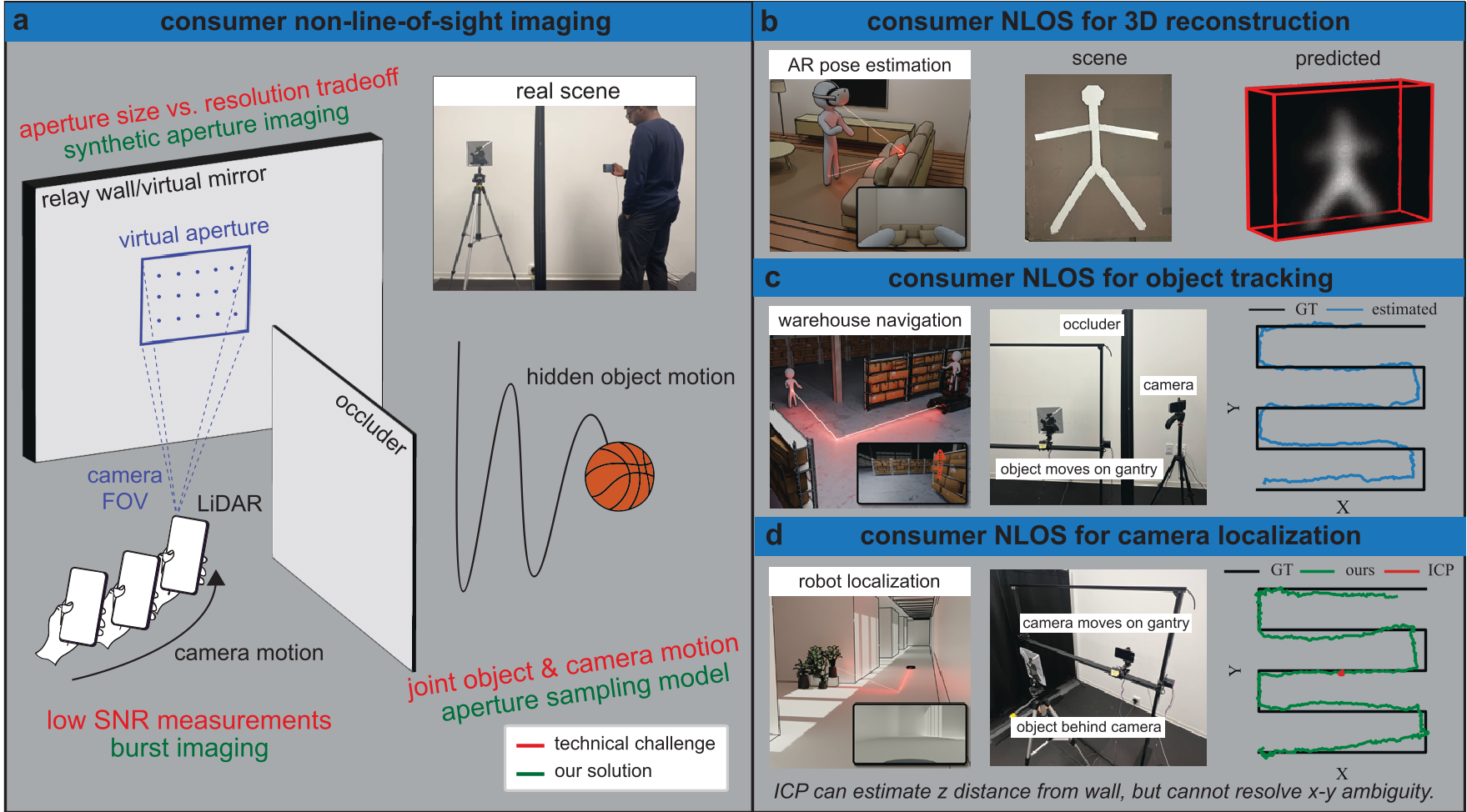 Figure 1: Applications including hand tracking and camera localization.
Critical Analysis & The Future
The "Plug-and-Play" Milestone: The most impressive feat is the validation on the ST VL53L8CX. This is a standard component found in many budget gadgets. By proving NLOS works here, the authors have effectively moved the technology from "academic curiosity" to "production-ready software."
Limitations: The model currently performs best with retroreflective materials (like high-vis clothing). For purely diffuse (matte) objects, the SNR drops significantly, leading to higher "regions of ambiguity."
Future Outlook: We are likely looking at a future where:
- AR Headsets can track your hands even when they are occluded by your body.
- Warehouse Robots can "sense" a coworker coming around a blind corner before a collision occurs.
- Smart Vacuums can navigate through featureless hallways by "looking" into the next room via wall reflections.
Conclusion
This paper is a masterclass in computational imaging efficiency. It proves that when hardware is limited, sophisticated physics-based models (MAS) combined with robust statistical estimation (Particle Filtering) can bridge the gap. NLOS imaging is no longer a luxury; it's a software update away.