
Turning Every Smartphone into a "Periscope": NLOS Imaging with Consumer LiDAR
Imaging Hidden Objects with Consumer LiDAR via Motion Induced Sampling
This paper introduces a multi-frame fusion strategy to enable Non-Line-of-Sight (NLOS) imaging on consumer-grade LiDAR sensors (<100). The core method, Motion-Induced Aperture Sampling (MAS), unifies object shape, object motion, and camera motion, facilitating real-time 3D reconstruction, tracking, and localization without specialized lab equipment.
TL;DR
Researchers have unlocked the ability for consumer-grade LiDAR—the kind found in your iPhone—to "see" objects hidden around corners. By moving the camera and using a new "Motion-Induced Aperture Sampling" (MAS) model combined with Particle Filtering, they overcome the poor resolution and noise that previously restricted Non-Line-of-Sight (NLOS) imaging to elite optics labs.
Academic Context: This work bridges the gap between high-end computational photography and ubiquitous mobile sensing, moving NLOS from a "controlled lab demo" to a "plug-and-play" mobile feature.
The Problem: The High Cost of Looking Around Corners
Traditional NLOS imaging is a hardware arms race. To capture light that has bounced off a wall (a "virtual mirror") and then off a hidden object, you typically need picosecond-accurate SPAD sensors and powerful lasers.
Consumer LiDARs, while based on similar SPAD technology, are intentionally "crippled" for the mass market:
- Low Power: Laser output is strictly limited by eye-safety regulations.
- Low Resolution: Sensors often have fewer than 100 pixels to save on bandwidth and costs.
- Motion Instability: Handheld use introduces "jitter," which usually ruins the delicate timing required for NLOS reconstruction.
The Insight: Motion is an Opportunity, Not a Bug
The researchers' key breakthrough is a shift in perspective: Camera and object motion are not noise—they are sources of information.
Inspired by "synthetic aperture radar" (SAR) and "burst photography," they developed the Motion-Induced Aperture Sampling (MAS) model. This model recognizes that if you move a handheld LiDAR, you are effectively sampling the hidden scene from multiple points in space (creating a larger "virtual aperture").
The MAS Model & Light-Cone Transform
The math relies on the Light-Cone Transform (LCT). The LCT converts time-of-flight measurements into a space where the relationship between the object and the sensor becomes a 3D convolution. Under the MAS model:
- Object Shape defines a "Canonical STIR" (Space-Time Impulse Response).
- Object/Camera Motion appears as a simple translation (shift) of that response.
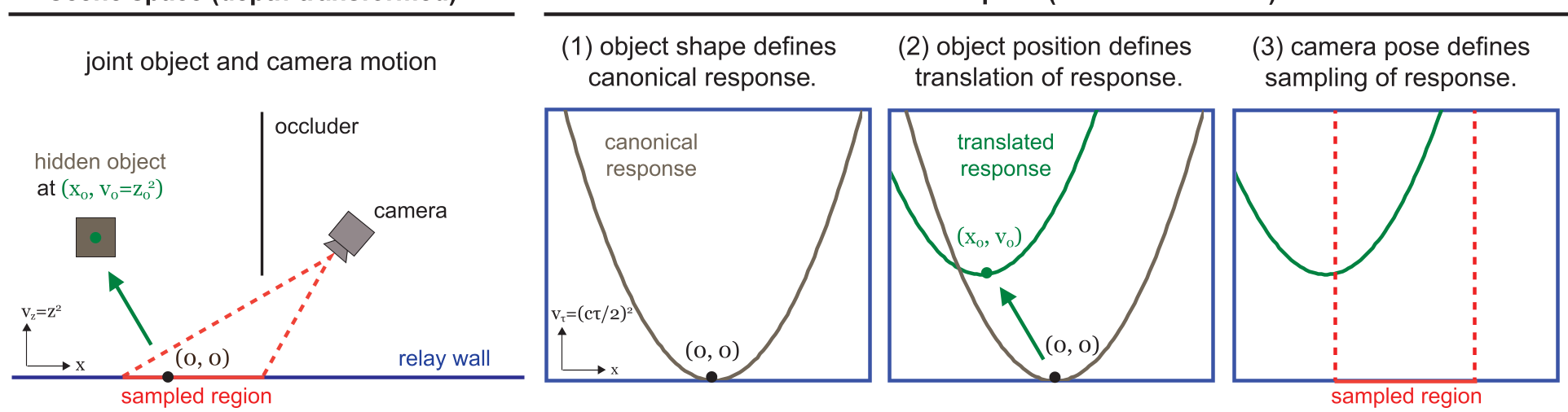 Figure 2: The MAS model decouples object shape from its motion, allowing for efficient rendering by indexing into pre-computed voxel cubes.
Methodology: The Particle Filter Engine
How do you handle the extreme noise of a $100 sensor? The authors employ a Particle Filter.
Instead of trying to "calculate" the object's exact position from one bad frame, the algorithm maintains 1,000 "guesses" (particles). In every frame:
- Propagation: Particles move based on a motion prior (e.g., "objects usually don't teleport").
- Evaluation: Each particle "renders" what the LiDAR should see if the object was at that location. This is compared to the actual raw data.
- Resampling: Guesses that match the data survive; those that don't are discarded.
This recursive process allows the system to build confidence over time, effectively "smoothing out" the low SNR of consumer hardware.
Experimental Success: SOTA Results on a Budget
The authors tested their method using smartphone sensors and the widely available ST VL53L8CX sensor.
- Tracking Accuracy: For a 3D hidden object, they achieved a mean error of 4.7 cm.
- Camera Localization: In a white, featureless room where standard SLAM would "get lost," the system used a hidden object (which it could see around a corner) as a "visual landmark" to successfully track the camera's path.
- Real-time Performance: The indexing-based rendering and particle filter loop are efficient enough to run at 30 Hz on mobile-class hardware.
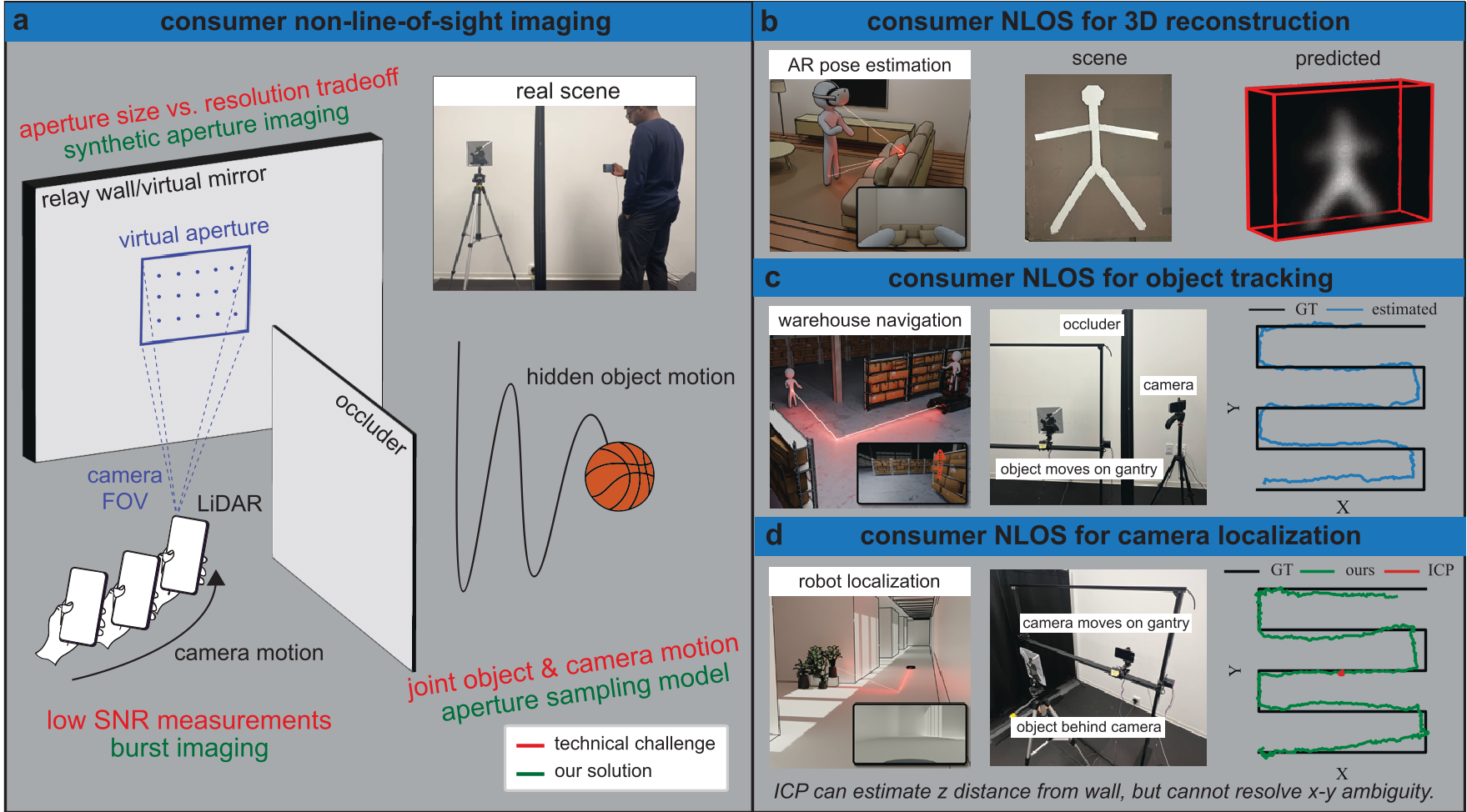 Figure 1: Applications including 3D tracking of hidden hands and reconstruction of hidden mannequins using handheld motion.
Critical Analysis & Takeaways
The brilliance of this paper lies in its pragmatism. By assuming the shape of the object is known (a common scenario in tracking) or the environment is static (common in localization), the researchers turned an "intractable" inverse problem into a manageable 3-degree-of-freedom search.
Limitations:
- The model works best with retroreflective objects. While it can handle diffuse (matte) objects, the SNR drops significantly (as shown in Figure 5), leading to higher uncertainty.
- Currently, it assumes rigid-body translation; non-rigid motion (like a person's limbs waving) remains a future challenge.
Future Outlook: This is the first step toward "Plug-and-Play" NLOS. We are moving toward a world where warehouse robots can see around blind corners and AR glasses can track your body even when your hands are behind your back—all using the sensors already in your pocket.