
Harmonizing Cultures in VR: Computational Mapping of Arab and Indian Ocean Music
Developing immersive VR experience for visualizing cross-cultural relationships in music
This paper presents an immersive Virtual Reality (VR) and web-based dashboard system for visualizing cross-cultural musical relationships within heritage archives of the Arab Mashriq and Western Indian Ocean. It utilizes Deep Autoencoders and t-SNE to map non-Eurogenetic music into a navigable 3D similarity space, achieving intuitive discovery through computational ethnomusicology.
TL;DR
Researchers at NYU Abu Dhabi have developed an immersive VR system that allows users to "walk through" a galaxy of music. By applying deep learning to archives from the Arab Mashriq and Swahili coast, they converted raw audio into a 3D similarity map, enabling anyone to discover cross-cultural musical links through spatial navigation and binaural sound.
Contextualizing Musical Heritage
Digital Humanities often prioritize the written word or visual artifacts, yet music remains one of the most expressive vehicles of cultural identity. The MaSC (Music and Sound Cultures) research group identified a critical gap: while the field of Music Information Retrieval (MIR) is booming, it remains heavily indexed towards Eurogenetic (Western) music. This paper introduces a bridge between archival preservation and modern computational analysis, focusing on the rich, interconnected traditions of the Arab world and the Western Indian Ocean.
The "Why": Beyond Metadata
Traditional digital libraries rely on text tags (e.g., "Genre: Folk"). However, cultural nuances—like the specific timbre of a Tar or the rhythmic cycles of Swahili poetry—are often lost in translation. The authors sought a way to let the audio itself dictate the organization of the library.
The core insight was to use Deep Autoencoders to extract "fingerprints" without human intervention. Instead of telling the computer what to look for, the model learns the structural essence of the spectrogram through a bottleneck architecture.
Methodology: From Spectrograms to 3D Space
1. The Neural Bottleneck
The team used a stacked autoencoder to compress log-frequency spectrograms into a 50-dimensional vector. This "bottleneck" forces the network to ignore noise and retain only the most critical acoustic features.
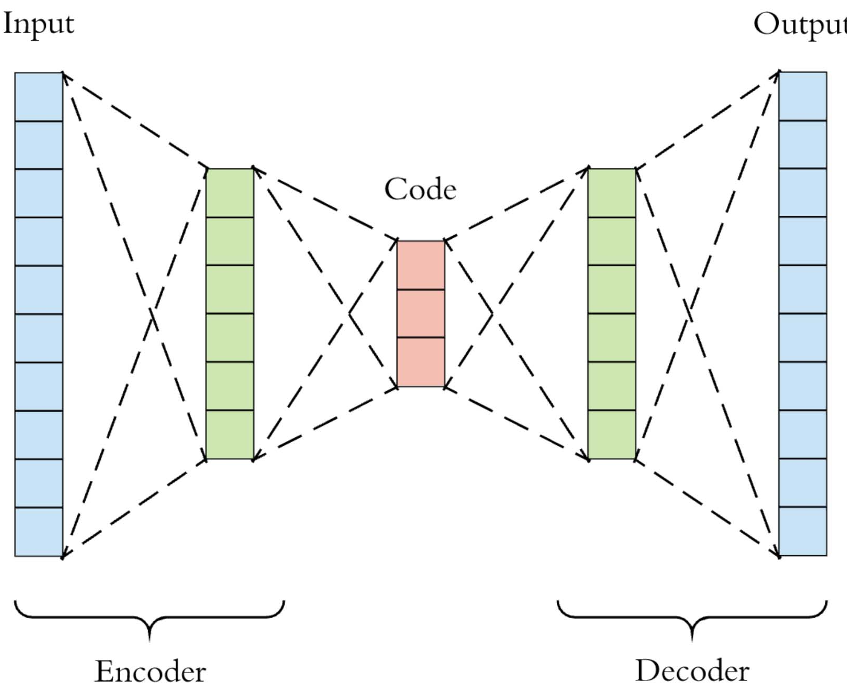 Figure 1: The architecture used to learn unsupervised music representations.
2. High-Dimensional Projection (t-SNE)
To make 50-D data human-readable, the authors utilized t-SNE (t-distributed Stochastic Neighbor Embedding). Unlike linear methods like PCA, t-SNE is excellent at keeping similar items in tight clusters while revealing the "social geography" of the music.
Immersive Results: A New Way to "Listen"
The results were striking. When mapped, the system didn't just group songs by album; it revealed cultural resonances:
- Cluster A: Persian instrumental music (Tar and Sitar).
- Cluster B: Traditional vocal music from 1900-1930s Lebanon and Syria.
- Cluster C: Modern electronic/pop Arab music.
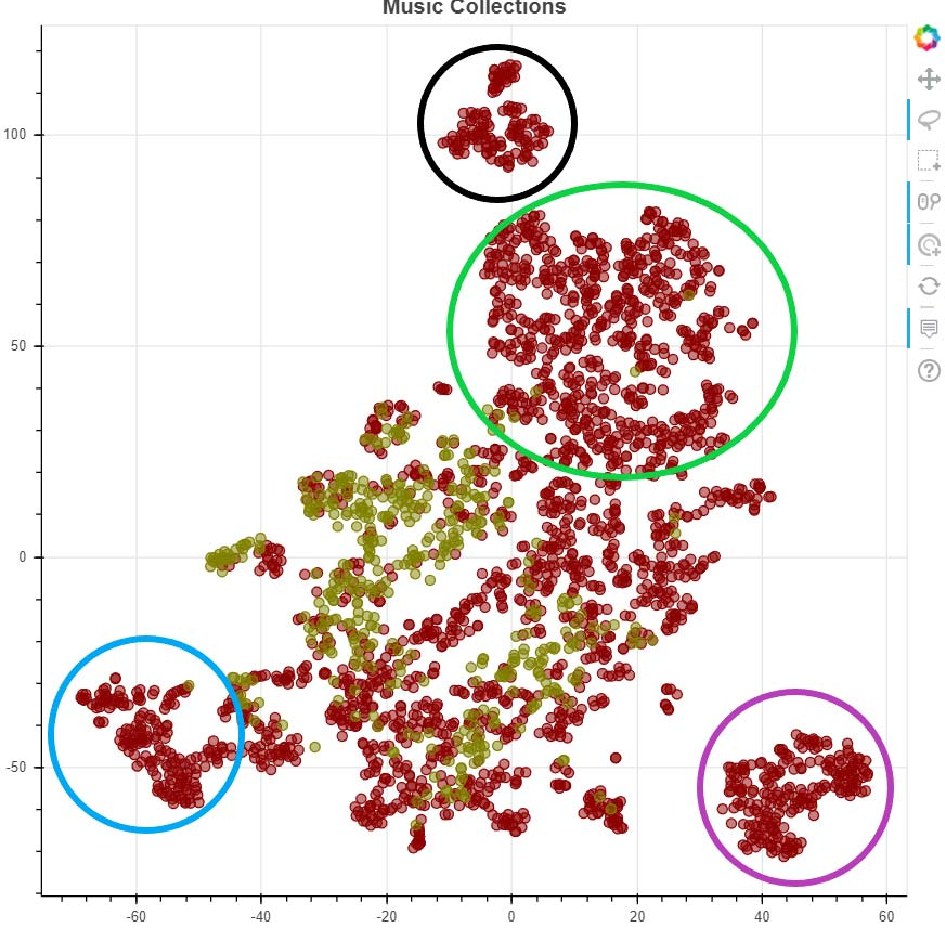 Figure 2: Comparing MFCC baseline (top) with Autoencoder mapping (bottom). Note the clearer semantic clustering in the latter.
The VR Experience
Developed in Unreal Engine 4 for the Oculus Quest, the VR application maps these clusters into a 3D sky of "Audio Spheres."
- 6-DOF Movement: Users can walk between clusters of different music.
- Spatial Audio: Using Steam Audio’s HRTF (Head-Related Transfer Function), the sound changes as you turn your head, providing a pinpoint sense of where a specific "musical star" is located in the sky.
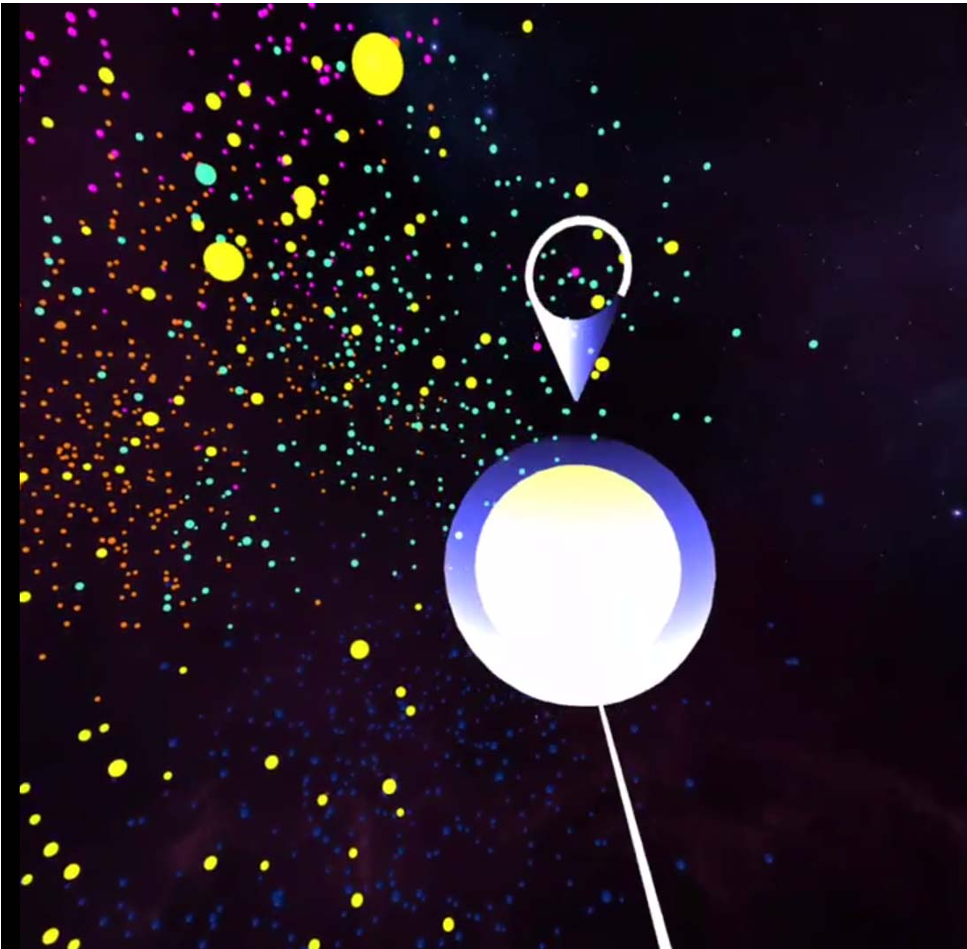 Figure 3: A user navigating the 3D map to trigger specific audio excerpts in real-time.
Critical Insight & Future Directions
The strength of this work lies in its unsupervised nature—it doesn't require thousands of hours of manual labeling to be useful. However, the authors admit that without expert-verified metadata (genre, mode, rhythm), the system remains an exploratory tool rather than a definitive classification engine.
The next frontier? Cross-cultural universality. By adding curated labels for melodic modes (Maqam) and rhythmic cycles, MaSC aims to build supervised models that can definitively answer: Just how similar is a coastal Swahili rhythm to a Gulf Mashriq beat?
Conclusion
This study proves that VR isn't just for gaming—it is a powerful pedagogical tool for Digital Humanities. By turning an archive into a navigable landscape, we move from "searching for a song" to "exploring a culture."