
Digital Bridges: Why Emotional Affordance Trumps Features in Reducing Elder Isolation
Impact of Online Social Media Communication and Offline Geographical Distance on Elder Users’ Intergenerational Isolation: From Technology Affordance Perspective
This study investigates how social media communication influences intergenerational isolation among elderly users (55+) through the lens of Technology Affordance Theory. Using a survey of 107 Chinese elders, it identifies that "emotional affordance"—rather than just functional features—is the primary driver for reducing isolation via increased communication frequency.
TL;DR
Can WeChat really replace a face-to-face visit? This study reveals that for the elderly, the frequency of digital contact—driven by the emotional affordance of social media—is the key to fighting intergenerational isolation. Surprisingly, living further away from children actually makes elders feel less isolated, provided they use social media as a compensatory "digital bridge."
Context: The Theoretical Gap in Elder HCI
While designers obsess over making interfaces "simple" for the elderly (larger fonts, bigger buttons), they often miss the underlying psychological motivation. Is social media a tool for tasks (Functional Affordance) or a vessel for feelings (Emotional Affordance)? This research positions itself at the intersection of Technology Affordance Theory and intergenerational support, moving beyond "what" elders do to "how" it makes them feel.
The Motivation: Paradox of Distance
The research is driven by a counter-intuitive observation: technology doesn't always help. Some elderly users report more isolation despite being "connected." The authors suspected that offline factors, specifically Geographical Distance, play a misunderstood role. Does physical distance act as a barrier, or a catalyst for digital intimacy?
Methodology: Affordance-Based Mediation
The researchers surveyed 107 Chinese elders (average age 61) using WeChat as the primary case. They broke down technology into two types of "affordances" or action possibilities:
- Functional Affordance: Knowing the tech can send voice notes, photos, or video calls.
- Emotional Affordance: Perceiving the tech as a way to feel cared for and connected.
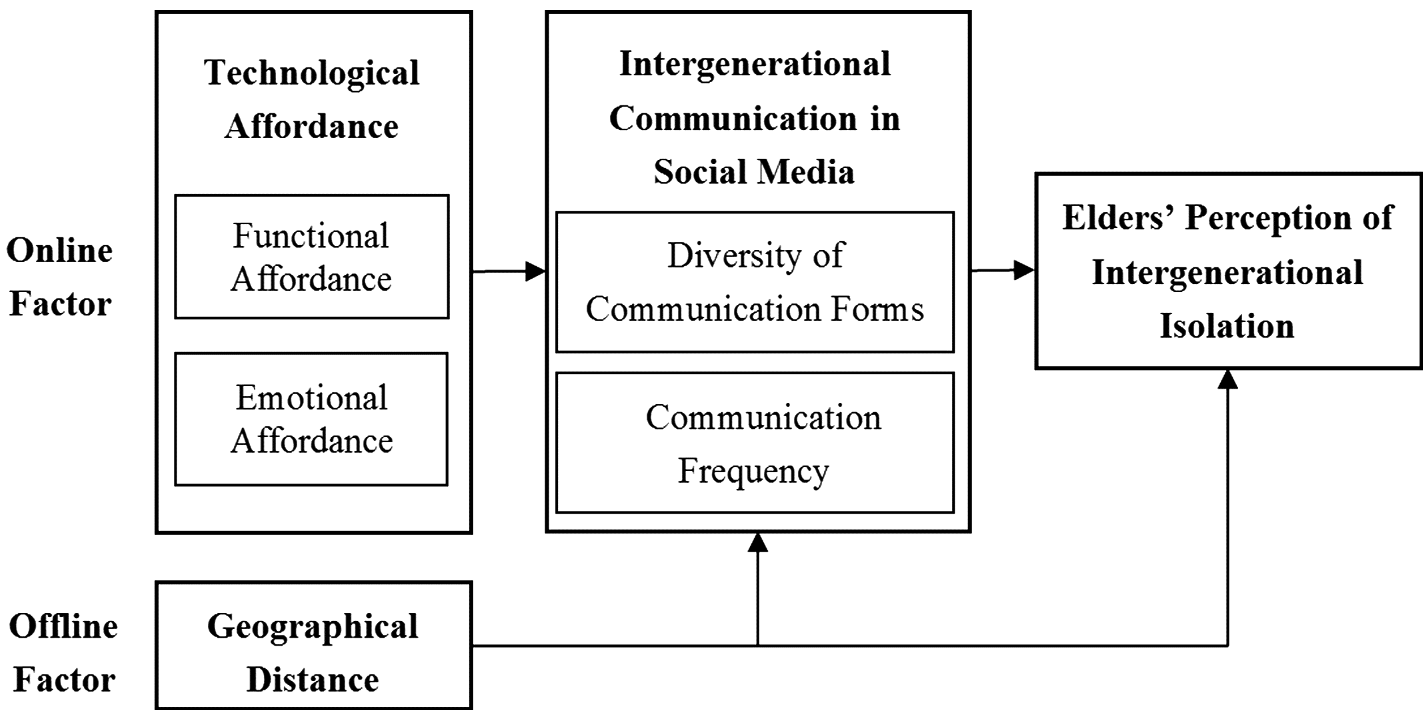
The model tests how these perceptions drive Communication Frequency and Diversity of Forms (text, video, moments), and how those behaviors influence Intergenerational Isolation.
Core Findings: Quality of Connection
The results, analyzed via SmartPLS, yielded three high-impact insights:
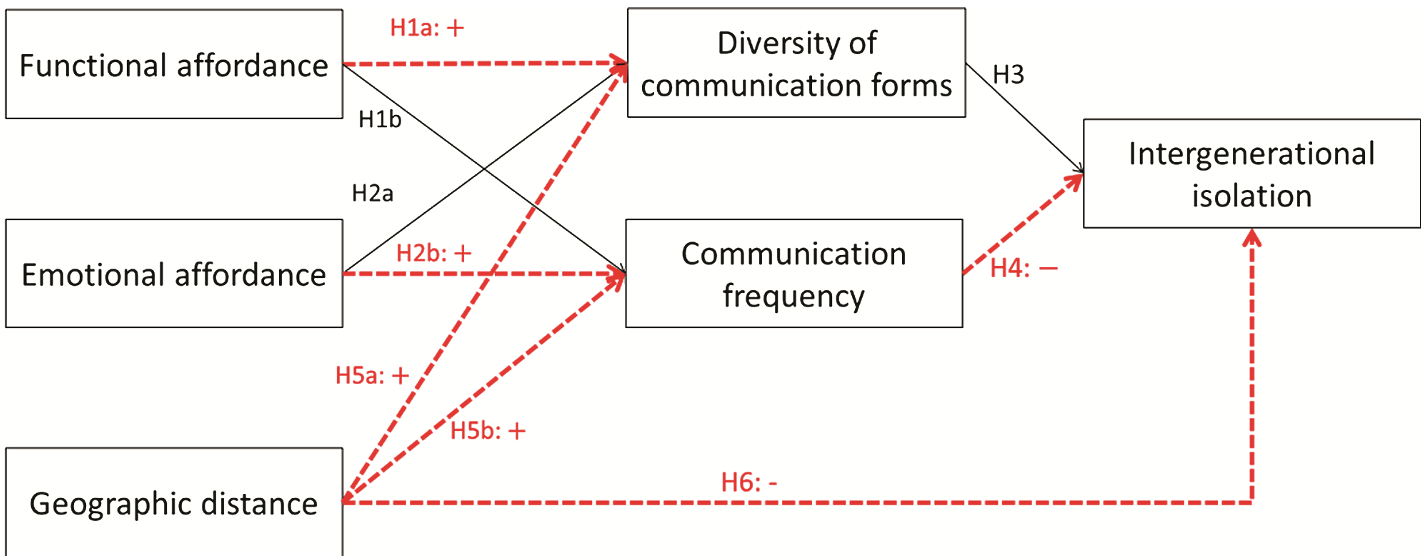
1. Functional Knowledge $
eq$ Emotional Relief Knowing how to use 10 different features (video chat, red packets, etc.) does not reduce isolation. Functional affordance encourages elders to experiment with diverse forms, but diversity of form has zero significant effect on reducing isolation.
2. The Power of Frequency
What actually matters is how often the phone pings. Emotional affordance drives usage frequency, and Frequency is the only digital factor that significantly lowers perceived isolation.
3. The "Distance Bonus"
In a striking rejection of Hypothesis 6, the study found that further geographical distance leads to LOWER perceived isolation. Why? Because distant parents use social media more aggressively to maintain "connected presence," creating a mediator effect that outweighs the pain of physical absence.
Critical Analysis & Professional Insights
Takeaway for Product Designers
Stop cluttering "Elder Modes" with complex functionalities. Instead, design for Emotional Frictionlessness.
- Priority Contact: A permanent widget for the child's chat on the home screen.
- Heart-to-Heart Support: Features that encourage emotional sharing rather than just utilitarian information exchange.
Limitations
The study is cross-sectional (a "snapshot" in time). Loneliness and isolation are dynamic. Future work should look at the content of the messages—after all, a frequent but argumentative chat might actually increase isolation.
Conclusion
This paper shifts the focus from "Elderly as users with limited capability" to "Elderly as users with deep emotional needs." It proves that social media is most effective not when it acts as a Swiss Army Knife for tasks, but when it acts as a constant, low-effort heartbeat between generations.