
Deciphering Customer Satisfaction in a Pandemic: A Machine Learning Approach to Hotel Quality
What is the impact of service quality on customers’ satisfaction during COVID-19 outbreak? New findings from online reviews analysis
This study presents a machine learning framework to analyze the impact of service quality on customer satisfaction in Malaysian hotels during the COVID-19 pandemic. By integrating LDA, EM clustering, and ANFIS, the research successfully identifies key satisfaction dimensions and predicts performance levels from TripAdvisor big data.
TL;DR
This research investigates how the COVID-19 outbreak reshaped traveler preferences in Malaysia. By applying a hybrid machine learning pipeline—including LDA for text mining and ANFIS for satisfaction prediction—to TripAdvisor data, the study reveals that specialized COVID-19 service protocols have become the primary driver of hotel performance and customer loyalty.
Contextual Positioning
Positioned at the intersection of Big Data Analytics and Crisis Management, this work moves beyond simple sentiment analysis. It establishes a robust methodology for "Voice-of-the-Customer" (VoC) extraction during black swan events, shifting the academic focus from static satisfaction models to dynamic, disaster-responsive frameworks.
The Core Challenge: Understanding a Shifting Paradigm
The pandemic didn't just stop travel; it fundamentally altered the criteria of travel. Traditional hotel metrics—Value, Location, and Room Quality—suddenly had to compete with a new, urgent priority: Biological Safety.
The authors identified two major gaps:
- Methodological Inefficiency: Traditional surveys are too slow and prone to bias for real-time pandemic monitoring.
- Insight Gap: There was little quantitative evidence on how much "mask mandates" or "contactless service" actually weighed against "bed comfort" in the consumer's mind.
Methodology: The Machine Learning Pipeline
The authors propose a sophisticated four-stage hybrid model to process 1,685 reviews from 116 Malaysian hotels.
1. LDA for Topic Discovery
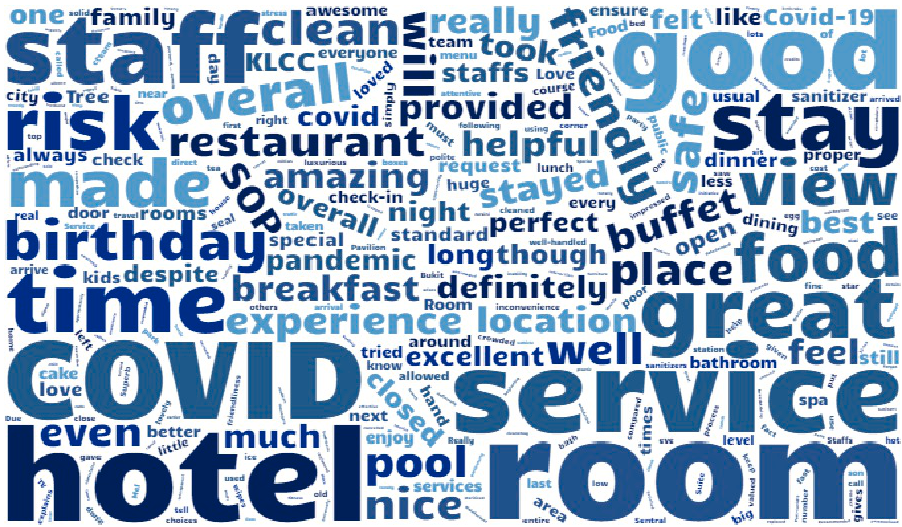
Using Latent Dirichlet Allocation, the researchers moved beyond numerical ratings to "read" what customers were actually writing. This allowed them to extract dimensions like hygiene protocols directly from the text.
2. EM Clustering & HOSVD
The data was segmented using Expectation-Maximization (EM). To handle the "sparse data" problem (where reviewers don't rate every category), they employed Higher-Order Singular Value Decomposition (HOSVD), a multilinear generalization of SVD, to impute missing values by recognizing patterns across the user-hotel-criteria tensor.
3. ANFIS for Non-linear Prediction
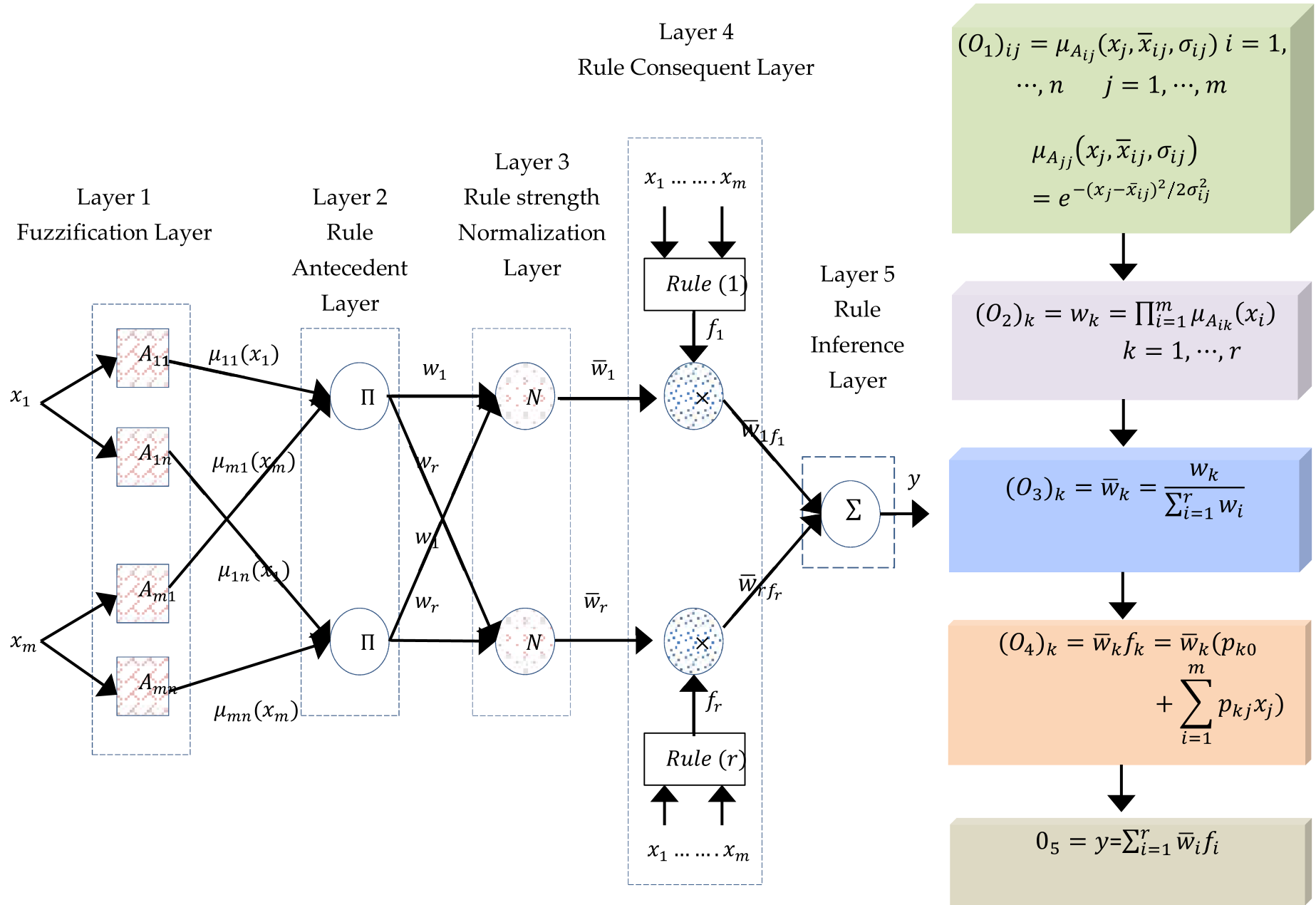
The Adaptive Neuro-Fuzzy Inference System (ANFIS) acted as the "brain," mapping the relationship between specific service criteria and the overall satisfaction rating.
Key Insights and Results
The findings were stark: the correlation between service quality and satisfaction became significantly steeper for hotels that aggressively implemented COVID-19 SOPs.
- The "Safety Multiplier": While customers still value "Sleep Quality" and "Value," their satisfaction levels plateaued if COVID-19 safety measures were perceived as weak.
- Predictive Power: The ANFIS models achieved an of up to 0.96, proving that fuzzy logic is exceptionally well-suited for the "lingual" and often ambiguous nature of customer reviews.
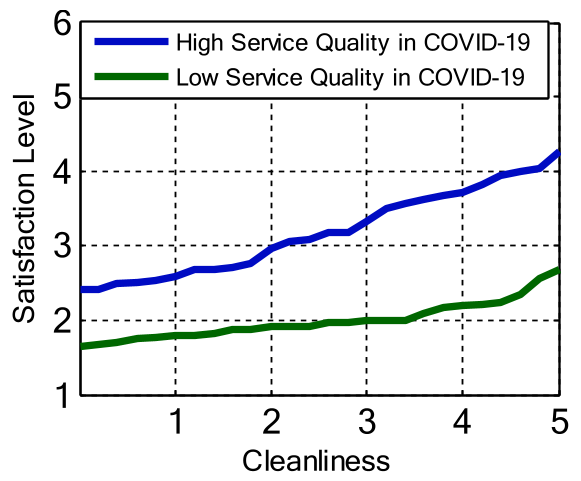 The charts above demonstrate how satisfaction (Z-axis) scales with specific criteria like Service and Cleanliness across different clusters.
Critical Analysis & Conclusion
The Takeaway
The paper proves that in a post-pandemic world, Hygiene is the new Luxury. For hotel operators, the "Quality of Service" is no longer just about the smile of the staff, but the visibility of their sanitization protocols.
Limitations & Future Paths
While the study is robust for the Malaysian market, its findings are geographically constrained. Future research should apply this HOSVD-ANFIS pipeline to multi-platform data (e.g., combining TripAdvisor with Booking.com) to provide a more globalized perspective on consumer resilience and habit formation.
Conclusion
By bridging the gap between qualitative text and quantitative ratings, Nilashi et al. have provided a blueprint for how businesses can use AI to listen to their customers when the world changes overnight.