
Semantic Social Networks: The Architecture for Truly Decentralized Organizations
Impact of Using Semantic Social Networks on Organizations
The paper proposes a framework for building Semantic Social Networks (SSN) to facilitate the transition of organizations from centralized to decentralized structures. By integrating Semantic Web technologies (RDF, FOAF) with Social Network Analysis (SNA), it provides a mechanism to monitor and manage distributed workgroups, achieving SOTA-level improvements in organizational flexibility and reliability.
TL;DR
Decentralization is often feared as a precursor to chaos. This paper introduces a Semantic Social Network (SSN) framework that uses RDF, FOAF, and automated agents to turn organizational "anarchy" into a highly efficient, manageable, and resilient structure. By automating the discovery of relationships between workgroups, the authors demonstrate a massive 20x boost in network density and nearly 30x increase in reliability.
The Decentralization Dilemma
Why do organizations stay "top-down" even when horizontal structures are faster and more innovative? The authors identify three missing pillars:
- Lack of Structure: Workgroups without hierarchy often lose direction.
- Missing Catalysts: No mechanism exists to pair workgroups efficiently.
- Control Difficulty: Managers cannot track information flow in real-time.
Traditional Social Network Analysis (SNA) is too slow; by the time you've mapped the network, the organization has already changed.
Methodology: Semantic Web as the Organization's Nervous System
The core innovation lies in the use of Semantic Web Technologies (SWT). Instead of manual reporting, the framework uses:
- Ontologies: Extended FOAF (for social links) and Dublin Core (for project metadata) to create a shared "language" for the company.
- Automated Agents: "Social Network Inspectors" that subscribe to RDF feeds to generate real-time network datasets.
- Jena Inference Engine: A reasoning layer that ensures the data remains consistent and discovers "hidden" synergies between groups working on similar tasks.
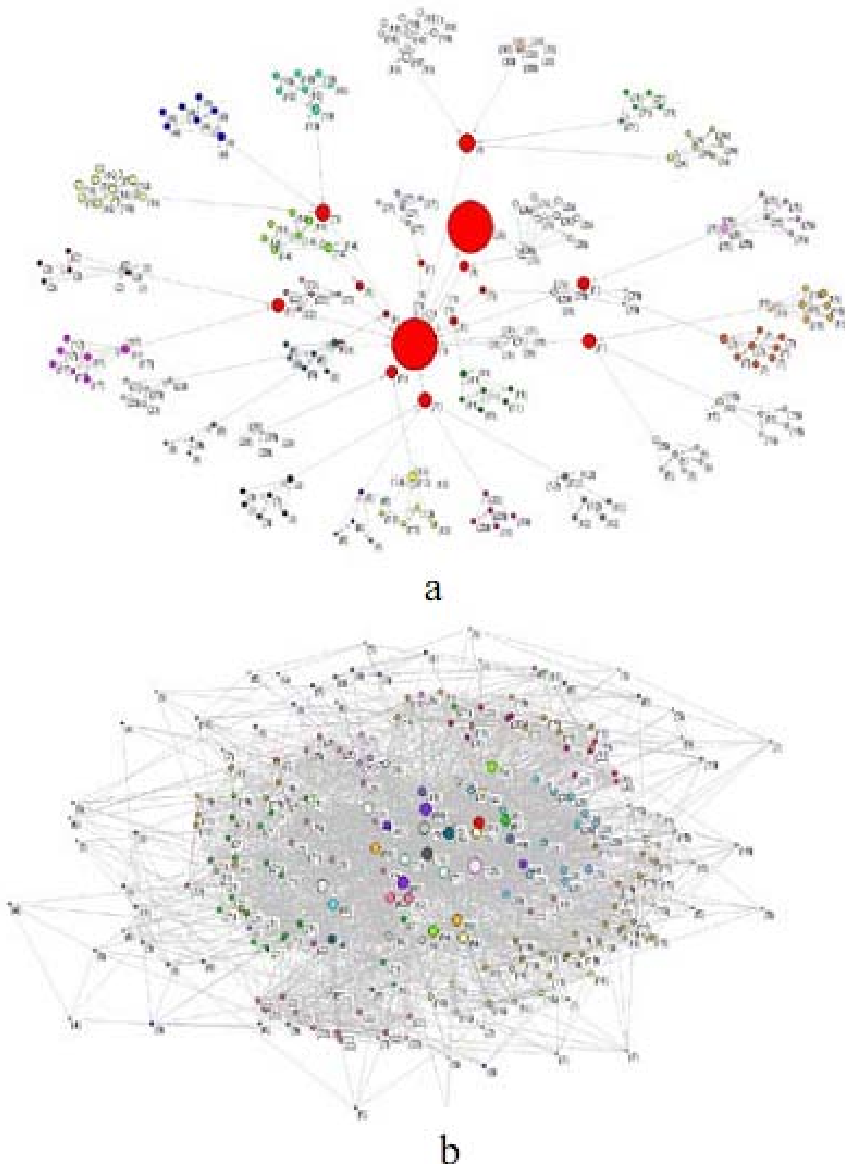 Figure 1: Visualization of the transition from a centralized SN (a) to a semantically-enhanced decentralized SSN (b).
Results: Beyond the Hierarchy
The authors tested this in a real-world IT company (Rayan Faragard). The transformation was quantified using standard SNA metrics:
| Metric | Original SN | Semantic SN (SSN) | Improvement/Impact |
|---|---|---|---|
| Density | 0.01 | 0.27 | 27x denser connections |
| Betweenness | 0.004 | 0.131 | Massive increase in info flow |
| Bi-Components | 27 | 1 | 27x more reliable/less isolated |
| Avg. Constraint | 0.87 | 0.25 | Higher employee freedom/flexibility |
Eliminating Bottlenecks
In the traditional SN (Figure 1-a), everything flows through a few "red" management nodes. In the SSN (Figure 1-b), the network is dense and cohesive. The Betweenness increase proves that information is no longer trapped in silos; it flows through the workgroups themselves, enabling faster, localized decision-making.
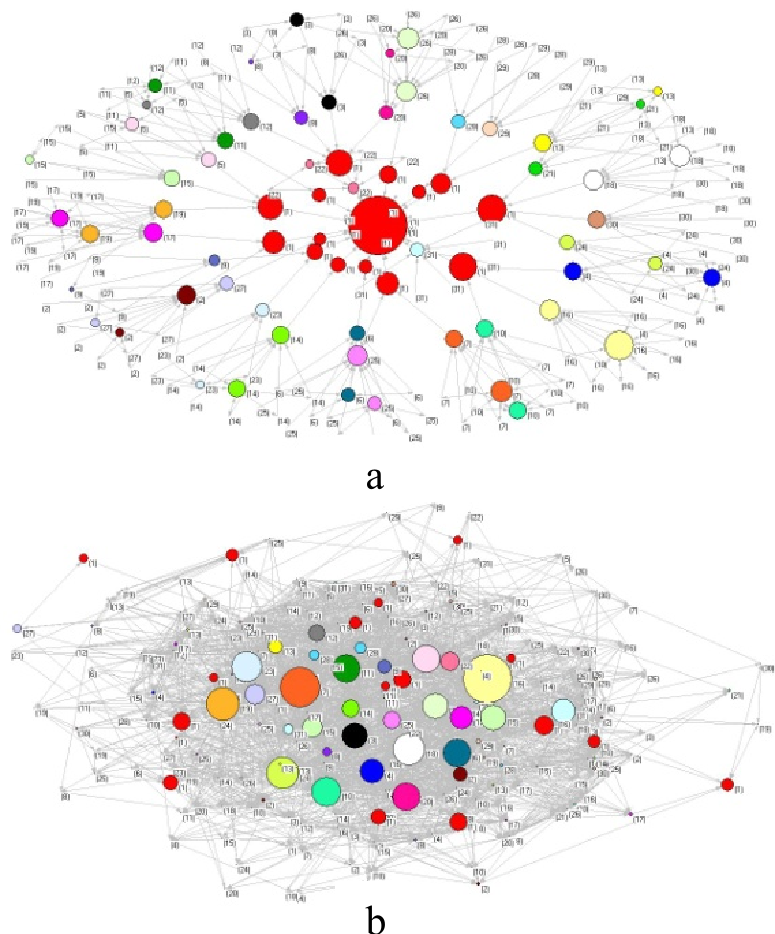 Figure 2: Betweenness analysis showing how centralized "hubs" in SN are replaced by distributed information paths in SSN.
Critical Insights & Conclusion
The most striking takeaway is the Reliability factor. Common wisdom suggests that decentralized systems are fragile. However, by reducing Bi-Components from 27 to 1, the authors prove that a semantically-linked decentralized organization is actually more robust. If one node fails, there are dozens of other paths for the information to take.
Limitations: The authors highlight that this is not a "magic bullet." They tested it on a construction firm (Pajoohesh) and found it unsuitable. Decentralization requires an environment that changes rapidly and a work nature where synergy actually adds value.
Future Outlook: As we move toward the era of AI-driven "Catalysts," using Semantic Web technologies to describe human and AI workgroups will be the foundational layer for the next generation of hyper-flexible organizations.