
Unlocking the "Hidden" Ads: Discovering Implicit Concepts in TV via Social Media
Discovering implicit concepts in popular TV programs from social media
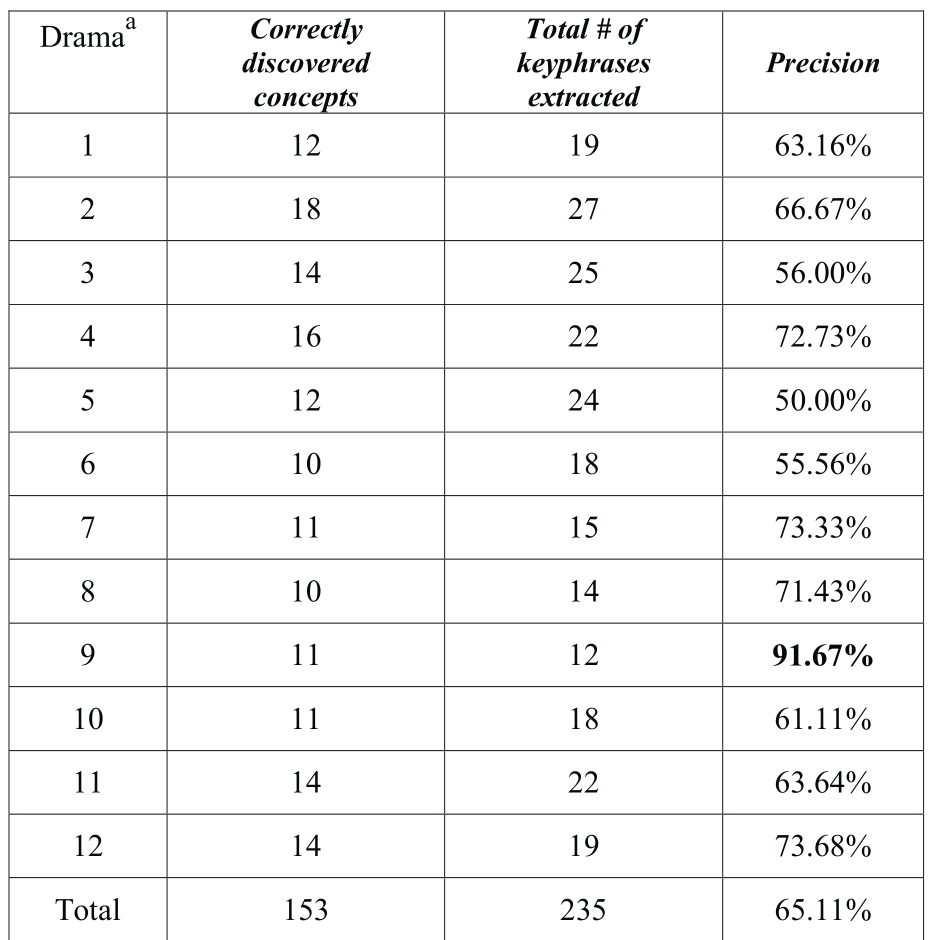
The paper introduces a Web mining-based approach to discover "implicit concepts" (e.g., specific foods or fashion items) in popular TV programs using social media data. By leveraging keyphrase extraction and Chi-square-based relevance analysis across diverse forums, the method achieves an average precision of 65.11% in identifying products and topics that are embedded in dramas but not explicitly listed in Electronic Program Guides (EPGs).
TL;DR
Researchers have developed a Web mining framework that identifies "hidden" topics and products in TV shows by analyzing fan discussions on social media. By applying statistical relevance tests to forums, the system can link a drama to specific items—like the "fried chicken and beer" craze from My Love from the Star—without ever "watching" the video, achieving an average precision of 65.11%.
Background: The Metadata Gap
In the era of Smart TVs, vendors want to match advertisements with content (Contextual Advertising). However, Electronic Program Guides (EPGs) only provide basic data: actors, directors, and a brief synopsis. They don't capture the Implicit Concepts—the specific lipstick a lead actress wears or the snacks the characters eat—which often become viral sensations. Previous solutions relied on complex video analysis (CV), which is computationally expensive and often misses the cultural context of why an item is trending.
The Core Insight: Social Media as a "Second Screen"
The authors suggest that we don't need to analyze the pixels of the video to know what's popular. Instead, we can look at what the audience is talking about. When a product placement is successful, it triggers specific discussions on forums. The challenge lies in filtering the "noise" of general conversation to find these hidden links.
Methodology: From Text to Trends
The proposed system architecture consists of two critical modules:
1. Topic Detection & Filtering
The system starts by building a Program-Specific Lexicon (names of characters, plot keywords) to guide word segmentation. It then scrapes data from multiple sources:
- General Forums: PTT and Pixnet (capturing general drama discussion).
- Specialized Forums: FashionGuide (capturing specific tags for cosmetics, apparel, and lifestyle products).
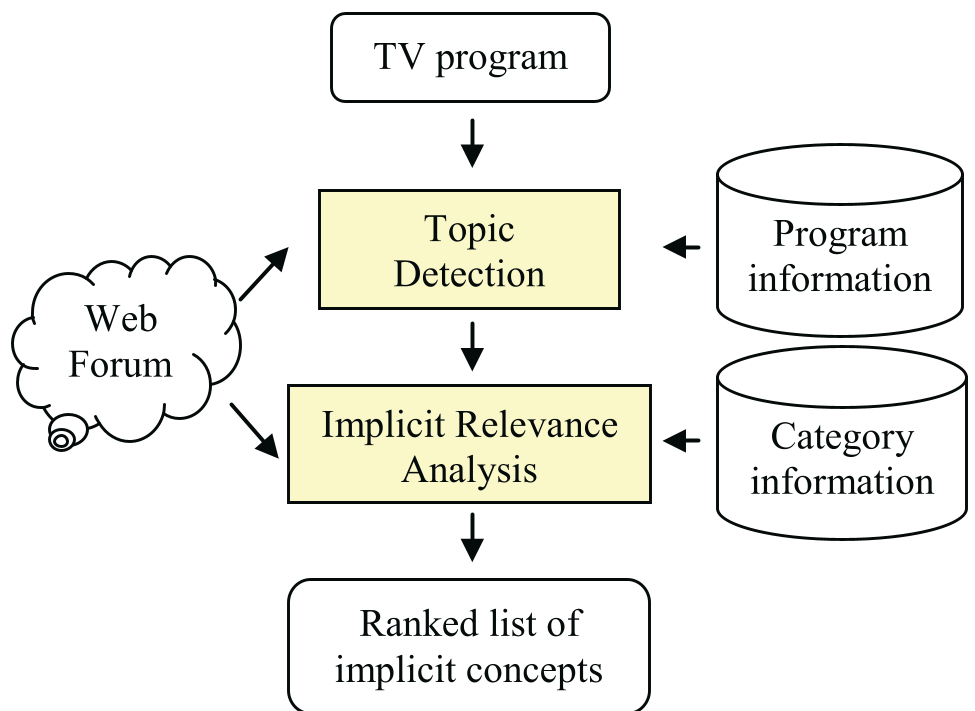
2. Implicit Relevance Analysis
This is where the mathematical heavy lifting happens. The system uses the Chi-square test to measure the strength of association between a TV Program () and a Topic Candidate ().
- Topical Relevance: Uses a contingency matrix to see how often a program and a keyword appear together compared to chance.
- Categorical Relevance: Measures how strongly a topic relates to broader e-commerce categories (e.g., "Dining" or "Cosmetics"). By combining these scores, the system filters out random noise and highlights topics with a genuine implicit connection to the show.
Experimental Results
The researchers tested the system on 12 major Asian dramas. The results showed a clear correlation between "buzz" and precision:
- The High Performer: My Love from the Star (Drama #9) reached 91.67% precision. The high density of discussion about the lead characters' fashion and diet made the implicit concepts easy to extract.
- The Challenge: Two Fathers (Drama #5) only hit 50% precision. This was due to the "common word" problem—the term "father" is too generic, leading to noisy data.
Critical Insight & Future Outlook
While effective, the method has a bottleneck: Efficiency. The computational complexity of (Topics times Categories) means that as the internet grows, the system needs more optimization to run in real-time.
The Takeaway: This work proves that communal human intelligence (social media) can be a proxy for machine perception (computer vision). For advertisers, this means "listening" to the audience is just as important as "watching" the content. Future smart TVs could use these insights to turn a viewer's curiosity about a character's outfit into a frictionless shopping experience.
Conclusion
By bridging the gap between social media buzz and broadcast metadata, this approach provides a scalable way to monetize embedded marketing. It moves us closer to a truly "context-aware" entertainment ecosystem.