
LinkedIn as a Catalyst for BPM: Bridging Professional Identity and Process Reuse
Toward an Approach to Improve Business Process Models Reuse Based on LinkedIn Social Network
The paper proposes a Social BPM approach that facilitates the reuse of Business Process (BP) models by leveraging user professional profiles from LinkedIn. The core method uses a recommendation system to match a modeler's business interests—extracted via LinkedIn APIs—with existing process models in repositories, aiming to reduce modeling errors and time.
TL;DR
Modeling business processes (BP) from scratch is often a "reinventing the wheel" exercise fraught with inefficiency. This paper introduces a Social BPM framework that utilizes LinkedIn professional data to automatically recommend relevant BP models from massive repositories. By transforming a user's career history into a "Business Interest Vector," the system ensures that a manufacturing expert is immediately presented with manufacturing processes, bypassing the need for manual, complex repository queries.
Context & Motivation: The "Search" Bottleneck in BPM
In the Business Process Management (BPM) lifecycle, reuse is the holy grail of efficiency. However, the reality of existing repositories like SAP or IBM-BPEL is bleak:
- Heterogeneity: Different languages and structures make cross-repository search nearly impossible.
- Discovery Fatigue: Modelers often find it easier to draw a new process than to navigate thousands of poorly indexed folders.
- Context Blindness: Repositories don't know who is searching. A financial analyst and an IT architect see the same raw list of results.
The authors' central insight is that professional social networks (PSNs) already contain the "context" that BPM repositories lack. Your LinkedIn profile is essentially a structured summary of your business intentions.
Methodology: The Social-to-BPM Pipeline
The framework operates through a multi-stage pipeline designed to bridge the gap between social data and formal BP models:
1. LinkedIn Data Extraction & Filtering
The system uses LinkedIn APIs to pull profile data. This isn't just a "bio" scrape; the Data Filtering Component specifically targets attributes like profession, company, position, experience, and specialties.
2. Business Profile Indexing
Attributes are transformed into a keyword vector . This vector represents the "Business Interest" of the modeler.
3. Recommendation Engine
The core of the reusability logic lies in two techniques:
- Content-Based: Matching the vector against keywords in model descriptions (e.g., matching "Project Manufacturing" in a profile to "Billing for project manufacturing" in the repository).
- Tag-Based: Leveraging social tagging (history of what other similar users used) to improve the suggestion quality over time.
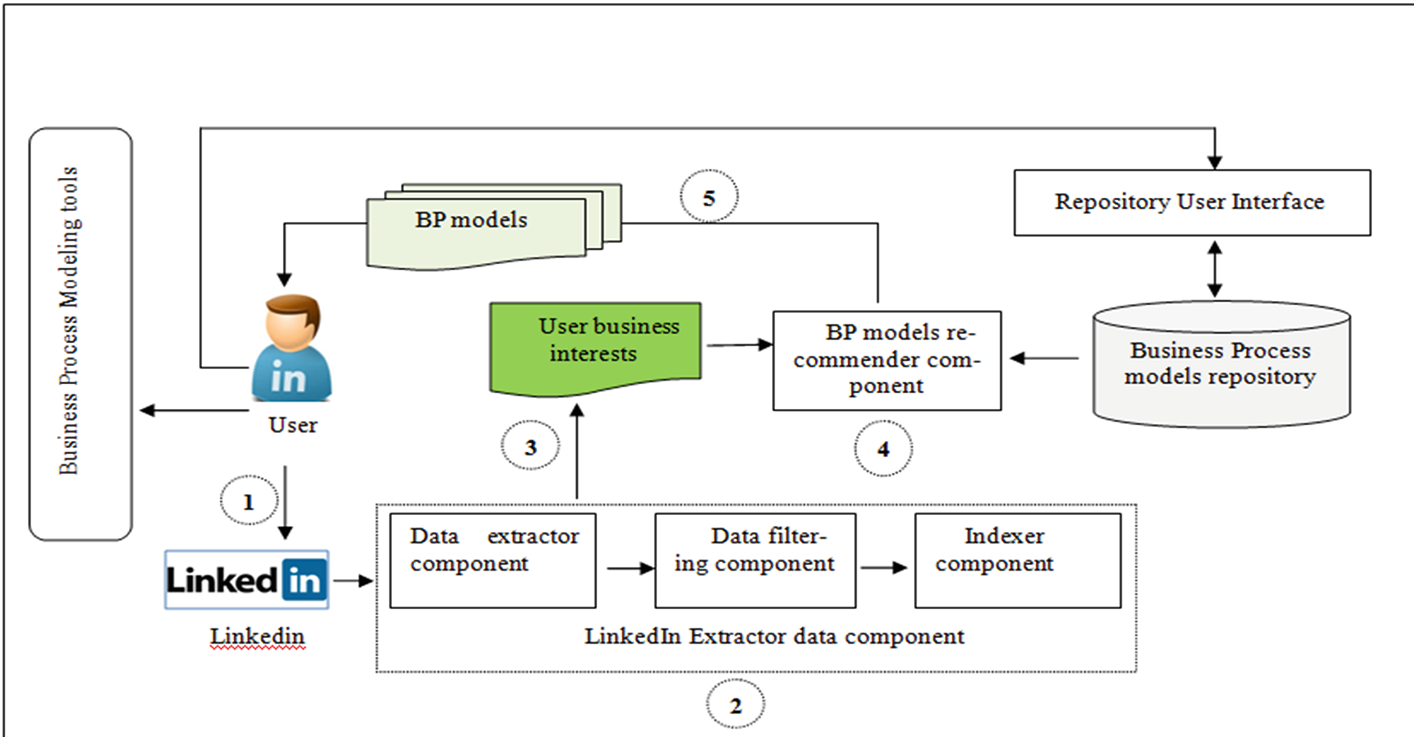 Figure 1: Conceptual Architecture of the proposed Social BPM approach.
Case Study: From LinkedIn Profile to Model Suggestion
To validate the approach, the authors used a persona, "Sara Brown," a Business Process Expert in Manufacturing.
- Manual Task (Typical): Sara would have to browse dozens of SAP categories (Logistics, Sales, Finance) to find a specific manufacturing template.
- Social Task (Proposed): The system automatically extracts keyword "Manufacturing" and "Project manufacturing" from her LinkedIn profile and instantly retrieves relevant models (e.g., Contract manufacturing procurement process).
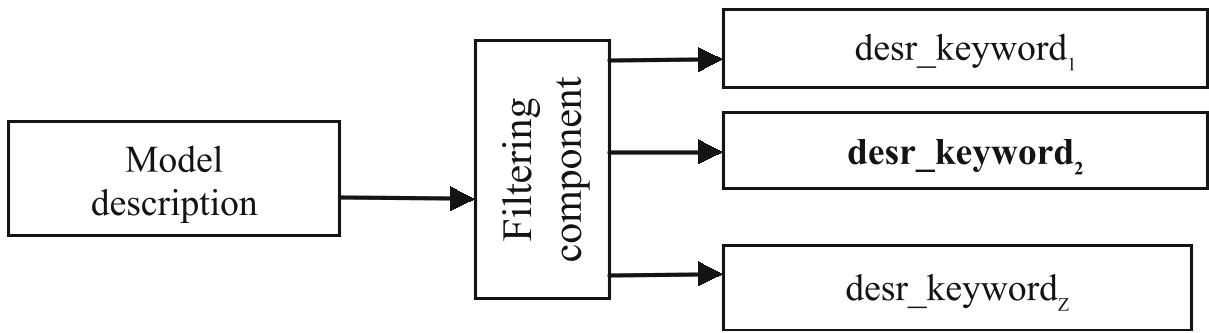 Figure 2: The transformation of raw model descriptions into searchable keyword vectors.
Competitive Analysis: Why This Matters
Most academic efforts to improve reuse focus on modifying the repository structure or inventing new process languages. As shown in the comparative table (Table 3 in the paper), the proposed approach is the ONLY one that provides a Recommendation System and considers User Business Interests without requiring a total overhaul of existing enterprise infrastructure. It is a "wrapper" or "add-on" rather than a disruptive, incompatible new standard.
Critical Insight & Conclusion
The significance of this work lies in its pragmatism. By acknowledging that modelers are also social beings with digital footprints, it solves a technical retrieval problem using a social data solution.
Future Directions: While the paper focuses on LinkedIn, the logic could theoretically extend to GitHub (for IT processes) or internal Enterprise Social Networks (ESNs). The main limitation currently remains the "Keyword Matching" simplicity; moving toward semantic embedding models (like BERT or specialized LLMs) could further enhance the accuracy of these professional recommendations.
Takeaway: The future of BPM is not just about the model, but the modeler. By connecting the "Who" to the "What," we can finally make BP reuse a reality in the enterprise.