
Friendship-Based Routing: Optimizing Social Ties for Resilient Mobile Networks
An Improved Friendship-based Routing Algorithm in Mobile Social Networks
This paper introduces an Improved Friendship-based Routing Algorithm for Mobile Social Networks (MSNs), categorized under Delay Tolerant Networks (DTNs). The method combines community formation and bridge node selection with an efficient resource management mechanism to optimize message delivery in intermittently connected environments.
TL;DR
Mobile Social Networks (MSNs) are notoriously difficult to route due to sporadic connectivity and limited node resources. This paper proposes an Improved Friendship-based Routing Algorithm that moves away from blind message replication. By using a hybrid metric of contact frequency and duration to identify "friendship" communities, it achieves a high message delivery ratio while significantly cutting down on overhead and buffer waste.
The Bottleneck: Flooding vs. Social Intuition
In the realm of Delay Tolerant Networks (DTNs), the "Epidemic" approach is the brute force solution: a node meets another and simply hands over all its data. While this ensures the fastest delivery in a vacuum, it creates a "broadcast storm" that cripples performance in real-world scenarios with limited storage (buffer) and battery life.
The researchers identified that humans don't move randomly; we move in social clusters. Prior social-based metrics like betweenness centrality (SimBet) or PageRank (PeopleRank) were steps in the right direction, but they often failed to account for the temporal quality of connections—how long we stay together, not just how often we meet.
Methodology: Social Graphs and Hybrid Metrics
The authors proposed a system that builds a local social graph at each node. To determine if a "friendship" (a reliable link) exists, they use a Hybrid Metric ():
This formula balances frequency (how many times we met) with duration (the integral of contact time). This prevents "transient" encounters (passing a stranger on a bus) from being weighted as heavily as "stable" encounters (sitting next to a colleague).
1. Community-Aware Forwarding
The routing logic is split into two distinct strategies:
- Intra-community: If the destination is in the same social circle as the relay node, a single copy is sufficient.
- Inter-community: If the destination is in a different circle, the algorithm identifies "bridge nodes" to carry the message across social boundaries.
2. Efficient Resource Management
To stop the buffer from overflowing, the authors implemented Algorithm 1 (Resource Management). It utilizes an acknowledgment distribution mechanism to delete messages that have already reached their destination and uses a Deadline-based drop policy () to purge messages that no longer have a chance of arriving on time.
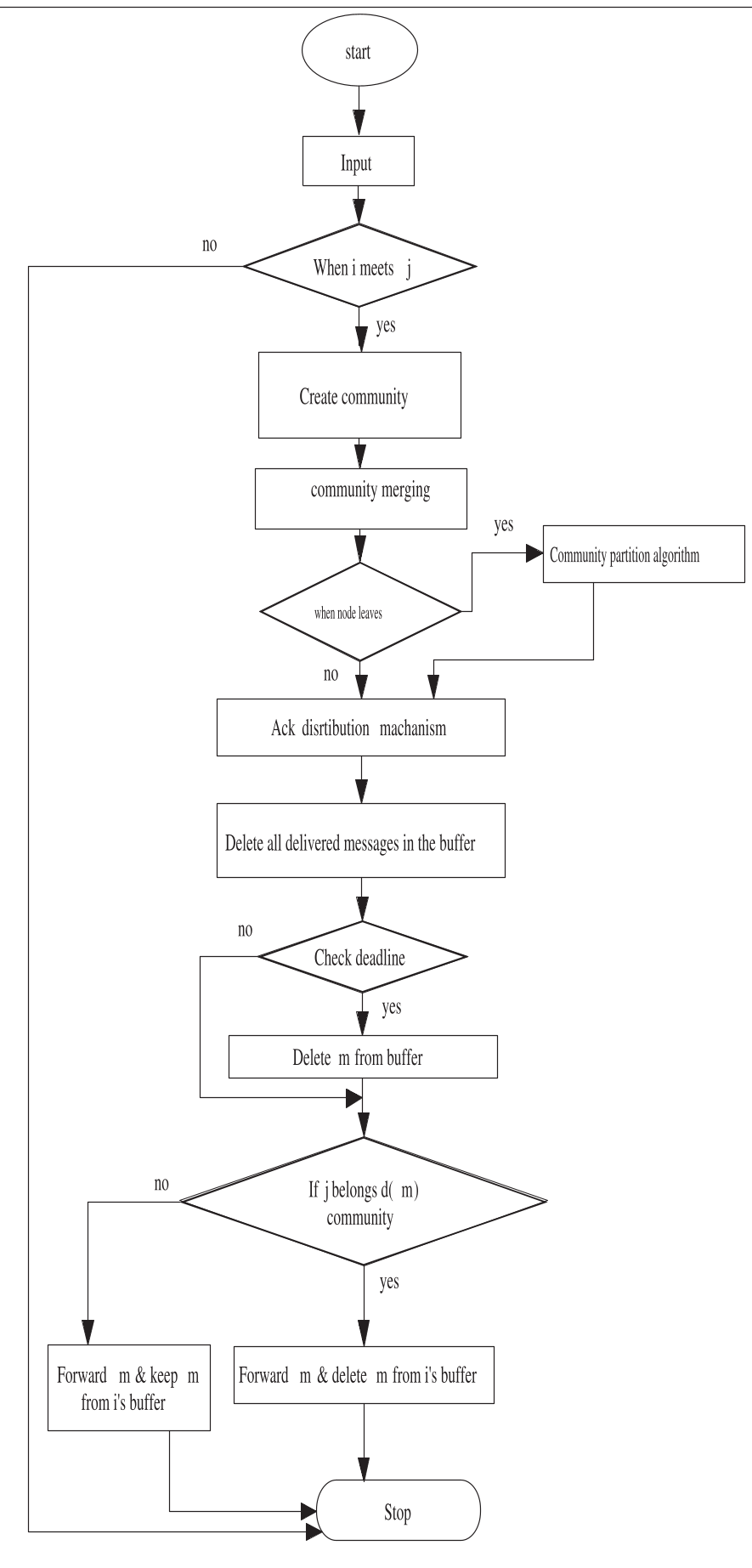 Fig. 1: The logical flow from meeting nodes to community formation and eventual routing.
Experimental Performance
Using the ONE (Opportunistic Network Environment) simulator with a Cambridge dataset of 126 nodes, the algorithm was tested against Epidemic and SimBet protocols.
Key Findings:
- Delivery Ratio vs. Buffer Size: As shown in Fig. 3, the proposed algorithm maintains a high delivery ratio even as buffer size fluctuates, outperforming SimBet and matching Epidemic without the associated cost.
- Overhead Control: One of the most striking results is the Overhead Ratio (Fig. 6). While Epidemic's overhead sky-rockets as more buffer is added (since it replicates more), the Friendship-based routing remains flat and efficient.
- Message Drop Rate: Because of the proactive deletion of expired messages, the drop rate (Fig. 5) is significantly lower, leading to better resource longevity.
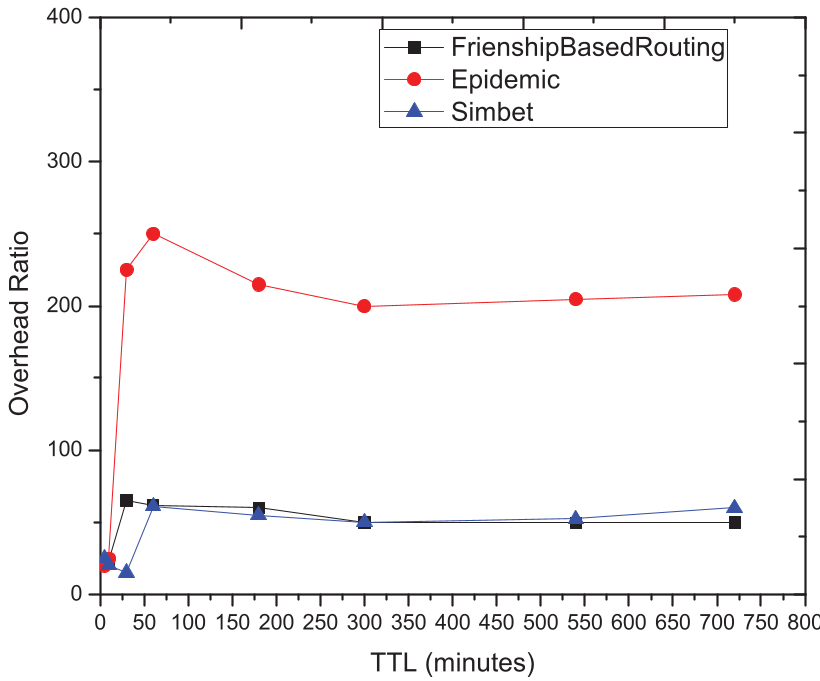 Fig. 6: The proposed algorithm demonstrates significantly lower overhead as buffer capacity increases.
Critical Analysis & Conclusion
The core innovation of this work isn't just "finding friends," but rather the mathematical formalization of friendship stability via the hybrid metric and the systematic cleaning of the buffer.
Limitations & Future Work
- Privacy: Building local social graphs requires nodes to swap neighbor lists, which could raise privacy concerns in real-world deployments.
- Dynamic α: The scaling variable is currently static; future iterations could benefit from a dynamic that adjusts based on the specific network density or mobility patterns.
Takeaway: This paper proves that "Social Intelligence" is the key to managing the chaos of intermittently connected networks. By prioritizing meaningful human-centric ties over random encounters, we can build communication systems that are both resilient and resource-efficient.