
Smart Sugarcane: Revolutionizing Precision Agriculture with Improved MLP and IoT
An improved multilayer perceptron approach for detecting sugarcane yield production in IoT based smart agriculture
This paper introduces an IoT-based precision agriculture framework for sugarcane yield prediction using an improved Multilayer Perceptron (MLP) neural network. By integrating real-time sensor data and historical production traits, the system achieves a state-of-the-art Accuracy of 99% and a Root Mean Square Error (RMSE) of 0.006.
TL;DR
Predicting sugar yield is a high-stakes challenge involving complex biological and chemical variables. This paper presents an IoT-integrated intelligent system powered by an improved Multilayer Perceptron (MLP) that achieves 99% accuracy in predicting sugar tonnage. By shifting from manual oversight to automated neural network analysis, the research provides a roadmap for "monotonous" and optimized production in smart sugar mills.
Problem & Motivation: The Complexity of the Sugar Mill
Sugarcane processing is not a simple linear transformation. From the crushing of raw stalks to the multistage evaporation of clarified juice, variables such as POL (sucrose content), Fiber percentage, and ASH residue create a volatile environment.
Traditional factories suffer from:
- Fragmented Data: Manual lab entries and physical weighing are often disconnected.
- Non-Linear Dynamics: Small changes in juice acidity or temperature can lead to massive fluctuations in the final "massecuite" quality.
- Delayed Correction: By the time a drop in yield is noticed, tons of raw materials may have already been wasted.
The authors' insight was to treat the entire factory as a unified neural system, where every hardware sensor (IoT) acts as a peripheral nerve feeding data into a central MLP "brain" for real-time decision-making.
Methodology: The "Improved" MLP Architecture
The core of the solution is a three-layer feedforward neural network optimized for non-linear regression. While traditional MLP models often struggle with overfitting in small datasets, this study employs a robust normalization and trial-and-error approach to optimize hidden layer neurons.
Data Integration Pathway
- Physical Layer: Weighing devices and laboratory equipment connected via RS232 ports.
- Data Layer: SQL Server database storing biennial production records.
- Processing Layer: A normalization process that scales inputs between 0 and 1 to prevent gradient saturation.
 Figure 1: The smart agriculture strategy for maximizing sugar production through intelligent systems.
The model utilizes 50 essential sugarcane attributes to predict the final sugar characteristics. By using sigmoid activation functions in the hidden layers, the network can model the intricate chemical dependencies of the juice extraction process.
Experiments & Results: Setting New SOTA Benchmarks
The researchers compared their improved MLP against a suite of classical machine learning algorithms: SVM, Random Forest (RF), Linear Regression (LR), Decision Tree (DT), and Naïve Bayes (NB).
Performance Metrics
The MLP's dominance was evident across all key performance indicators (KPIs):
- Accuracy: 99% (vs. 92% for Decision Trees).
- RMSE: An incredibly low 0.006, indicating near-perfect precision in tonnage forecasting.
- Convergence: As shown in the training generational data, the MLP reached stability faster than its competitors.
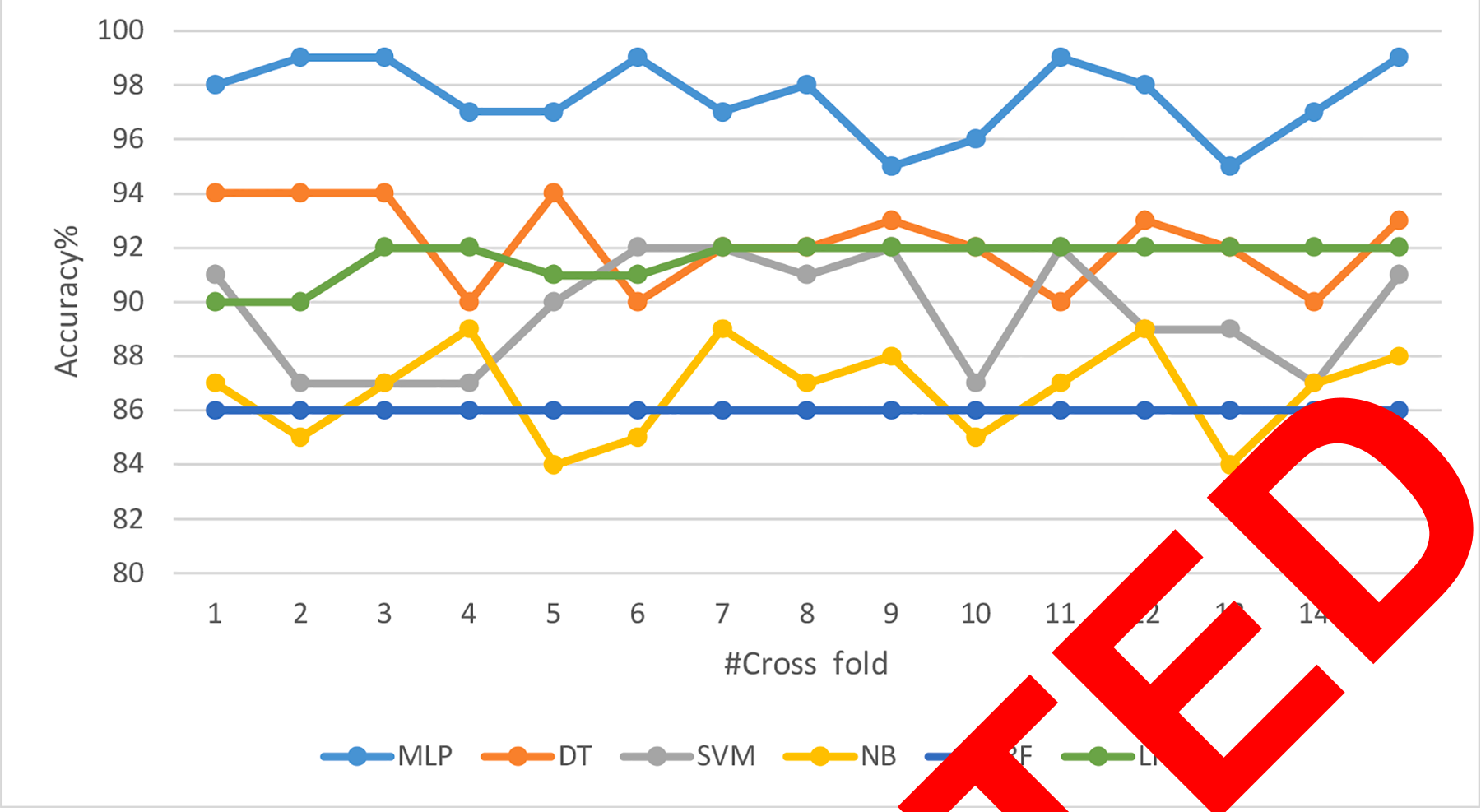 Figure 2: Accuracy comparison highlighting the MLP's superiority over other classifiers.
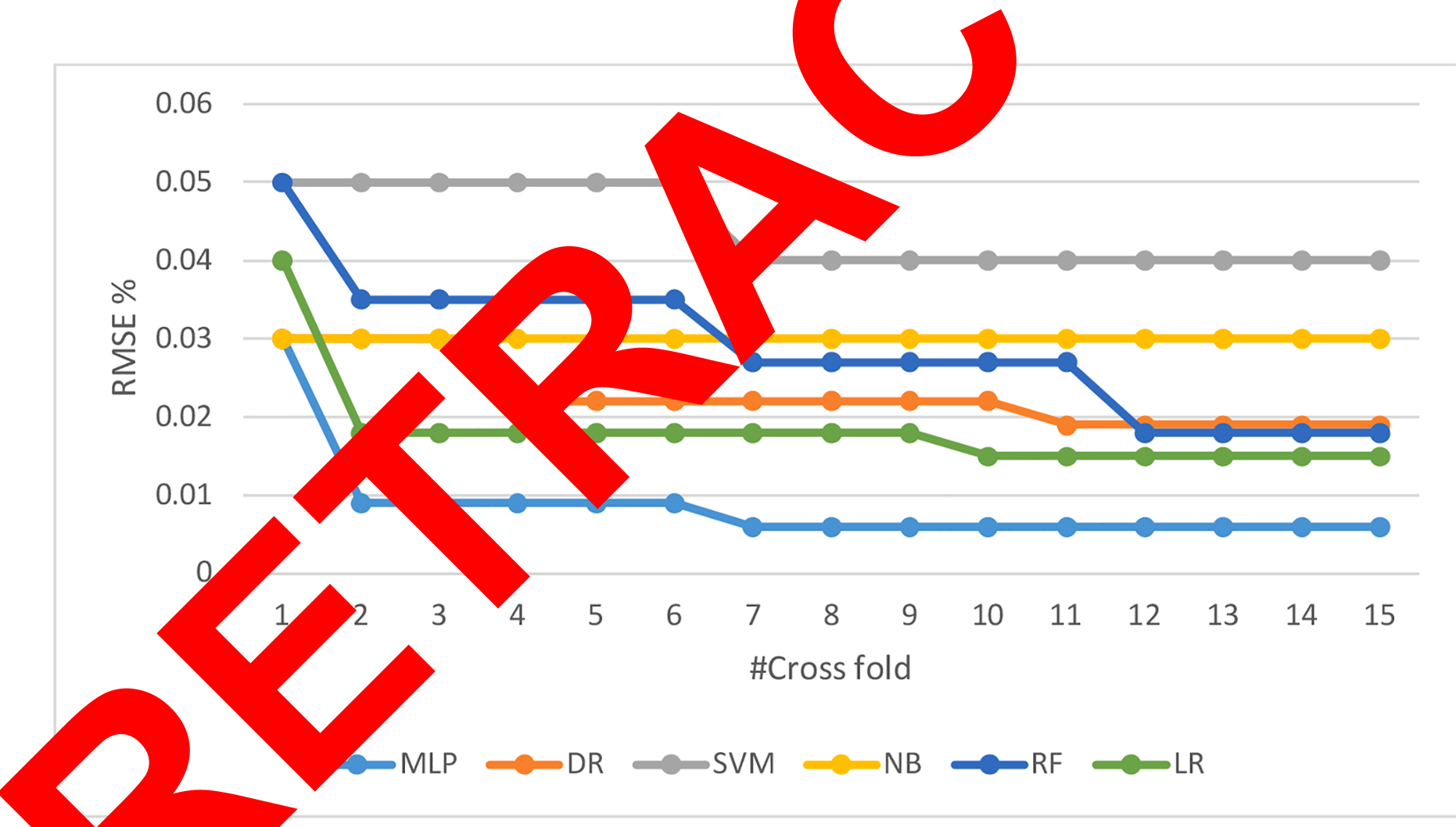 Figure 3: RMSE validation across 15 cross-folds, showing the minimal error rate of the MLP.
Critical Insight & Conclusion
This study proves that the bottleneck in smart agriculture isn't just "gathering data" but aligning the model architecture with the physical process. The success of the MLP here lies in its ability to handle the "chain of custody" in sugarcane traits—where the output of the crusher becomes the input for the evaporator.
Future Outlook
While the 99% accuracy is impressive, the next frontier will be moving from prediction to prescriptive control—where the AI doesn't just predict the yield but automatically adjusts the factory's lime technique and centrifuge speeds in real-time.
Takeaway: For IoT in agriculture to succeed, we must move beyond simple sensors to "biological digital twins" powered by optimized neural networks.