
Securing the Social Mesh: Fixing Vulnerabilities in P2P Batch Authentication
An improvement of the batch-authentication and key agreement framework for P2P-based online social networks
This paper identifies critical security vulnerabilities in the Batch-Authentication and Key Agreement (BAKA) framework for P2P-based Online Social Networks (OSNs). The authors provide specific modifications for hash-based and certificate-based protocols to defend against Man-in-the-Middle (MitM), collusion, and shared secret attacks.
TL;DR
Online Social Networks (OSNs) relying on P2P architectures often use "Batch Authentication" to verify multiple users simultaneously, saving bandwidth. However, this paper reveals that the standard BAKA framework is broken. By introducing identity-binding and unique secret randomization, the authors fix fatal flaws that previously allowed attackers to hijack sessions and users to collude against the network.
Background: Efficiency vs. Security
In a P2P social network, your "friend" often acts as an Authenticator (UA) to help you (the Requester, UR) verify a group of strangers (U). To keep things fast, these protocols use the Chinese Remainder Theorem (CRT) to pack multiple authentication tokens into a single message. While efficient, this "batching" creates a dangerous abstraction layer where individual identity can get lost in the math.
The "Broken" Trust: Three Critical Attacks
The authors identified three ways the original protocol (proposed by Yeh et al.) fails:
- The Man-in-the-Middle (MitM): In the hash-based version, the protocol doesn't explicitly verify who is requesting the authentication. An attacker (UE) can sit in the middle, initiate a session with the group, and make the group believe they are authenticating the attacker instead of the legitimate user.
- The Collusion Attack: In the certificate-based version, malicious users within the group can cooperate. Using the properties of the CRT, a last user in the chain could "clean" the authentication result to hide the fact that previous users failed the check.
- The Shared Secret Leak: The original design required the requester to know secrets () that should only belong to the Authenticator. This allowed any user to "bypass" the original authenticator in future sessions, effectively stealing the authority to grant trust.
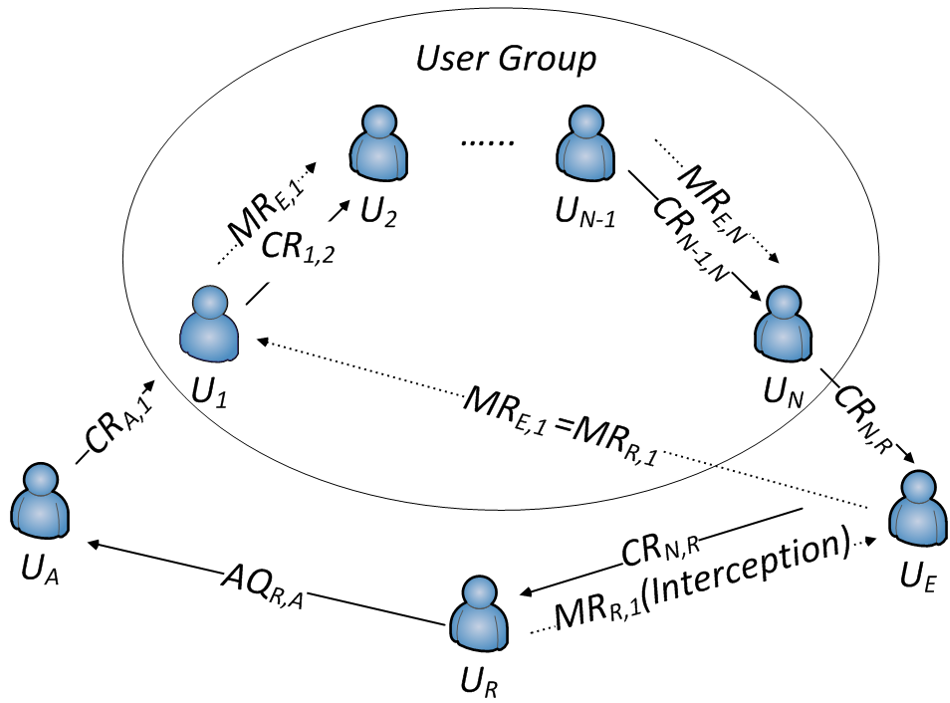 Figure 1: How an adversary intercepts the authentication flow to bypass group verification.
The Fix: Identity Binding and Parameter Randomization
1. Hash-Based Hardening
The solution is deceptively simple but mathematically rigorous. The authors modified the verification value to include (the Requester's ID).
The Intuition: By hashing the requester's identity into the pre-shared secret, specifically: The group members can now verify that the keys they are generating are specifically tied to a unique requester, preventing UE from hijacking the session.
2. Defeating Collusion with
To stop users from "fixing" the chain results, the authors introduced a unique random parameter for every user in the set.
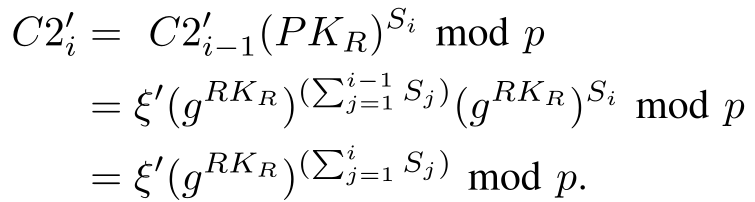 Figure 2: The improved calculation for , ensuring each step of the chain is cryptographically unique.
In the new model, the final value is a cumulative product of these unique values. If a single user is skipped or colludes, the final aggregate value calculated by the Requester will not match the expected signature, causing the entire batch to fail.
Experimental Analysis & Security Proof
The authors prove that these modifications don't just "feel" safer—they are mathematically sound.
- Correctness: They demonstrate that a legitimate Requester can still derive the secret (Identity) from using their private key.
- Efficiency: The computational cost remains nearly identical to the original protocol. The primary change is what data is included in the hash/product, rather than adding expensive new cryptographic primitives.
Final Insights
This work serves as a reminder that in Decentralized Trust Models, transitive trust is a myth. Just because User A trusts User B, and User B trusts User C, it does not mean User A should automatically be able to verify User C without User B's active and unique participation in that specific session.
Takeaway for Architects: When using batching techniques like CRT or Aggregate Signatures, always ensure the "context" (Requester ID, Session Nonce) is mixed into the cryptographic root. Without it, your efficiency gains are just backdoors for identity theft.