
Gamifying Heritage: Can a Scavenger Hunt App Transform the Living Museum Experience?
Improving Children's Cultural Heritage Experience Using Game-based Learning at a Living Museum
This empirical study explores the impact of a Game-Based Mobile Guide (GBMG) on children's cultural heritage experiences at the Sarawak Cultural Village (SCV), a living museum. Using a Scavenger Hunt mechanic, the study compares digital guides against traditional paper pamphlets using the Museum Experience Scale (MES).
TL;DR
Researchers at Universiti Malaysia Sarawak developed a game-based mobile guide (GBMG) to help children navigate the Sarawak Cultural Village. While the app successfully boosted emotional connection through rewards and interactive quests, it struggled to outperform traditional paper pamphlets in terms of actual learning and engagement due to critical usability hurdles.
Context: The "Boredom" Crisis in Heritage Sites
Living museums like the Sarawak Cultural Village (SCV) offer a rich tapestry of intangible culture, yet children often find themselves "running from place to place" or buried in their smartphones without context. The core problem is a lack of resonance: traditional labels are too brief, and staff are often busy with cultural shows, leaving children unguided. The authors' intuition was simple: if children are already on their phones, why not turn the phone into a tool for cultural discovery?
Methodology: The Scavenger Hunt Approach
Unlike a standard audio guide, the GBMG utilizes a Scavenger Hunt mechanic. Children are tasked as "Junior Anthropologists" to locate 30 different artifacts (like the sebang or sumpit) across various ethnic houses.
App Architecture and Design
The development followed a Human-Computer Interaction (HCI) lifecycle, notably involving children in the design phase to ensure the "fun factor."
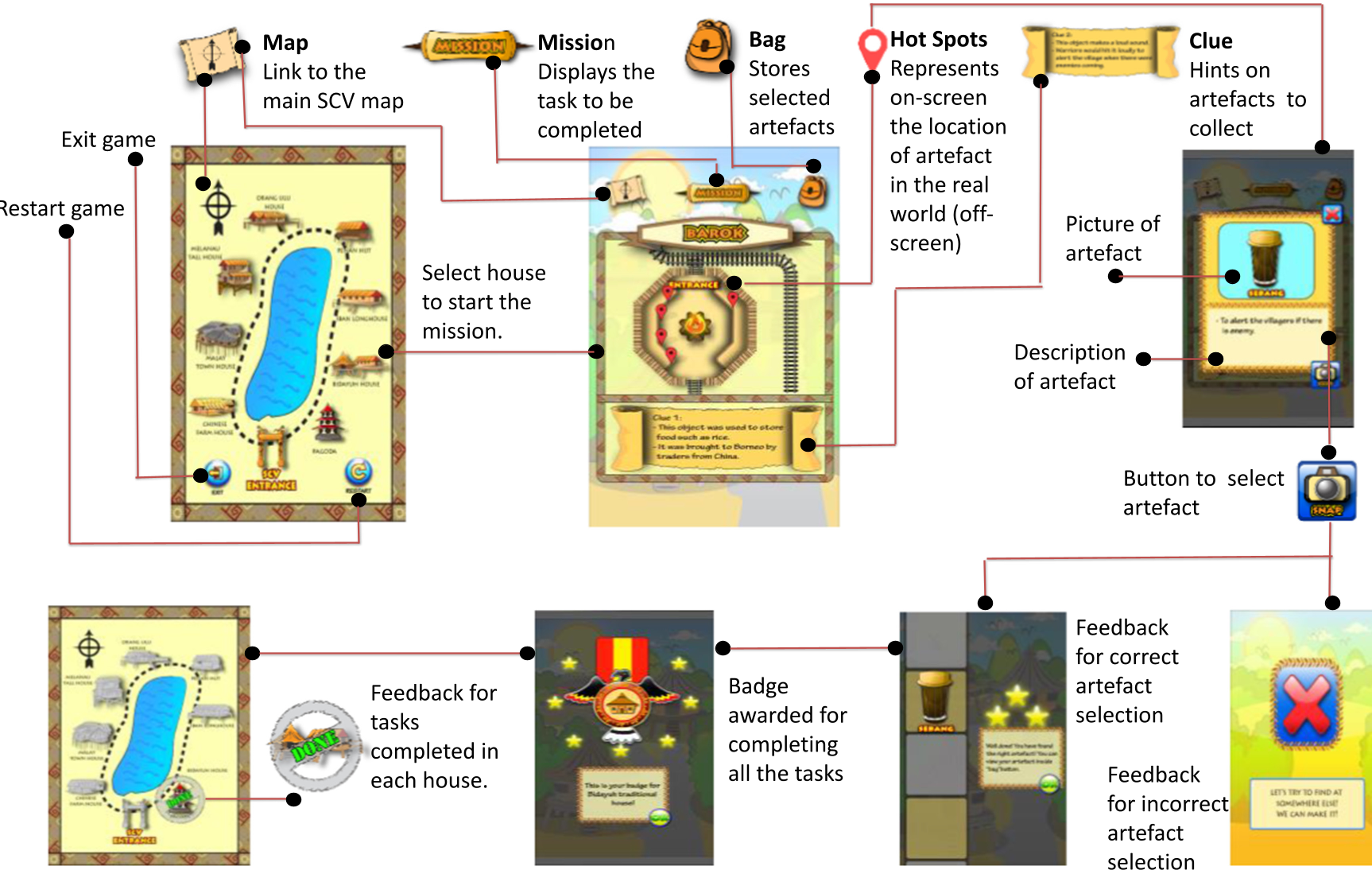 Figure 1: The interaction flow of the GBMG, moving from mission assignment to artifact discovery.
The app avoided high-fidelity realism in favor of graphical depictions, ensuring the interface felt like a game rather than a digital textbook.
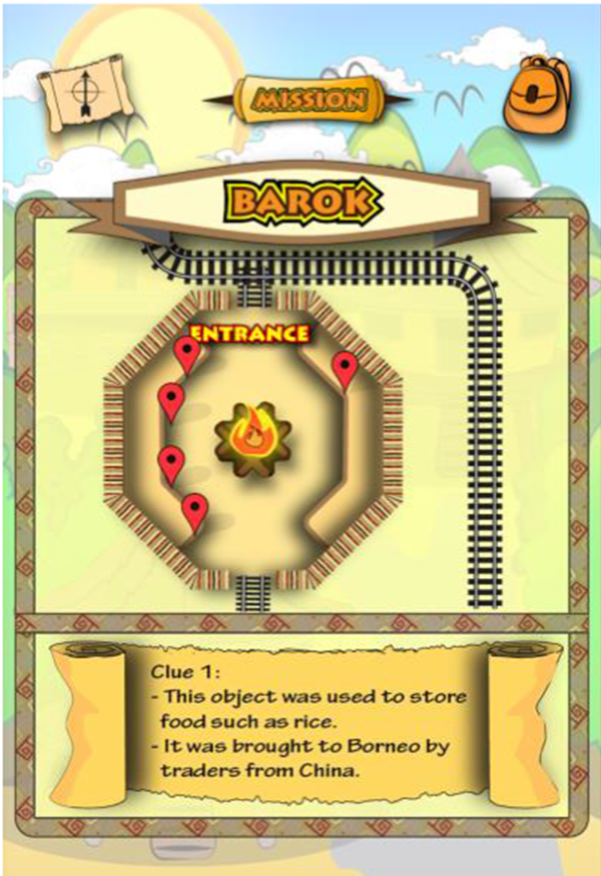 Figure 2: Example of the scavenger hunt clues designed to prompt physical exploration.
Experiments: Mobile vs. Paper
The study involved 45 children divided into two groups. The "control" group used a paper pamphlet with identical visual assets and information to ensure a fair comparison of the medium rather than the content.
Key Results & The "Emotional" Paradox
The results, measured via the Museum Experience Scale (MES), revealed a fascinating split:
| Dimension | GBMG Mean | Pamphlet Mean | Significance |
|---|---|---|---|
| Engagement | 4.19 | 4.04 | Not Significant |
| Knowledge/Learning | 3.99 | 3.80 | Not Significant |
| Emotional Connection | 4.12 | 3.74 | Significant (p < 0.05) |
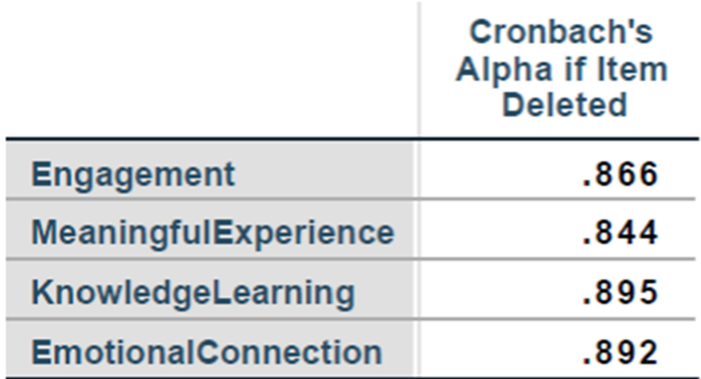 Table 1: Reliability metrics for the Museum Experience Scale dimensions.
Critical Insights: Why Wasn't it a Total Victory?
The study provides a sobering look at "Research in the Wild." While the GBMG group felt more emotionally connected—likely due to the dopamine hit of "badges" and progress bars—they didn't necessarily learn more than the pamphlet group.
The Culprit: Usability Friction. Heuristic Evaluation by HCI experts identified 21 usability issues, including:
- Small Font Sizes: Making instructions tedious to read.
- Language Barriers: The app was only in English, which was a second language for many participants.
- Lengthy Instructions: Digital attention spans are shorter; long text blocks caused children to skip information.
Takeaway for Future Tech
This research highlights that interactivity is not a silver bullet. To truly enhance cultural heritage:
- Aesthetics Matter: Emotional connection is driven by rewards, but learning is driven by clarity.
- Multimodal Support: Future apps should utilize audio to bypass reading fatigue.
- The Environment is the Star: The app must act as a bridge to the physical artifact, not a replacement for it.
In conclusion, gamification can make history "feel" better, but without impeccable UX and language accessibility, the educational impact remains locked behind the screen.