
Beyond Ratings: Building Trust in Dental Care Recommendation Systems
Improving dental care recommendation systems using trust and social networks
This paper proposes a novel trust-based framework for dynamic dental care recommendation systems that integrates social network analysis with crowdsourced data. By evaluating "Local Trust" (from personal networks) and "Global Trust" (from existing review sites), the system aims to provide personalized, high-quality dental provider suggestions while filtering out misleading Information.
TL;DR
Choosing a dentist is a high-stakes decision often driven by fear and the invasive nature of the work. While we have plenty of "Yelp-style" review sites, they lack the rigor needed for healthcare. This paper introduces a Trust-Based Framework that combines your personal social network (who does your inner circle trust?) with global crowdsourced data to find the most reliable dental care providers.
Background Positioning
In the landscape of recommender systems, we have moved from simple Collaborative Filtering to Trust-Aware Recommendations. This paper positions itself as a critical bridge between Social Network Analysis (SNA) and Health Social Networks (HSNs). It moves dental recommendations from the "Generic Business Review" category into a specialized "High-Trust Healthcare" category.
The Core Challenge: Why Ratings Are Not Enough
Standard recommendation engines fail in dental care for three main reasons:
- Invasive Nature: Unlike buying a book, a bad dental recommendation has physical and detrimental health consequences.
- The Anxiety Gap: Nearly 50% of patients experience dental anxiety. Generic sites don't account for a dentist's ability to handle specific phobias.
- Low Data Integrity: Crowdsourced sites suffer from "shilling attacks" (fake reviews) and inconsistent criteria. One user’s 1-star might be another’s 5-star simply due to a lack of standard metrics.
The Proposed Solution: A Dual-Trust Framework
The authors propose a "Dynamic" system that doesn't just look at who is near you, but who is right for your specific symptoms and social circle.
1. Local Trust (The Social Graph)
This is the most innovative part of the methodology. It calculates trust based on three pillars:
- Context Similarity: Does the recommender have the same symptoms or dental history as you? (e.g., "If they have a phobia of needles like I do, I trust their review of this dentist more.")
- Relationship Strength: Utilizing the "Friend of a Friend" (FOAF) logic. Trust propagates through social connections.
- Expertise Analysis: Identifying "power users" who have a history of providing high-quality, high-rated feedback in the dental space.
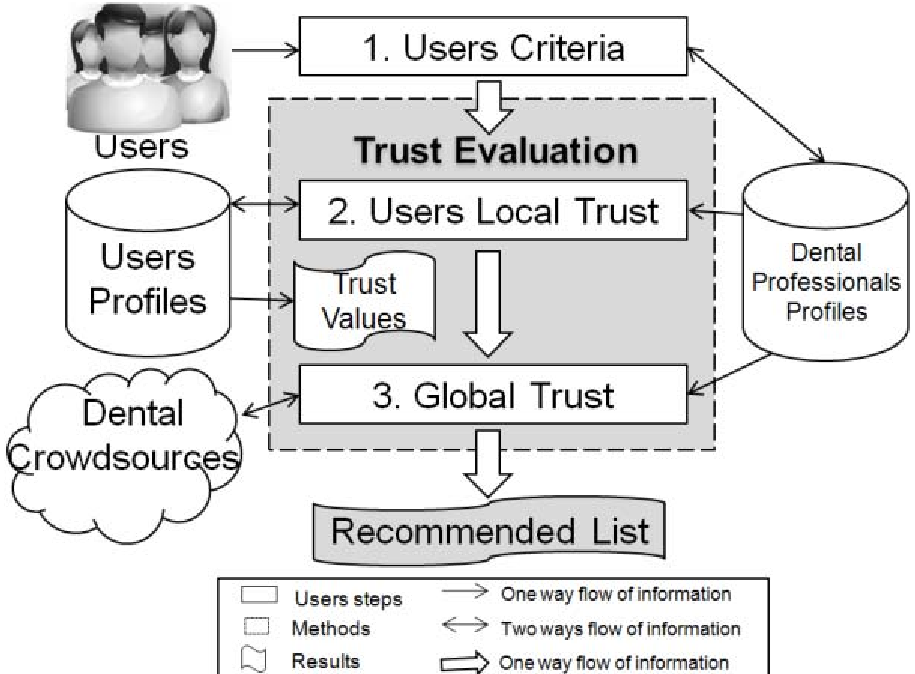 Figure 1: The dual-pathway of trust: Local Profile-based Trust vs. Global Crowdsourced Trust.
2. Global Trust (The Crowdsource Filter)
Once the local network provides a shortlist, the system cross-references these names against global databases like DrOogle and HealthGrades. This acts as a "sanity check" to ensure the local recommendation isn't an outlier.
Experimental Insights
Through an online survey of 183 participants, the authors established the hierarchy of needs for dental patients.
- Quality of Care & Service: Ranked as the absolute highest priority.
- Reliability & Distance: Secondary but critical factors.
- The Problem with Extremes: The authors noted that global reviews are often polarized (only very happy or very angry people post), which further justifies the need for a Local Trust layer to find the "middle ground" of objective truth.
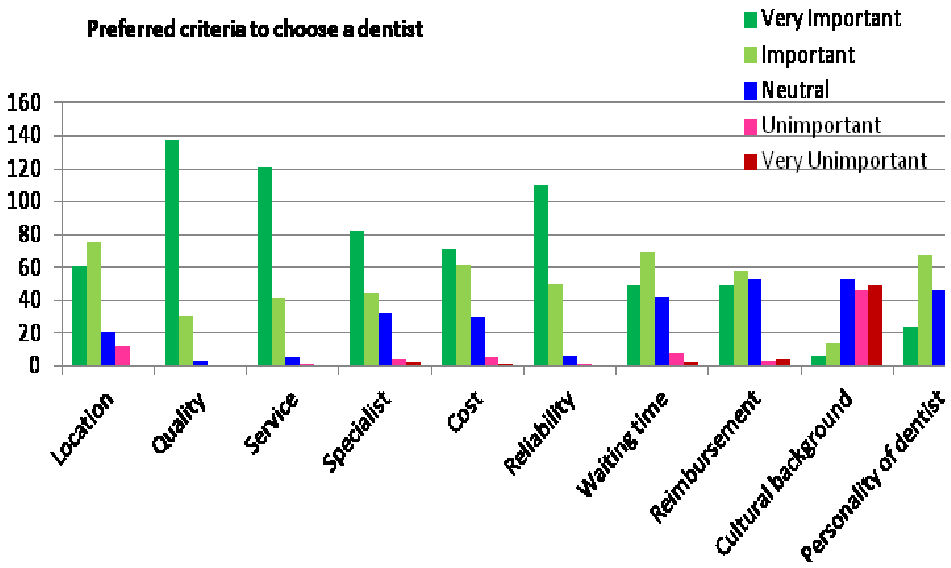 Figure 2: Survey results showing "Quality of Care" as the dominant factor for patients.
Critical Analysis & Conclusion
Takeaway
The shift from Global Reputation to Local Trust is a game-changer for healthcare AI. By emphasizing Context Similarity (shared symptoms and fears), this framework provides a blueprint for how we might build recommendation engines for other sensitive fields like mental health or surgery.
Limitations
- Cold Start Problem: For new users with small social networks, "Local Trust" is hard to calculate.
- Privacy: Merging social network data with health symptoms (like dental fear or hereditary issues) raises significant privacy concerns that need addressing via encryption or differential privacy.
Future Outlook
As healthcare becomes increasingly social, we expect to see these "Trust Graphs" integrated directly into insurance portals and health apps. The future of finding a doctor isn't a Google Search; it's a computation of your social circle’s collective experiences.