
Enhancing GRID Scheduling: A Practical Machine Learning Plug-In Approach
Improving Job Scheduling in GRID Environments with Use of Simple Machine Learning Methods
This paper introduces a plug-in architecture for GRID environments that enhances traditional scheduling algorithms (e.g., Round Robin, Random) using simple, off-the-shelf machine learning methods like Locally Weighted Learning (LWL). The core achievement is an adaptive "black-box" system that corrects base scheduler decisions to improve the ratio of jobs completed within deadlines.
TL;DR
Researchers have developed a non-intrusive machine learning (ML) plug-in designed to sit atop traditional GRID schedulers. By using "black-box" models like Locally Weighted Learning (LWL) to predict job outcomes, the system can override default decisions (like Round-Robin) when a more efficient node is identified. The result remains a more flexible, adaptive system that can improve job completion rates in congested environments without requiring a total overhaul of existing GRID frameworks.
Background & Motivation: The Static Scheduling Trap
Most GRID environments today still rely on "static" algorithms—Round-Robin, Random, or First-Come-First-Serve. While these are robust, they are "system-blind"; they don't account for the current state of congestion or the varying speeds of heterogeneous nodes.
The authors identify a massive hurdle in fixing this: Framework Complexity. Rewriting a GRID's core scheduling logic is often too time-consuming. Their insight was to treat the existing scheduler as a "base" and build an adaptive layer on top that acts only when it has high confidence that the base algorithm is making a mistake.
Methodology: The "Safe" ML Override
The architecture centers on the Entry Point node. When a job arrives, two things happen:
- The Base Selector (e.g., Round-Robin) picks a default node.
- The ML Selector evaluates all available nodes based on historical data.
The system uses a clever comparison logic: Only if the ML-selected node has a higher probability of success than the base-selected node does the system change the assignment.
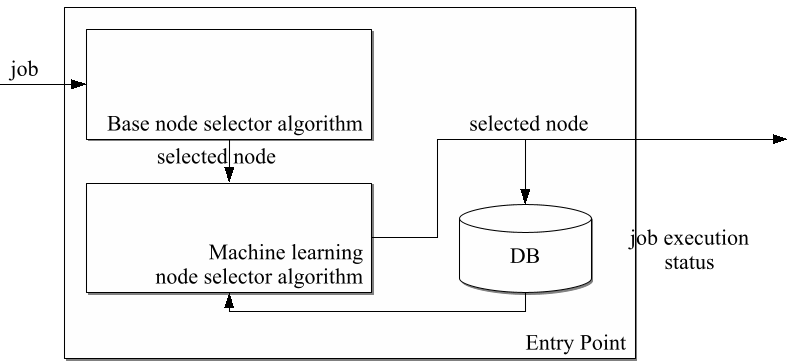 Figure 1: The Entry Point logic showing the interplay between Base and ML selectors.
The ML Toolkit
To keep the system lightweight and capable of "near-online" updates, the authors focused on simple methods from the WEKA framework:
- Locally Weighted Learning (LWL)
- Naive Bayes (NB)
- Decision Trees (J48)
They addressed data imbalance (where successful jobs often outweigh failures) by applying weights to positive examples and using Area under ROC (AROC) as a performance metric during 4-fold cross-validation.
Experimental Insights: Adaptability under Stress
The researchers simulated a network of 10 heterogeneous nodes with varying CPU speeds. To truly test the ML, they intentionally congested the system with batches of 1,000 jobs.
Key Findings:
- LWL is the MVP: Locally Weighted Learning proved to be the most stable. In experiments with "Round Robin" as a base, LWL consistently assigned more jobs to the fastest nodes compared to the baseline.
- Brittleness Matters: The J48 decision tree showed high variance. While it occasionally provided massive boosts (up to 2.11x improvement), it also failed significantly in other batches, highlighting that "complex" models aren't always better for dynamic scheduling.
- Adapting to Sudden Change: In a stress test where node properties were suddenly changed mid-experiment, the ML models initially dipped in performance but quickly relearned the new system state, eventually outperforming the base algorithm again.
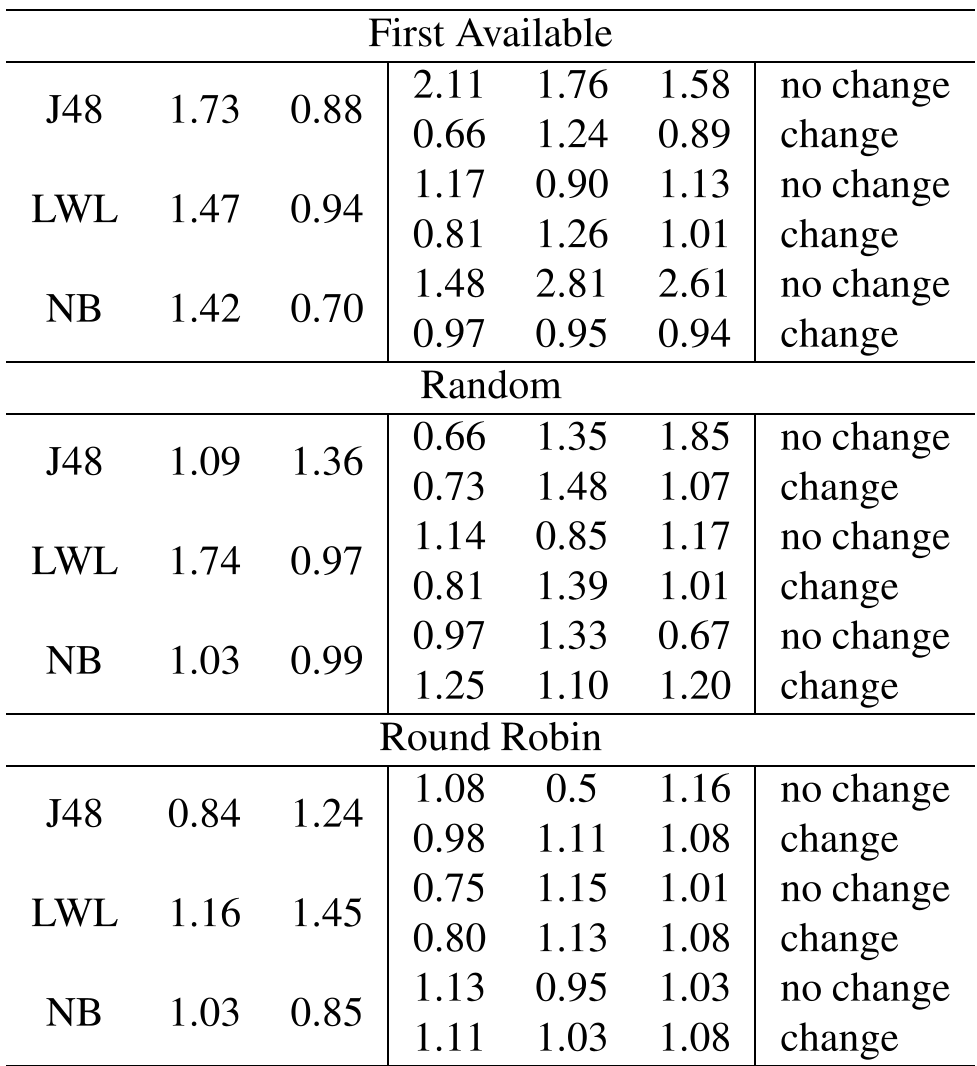 Figure 2: Ratio of jobs finished within deadline (ML vs No-ML). Values > 1 indicate ML superiority.
Critical Analysis & Conclusion
This work provides a highly practical roadmap for "upgrading" legacy systems. By utilizing a plug-in architecture, developers can inject intelligence into GRID frameworks without the risk of a full system failure.
Takeaways for the Future:
- Safety Fallbacks are Essential: The "compare-and-override" logic is a brilliant Inductive Bias that prevents the ML's "wrong" guesses from being worse than a random guess.
- Simplicity Wins: Simple algorithms like LWL can often outperform complex ones in high-noise, dynamic environments like GRID networks.
- Limitations: The study assumes good estimates of job runtime and queue lengths are available. In real-world scenarios, network latency and node failures add layers of "noise" that might require more robust probabilistic modeling.
Ultimately, the paper proves that even "off-the-shelf" ML can significantly optimize resource allocation if the integration architecture is designed with fallback safety in mind.